

Reimagining Stadium Experiences: The Future of Holographic Transparent Displays in Sports Venues
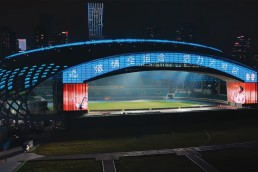
When the Shenzhen Bay Sports Center, famously known as the “Spring Cocoon”, installed a 2,500-square-meter holographic transparent screen, it did more than set a world record—the world’s largest holographic screen project. It marked a turning point in how display technology can redefine the spatial and experiential language of modern sports venues.
At the heart of this transformation is Unilumin’s Udesign SV series, a breakthrough in LED display innovation that merges holographic imaging with ultra-high transparency. With over 90% transparency and an ultra-thin profile, the screen dissolves the traditional boundaries between digital content and physical space. Unlike conventional LED displays that often appear as opaque “black walls” when inactive, holographic transparent screens maintain architectural openness while introducing dynamic visual storytelling.
A New Spatial Medium for Stadiums
Sports venues are no longer just places to watch a game, they are immersive entertainment hubs. Holographic transparent displays unlock entirely new possibilities for stadium design and fan engagement. Installed on glass façades, railings, or even suspended mid-air, these displays can present floating 3D visuals without obstructing sightlines or natural light.
In the case of Shenzhen Bay Sports Center, the massive holographic installation enhanced the atmosphere of large-scale sporting events by creating layered visual experiences. Event slogans, team branding, and immersive animations appear to float in space, seamlessly integrated with the stadium architecture. This not only elevates the spectator experience but also opens up new commercial opportunities for sponsorship and digital advertising.
From Passive Viewing to Immersive Interaction
The combination of holography and glasses-free 3D transforms how audiences interact with content. Rather than passively watching screens, fans become immersed in a multidimensional visual environment. This shift is particularly relevant as the sports industry seeks to compete with at-home viewing experiences by offering something uniquely physical and unforgettable.
Moreover, transparent holographic displays support flexible deployment. Whether used in VIP lounges, entrance halls, or exterior façades, they enable venues to deliver targeted content without compromising design aesthetics. Their ability to “disappear” when not in use ensures that the architectural identity of the venue remains intact.
A Glimpse into the Future of Holographic Screens
As the global transparent display market continues to grow, driven by demand for more integrated and visually compelling technologies, holographic transparent screens are poised to become a key component of next-generation stadiums. The fusion of digital content with physical space aligns perfectly with the evolving expectations of sports audiences, who increasingly seek immersive, shareable, and high-impact experiences.
Looking ahead, the potential extends beyond live events. From smart venue navigation to augmented reality storytelling and interactive fan engagement, holographic displays will play a growing role in enhancing the digital ecosystem of sports infrastructure.
The Shenzhen “Spring Cocoon” project is not just a milestone, it is a preview of what’s possible. With Udesign SV, stadiums are no longer limited by screens as surfaces; instead, the entire space becomes a canvas for innovation.
If you are looking for the same immersive solution, please visit Unilumin Udesign SV: https://en.unilumin.com/products/professional-amp-commercial/udesign-sv.html