

Arenas as Cities: The Rise of the 365-Day Hospitality
By George Vaughan, The Digital Line
If you build it, they will come.
For decades, stadium economics followed this simple, cinema inspired logic. Create a meeting place for fans of sports or music to congregate and they will gravitate to it. But in today’s landscape, that assumption no longer holds. Building the venue is only the starting point; the real challenge is giving people a reason to return when there is no event at all.
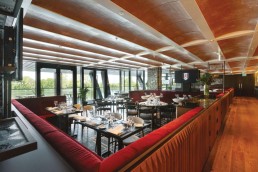
In today’s world, a modern stadium no longer sleeps. Lights remain on in its restaurants, visitors move through its lobbies, and office workers sip coffee in spaces that, just days before, were filled with thousands of chanting fans. The transformation is subtle but profound: the stadium has evolved from a periodic venue into a permanent destination.
What once seemed unusual now defines the direction of the industry. Increasingly, venues operate not as single-purpose sports facilities, but as miniature urban ecosystems – places designed to generate economic, social and cultural activity every day of the year. The result is the rise of the “365-day hospitality model,” where the success of a stadium is defined not only by what happens on a matchday, but also by what happens in between.
From Event Peaks to Everyday Footfall
For much of the 20th century, stadiums followed a simple rhythm. They opened for matches or concerts, produced intense but short-lived bursts of revenue and then sat largely dormant. While this model was sufficient in an era of lower construction costs and fewer expectations, it is increasingly difficult to justify today. Modern venues often cost hundreds of millions, if not billions to build and maintain.
More and more the reality is that idle time is no longer economically viable.
In response, developers and operators have reimagined the stadium as a year-round destination. Rather than relying solely on ticket sales and event-day spending, they seek to maximise daily footfall. Visitors no longer need a match ticket to justify a trip. A family might come for dinner, a business might host a conference, or tourists might book a stadium tour as part of a broader itinerary.
This marks a fundamental transition: from attendance-driven revenue to destination-driven revenue. In this new model, stadiums compete not only with other sports venues, but with restaurants, hotels and entertainment districts across the city.
Read the full article from ISSUE 47 below: