

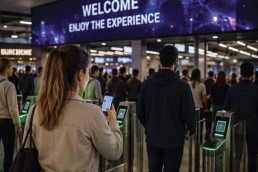
From Concrete to Code: How Technology is Transforming The Modern Venue
By George Vaughan, The Digital Line
It is often said that time moves faster as we get older. From personal experience I can certainly attest to the fact and it is perhaps nowhere more evident than in the world of technology.
Cast your mind back to 2008.
The smartphone revolution was only just beginning. The App Store was in its infancy. Most people still carried physical tickets, paid with cash, printed directions before travelling and relied on desktop computers for much of their digital activity. Social media was beginning to emerge as a cultural force but still had little influence on how we communicated, while concepts such as digital wallets, cloud computing and artificial intelligence remained largely the preserve of enthusiasts rather than everyday consumers.
At the time, many of us believed we were living through a period of remarkable technological change. Looking back now, we were certainly only witnessing the opening act.
In less than two decades, technology has transformed almost every aspect of our daily lives. The device in our pocket has become our primary interface to the world around us, understanding us in more intimate ways than we properly appreciate. It has become our camera, payment card, travel companion, entertainment platform and navigation system.
For those of us working within the venue industry, this shift is particularly significant because technology has not simply changed the buildings we operate. It has fundamentally changed the people who visit them as well.
The guests attending our arenas, stadiums and entertainment destinations today arrive with very different expectations from those who attended events in 2008. They expect information instantly, transactions to be seamless and experiences to be personalised.
Read the full article from ISSUE 48 below: