

The Evolving City: Stadiums and the Urban Imagination
The Evolving City: Stadiums and the Urban Imagination
From the Architecture of Isolation to the Architecture of Belonging
By Stuart Forbes
Stadiums have long occupied an uneasy place in the urban landscape – capable of generating extraordinary collective emotion, yet standing dormant for most of the year. Today, however, a quiet transformation is reshaping how we design and understand these buildings. The real opportunity is not defined by scale, luxury, or spectacle, but by purpose: by how imaginatively we can use the resources available to create places that serve their communities every day, not just on matchdays.
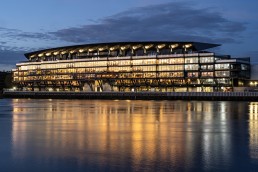
This conviction – that architecture should foster belonging regardless of budget – sits at the heart of the projects explored here. Whether working at the expansive scale of Wembley Park or the more intimate, community-focused fabric of Fulham Pier, the ambition has been the same: to move stadiums from isolation to integration, from single-use venues to 365-day civic ecosystems.
What follows is a reflection on that evolution, and on an enduring belief that the true power of stadium architecture is not measured in the spectacle it contains, but in the everyday life it enables within the city.
These two key projects represent a personal journey for me as I share with you the origins and comparisons of both these seminal projects.
Read the full article from ISSUE 46 below: