

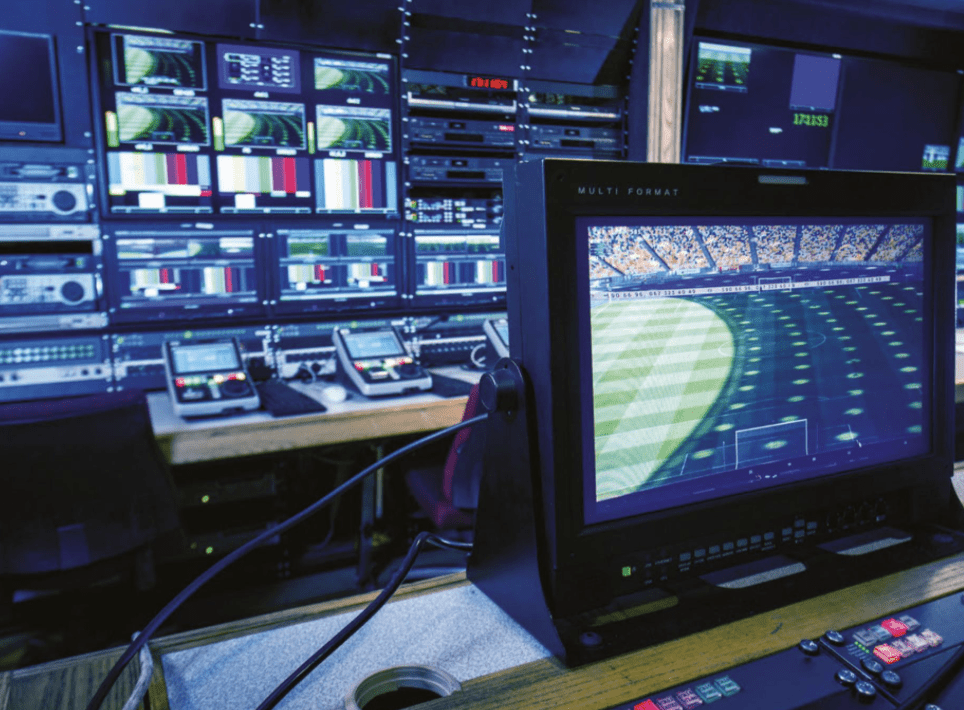
The broadcast industry is undergoing a significant transformation from Serial Digital Interface (SDI) to Internet Protocol (IP), and live sports broadcasting must keep pace with the latest technological advancements. While many fully IP-based facilities have been launched already, many executives in Head of Broadcast Engineering roles are still navigating this significant change.
The challenge? The transition to IP isn’t as simple as swapping out cables and hardware. It’s about reshaping the entire broadcasting workflow holistically. Undergoing this change enables broadcasters to be able to accommodate unprecedented scale, ultimate flexibility and future-proofed infrastructure.
The Rise (And Limits) of SDI
SDI was an innovation of the 1980s and built for simple, point-to-point video connectivity. SDI was an appealing solution thanks to its one source, one cable and one destination design which was perfect for small and relaxed broadcasting environments.
Nowadays, sports broadcasting has rapidly outpaced the criteria and benefits that SDI is able to offer to these small-scale operations. Live sporting events require a range of cameras, replay servers and graphics systems to capture the action. In many cases, this can span from dozens to hundreds and even exceed thousands of systems. To connect an endpoint to an SDI network, a single cable per source is required. However, in a modern live sporting event, this could lead to an enormous number of cables that results in an extremely time-consuming infrastructure.
Inefficiencies in SDI installations within sports broadcasting facilities unfortunately don’t stop there. For every increase in endpoint, there is an associated increase in bandwidth which also needs to accommodate the latest resolutions. These could range from HD or HDR, and up to full 4K requirements.
Real the full article from ISSUE 44 below: