

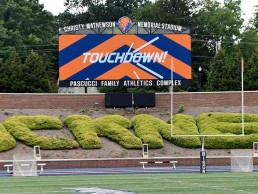
Bucknell University Kicking Off 2021 Season with New Daktronics Video Display
Daktronics has partnered with Bucknell University to design, manufacture and install a new LED video board in the end zone of Christy Mathewson Memorial Stadium on campus in Lewisburg, Pennsylvania. The large, new look to the end zone will be a centerpiece of the new Pascucci Family Athletics Complex, and it will be completed and ready to welcome Bison fans when the 2021 football season to kick off this fall.
“We are very excited to continue our partnership with Daktronics, which is an industry leader in sports venue entertainment,” said Jermaine Truax, Bucknell director of athletics and recreation. “The new Daktronics video and audio system that is being installed in Christy Mathewson-Memorial Stadium at the Pascucci Family Athletics Complex will greatly enhance the game-day atmosphere for our student-athletes and fans alike. Christy Mathewson-Memorial Stadium is approaching its 100th birthday in 2024, and our fans will now get to experience a wonderful blend of history and tradition with modern technology.”
The new video display will feature 10-millimeter pixel spacing and will measure approximately 20.5 feet high by 60 feet wide to appeal to fans in every seat of the stadium. The display features industry-leading environmental protection to ensure the display operates as expected in the outdoors of Pennsylvania.
Daktronics also provided a new state-of-the-art Sportsound® 2000 audio system that will be integrated into the video and scoring system at the stadium. This system provides full-range sound reproduction for a booming audio experience that includes clear and understandable speech from announcers.
“We are very proud to continue our long-standing partnership with Bucknell University by providing this new audio and video solution at historic Christy Mathewson Memorial Stadium,” said Scott Willson, Daktronics sales representative. “This will be a game-changer for the Bisons fans, corporate partners and student-athletes. I am looking forward to game-day in Lewisburg.”
To keep fans engaged and entertained, the LED display is capable of variable content zoning, which allows it to show one large video or image, but it can also be divided into multiple zones. These zones can show any combination of live video, instant replays, up-to-the-minute statistics and game information, graphics and animations, and sponsorship messages.
In addition to the equipment installation, the Bison will also receive a content package that will be produced and delivered by Daktronics Creative Services. The new board will support Bucknell football, men’s lacrosse, and men’s and women’s track & field competitions, as well as other campus events staged in the historic stadium.
Daktronics has grown with the sports industry from the company’s beginnings in 1968. Today, the company has LED video display installations at hundreds of colleges and universities across the United States.


Oak View Group Names Chris Granger CEO of Oak View Group Facilities
Oak View Group (OVG) has announced that Chris Granger has joined the company to lead OVG Facilities as its CEO. Based in Detroit, Chris will report to Tim Leiweke, CEO of Oak View Group.
Chris’ appointment comes on the heels of OVG’s announcement earlier this week to merge with Spectra, one of the industry’s leading food and beverage and hospitality providers, to create a leading full-service live events company. The combined company will provide industry-leading expertise in booking and creating content for the venues it manages, and it will be committed to sustainability across its business operations by harnessing the power of the entertainment and sports industries to inspire positive change robustly and at scale.
With more than 25 years of experience, Chris will oversee OVG Facilities, OVG Media & Conferences, and the OVG Arena Alliance, a collection of the top 32 venues in North America that provides a platform for booking, content, and sponsorship sales opportunities. In addition, Chris will focus on sustainability, public safety, and sanitization solutions across all venues, addressing some of the biggest challenges in the live events industry.
Tim commented: “As we grow as a company, there are priorities that we have set to guide that growth. First, character, in all aspects of our organization. Second, a commitment to lead the industry and change the conversation. Third, to not operate in fear. What I admire most about Chris is he is a living example of all three. Anyone and everyone that has worked with him knows he is a class act and leads by example. In addition, he is like us, dreaming for what we could be as an industry and thinking outside the box. And finally, he believes that this is the time for us to be bold, to be entrepreneurial, and to grow this industry. All of us at OVG, our facilities, and our fans, are looking forward to Chris’ leadership.”
“I am excited and humbled to join Tim Leiweke, Irving Azoff, and the incredibly talented team at Oak View Group. Venues, arenas, and stadiums increasingly play an irreplaceable role in society. They bring diverse people together to cheer, to sing, to vote, to protest, and to celebrate,” said Chris. “Further, we are seeing facilities lead the way in areas of public health, public safety, and sustainability. I look forward to contributing to the OVG vision of making a positive contribution to the world through our venues. I can't wait to get started.”
Chris continued: “I would also like to thank Chris Ilitch for the amazing opportunity to steward the business operations of two iconic teams, six world-class venues, and work with some of the hardest working people in sports and entertainment. It’s been an honor to represent the Winged Wheel and Olde English D, and truly the highlight of my career thus far. I am grateful for what I have learned, for the friendships built, and for the chance to live, work, and play in the Motor City, one of the great entertainment destinations in the world.”
Prior to joining OVG, Chris was group president of sports & entertainment with Ilitch Holdings, a position he held since 2017. While there, he was responsible for all aspects of business operations for the Detroit Tigers, the Detroit Red Wings, the company’s joint venture interest in 313 Presents, and the operations of Little Caesars Arena, Comerica Park, Detroit’s historic Fox Theater, DTE Energy Music Theater, Meadow Brook Amphitheater, and Michigan Lottery Amphitheater at Freedom Hill. In Granger’s four years leading the organization, the Ilitch sports and entertainment businesses saw a period of unprecedented growth, a broad expansion of programming, and significant community investment.
Chris previously served as president of the Sacramento Kings and Sacramento Basketball Holdings, LLC. During his tenure, the Kings enjoyed unprecedented revenue growth and were widely recognized as a highly innovative and community-minded franchise. Chris' influence also extended to the development of Sacramento’s award-winning, LEED Platinum Golden 1 Center, and its 1.5 million-square-foot downtown mixed-use development project, Downtown Commons. The Golden 1 Center was the first arena in the country to be recognized as LEED Platinum, reflecting its groundbreaking commitment to sustainability. Before joining the Kings, Granger worked in various capacities for the NBA for 14 years. While there, he served as the executive vice president of the NBA’s renowned team marketing and business operations function, where he advised NBA, WNBA, and NBA Development League teams on all aspects of business operations.
Chris and his family are active in a wide range of charitable organizations in the Detroit community, including Make-a-Wish Michigan, Salvation Army, the Henry Ford Museum, and City Year Detroit, where Chris proudly serves on the Board.
He received his bachelor’s degree from Cornell University and his Master of Business Administration from Yale. He was named Sacramento Business Person of the Year in 2017 and was a 2010 Sports Business Journal Forty Under 40 award winner.
Chinese eSports League Develops Remote Broadcast Workflow with Audinate’s Dante
The Peacekeeper Elite League is the highest level of eSports competition for the video game Peacekeeper Elite – the localized title of PUBG Mobile in the Chinese market. And while esports is a burgeoning market in the live production world, the production costs across these performances have traditionally been high due to the need for dedicated, on-site staff and expansive cable runs connecting many different video and audio feeds.
To mitigate this challenge, VSPN – a co-organizer of the Peacekeeper Elite League – recently experimented with a new way to host its events by relying on Audinate’s Dante for broadcast audio over a vast geographic distance.
On May 3rd, 2021, the first weekly final of the Peacekeeper Elite League 2021 S2 season was held in Chongqing Banan Huaxi Sports Center. Twenty professional teams from across the country gathered in the mountain city of Chongqing to compete.
While the idea of remote production had previously been considered too challenging due to latency issues associated with audio, the production team’s discovery of Dante changed their approach.
Used in more than 3,000 different products from more than 350 different manufacturers, Audinate’s Dante is recognized as the de-facto standard for digital audio networking. With near-zero latency and perfect synchronization, Dante offers uncompressed, multi-channel digital audio channels that can be routed over standard Ethernet networks. And, as proven by the Peacekeeper Elite League, it can also be effectively transmitted over hundreds of kilometers without latency issues.
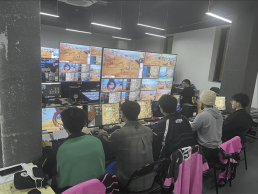
Using Dante, the event’s commentators and production staff were able to largely work remotely in Xi’an – some 750 kilometers away from where the competition was taking place in `qing – with minimal audio latency. This setup enabled impressive cost savings by reducing the number of individuals on-site, minimizing traditional AV cable runs, and simplifying the workflow under an easy-to-manage Dante network.
In Chongqing, the event’s workflow uses an SSL System T S300-32 platform with a redundant T25 DSP engine for outside broadcast. An SSL Live L550 audio mixing console is also used with several Dante interface boxes to capture team voice chat. The Dante network located at the competition site in Chongqing is then connected to the studio in Xi’an through a dedicated network line. This allows for real time, remote audio production in the live broadcast with minimal latency.
Further, the team was able to add a robust level of features and management capabilities to the production using Dante Domain Manager.
“To realize the Dante remote production, we needed to solve signal transmission across subnets, network delay, and PTP clock synchronization,” said WangWei Xie, Technical Manager of VSPN “To solve most of this we added Dante Domain Manager to the system, which allowed us to group and isolate devices across subnets and plan device group attributes.”
Dante Domain Manager is network management software that enables user authentication, role-based security, and audit capabilities for Dante networks – all while allowing for a smooth expansion of Dante systems over any network infrastructure.
“In our system, Dante Domain Manager enables PTP V2 functionality for all Dante devices,” WangWei Xie said. “It locks the devices in the two places under their respective GPS clocks through the Assign Zone function and divides the domains of the Dante devices in the system for distributed management. It also allows us to activate the maximum latency value of the Dante devices, and opens enough buffer space to deal with the data transmission delay caused by the remote transmission of the dedicated network line.”
The workflow used a Leader LT4610 GPS master clock generator with the Dante systems in Xi’an and Chongqing. This enables the two locations to receive GPS satellite signals through an antenna and convert the signals into PTP, BB, and other clock synchronization signals.
“The result was that the system was stable, and the live event was a complete success,” WangWei Xie said. “We used Dante to realize the two-way real-time transmission of nearly 20 uncompressed audio streams through the dedicated network line. After three days of live broadcast and testing, the entire audio system had no failure. It perfectly achieved our expected results.”
Xi’an Olympic Sports Center
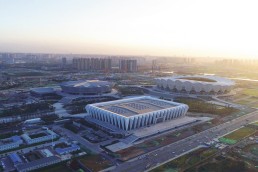
When construction began on the Xi’an Olympic Sports Center, home of China’s 14th National Games, officials wanted the modern venue to feature a state-of-the-art audio system that would give every seat a memorable experience. With help from pro audio distributor, EZPro International, officials found the solution they were looking for in products from EAW, Powersoft, Allen & Heath and Symetrix.
Completed in July 2020 with a total build cost of $1.12 billion, the Center occupies an area of 866,667 sq metres and houses three distinct venues: a 60,000-seater athletics stadium with track and field facilities, a gymnasium capable of seating 18,000 people, and a swimming and diving hall that accommodates 4,000 spectators. After the 14th National Games draw to a close, the centre will transition to hosting international sports events, exhibitions and conferences in addition to acting as a multi-function sports centre for nearby cities and towns.
With a strong grounding in the Xi’an pro audio industry for more than two decades, and an established reputation for providing reliable, high-end products, EZPro won the bid to start work on the project, installing a sound system that fit the brief of ‘world-class, advanced, stable, cost-effective and flexible’. “As soon as the public tender opened for bid, we submitted all the necessary documents and strived for a chance to pitch in front of the contractor and the consultant,” explained Zhou Jun, Chief Technical Engineer of the project. “The large-scale project was very demanding with a pressing schedule, so the fact that we had a branch office in Xi’an and were able to quickly respond to the contractors needs stood out as a great advantage. The substantial number of symbolic sports venue projects we have also been involved with in the past reassured the venue that we were fully capable of delivering this one to a high-quality, too. It turned out our efforts did not go to waste, and I believe we nailed the project!”
As the system was being used as an entertainment, vocal and emergency audio system, it needed to be reliable and as impactful as possible, so EZPro chose a range of manufacturers capable of adhering to the venue’s every need. “In designing the sound system, the goal was to provide the same frequency response for each listening area and to address any unevenness throughout the audience areas,” said System Designer, Zhang Xianjun. “We first built a 3D model for the stadium in AutoCAD, according to the architectural drawings. We then imported the model into EASE4.3 acoustic analysis software, followed by a 1:1 EASE model setup. We choose EAW’s RSX line array for its strong directivity, ability to optimise speech intelligibility, and its overall fantastic sound.”
For the project, the integrators installed six clusters of 44 EAW RSX212L active loudspeakers and eight EAW RSX18F single 18-inch active subwoofers in six arrays. Four EAW RSX129 active loudspeakers were installed under the in-arena scoreboard and four single 12-inch EAW VFM129i moving wedges were configured for the rostrum.
“All of the loudspeakers were installed under the catwalk of the stadium, which makes it difficult to see their operational status,” added Zhang. “Thanks to the self-detection of EAW’s RSX Series active loudspeakers, the sound engineers can quickly access their operational- and signal-status. The catwalk of the stadium is an asymmetric-hexagon structure, so it is harder for us to control installation angles of loudspeaker clusters. We were able to overcome this by using EAW original flyware, fixing the arrays under the catwalk by 3T electric hoist. We used two safety cables and the horizontal coverage is adjustable. With RADIUS Series loudspeakers, we have much less sound diffusion and direct sound coverage is improved.”
EAW’s RADIUS Series is designed to streamline setup and deliver maximum results in minimum time. The line features OptiLogic to drastically cut down on setup and tuning time, while the EAWmosaic app provides total system optimisation from anywhere in the venue, plus intuitive room design and prediction in a single, comprehensive application.
“The EAW RSX Series delivers an excellent listening experience with high fidelity and extended dynamic range, while also proving Dante integration across the line,” added Zhang. “The system has admirable intelligibility, and it is easy and seamless to switch between signals to keep the system safe and sound.”
Driving the loudspeakers across the venue are 34 of Powersoft’s Dante enabled Quattrocanali 4804 DSP+D amplifiers.
“With reliability as the most vital requirement, choosing amplifiers that were up to the immense task of driving this system was crucial,” said Yongjun Jiang, EZPro’s Technical Manager of the project. “Powersoft amplifiers have an incredible reputation, we knew them to be highly efficient and extremely reliable, not to mention their immense power output, which made them the perfect choice for us.”
EZPro wanted to avoid potential failure throughout the signal path of the audio system, which is where Powersoft’s Quattrocanali powerful DSP processing became vital. “The built in DSP modules Powersoft offer were incredibly useful, like the advanced EQ,” continued Yongjun. “And with lengthy cable runs like the ones we used for this installation; the active damping control feature was also essential.” For the diamond shaped gymnasium, sound reverberation presented another challenge, along with the need for the space to transform into a basketball court or an ice hockey rink when needed. For this area, EZPro opted for a total of 70 EAW loudspeakers, a combination of RSX212Ls, RSX18Fs, RSX129s and VFM129is. Accompanying the loudspeakers are three Allen & Heath digital mixers and two Symetrix digital processors.
“The way they are organised provide acute direction of sound and reduce any diffusion into the bleachers by the stage, which improves speech comprehension in the venue,” said Yongjun.
For these 70 loudspeakers, a single Powersoft Quattrocanali 4804 DSP+D is able to provide ample power and high-quality audio.
Finally, the natatorium features 30 EAW loudspeakers powered by eight Powersoft Quattrocanali 4804s DSP+D, along with two Allen & Heath digital mixers and two Symetrix processors. “The Powersoft amplifiers play a significant role throughout the entire venue,” said Yongjun.
“Main signals go directly into the amplifiers with Dante cards before feeding the loudspeaker systems, which ensures the best signal quality. The amplifiers are capable of detecting and switching channels automatically as required, whilst dealing with all the digital and analogue signals flawlessly.”
The immense system is supported by ArmoníaPlus, Powersoft’s system design software which has been devised to allow for simplistic control of complicated installations. The software allowed EZPro to speed up the initial system commissioning phase, thanks to its loudspeaker pre-set models, and has continued to be an essential part of the system control.
With ArmoníaPlus, operators can quickly check if the amplifiers are online, their signal and temperature ranges, and they can monitor the loudspeaker impedance, whenever and wherever required.
“The clear and intuitive user interface of ArmoníaPlus is a crucial asset to the installation for daily system operation,” said Yongjun. “The offline editing functions, quick set up and group control functions are extremely practical for the install.”
ArmoníaPlus allowed EZPro to visually represent the amplifiers in their locations, thanks to its customisation features. “The amplifiers located in the four different rooms are replicated in corresponding zones in the software, arranged in actual installation order. It’s completely invaluable for operators and makes controlling this complex system intuitive,” said Yongjun.
To ensure no disruption to audio in the event of a single point failure, EZPro implemented redundancy throughout the system, from microphone to loudspeaker – and everything in-between. At the input stage, non-redundant analogue sources are patched through passive splitters to deliver discrete signals to the main and backup systems. In each of the three venues, a pair of Allen & Heath mixers are deployed, running simultaneously at all times, allowing seamless switchover in the event of signal loss. Dante outputs from the main and backup mixers feed the Primary and Secondary Dante networks respectively, with a third independent network utilised solely for control signals throughout the complex. At the output stage, amplifiers with both Dante and analogue inputs were the preferred choice for peace of mind. The Primary Dante network feeds the amplifiers directly, while the secondary Dante network output is converted to analogue - via Allen & Heath’s DT168 Dante I/O expanders - to provide a redundant signal to the amplifiers.
“The applications are supposed to be versatile, as they cater for major sports events, performances, launches etc, so this required a moving tuning position with an easy-to-use console,” furthered Yongjun. “This is why we chose Allen & Heath dLive C3500 with DM48, Avantis with GX4816 devices. They have separate racks, and they are competent in long-distance transmission, scene storage and recall.
“All three of the Allen & Heath products deployed in the install - dLive, Avantis and SQ - are built on the XCVI 96kHz FPGA engine, delivering a consistent standard of high-resolution low-latency audio across the main and backup systems, regardless of their form factor.”
For the main stadium, a dLive C3500 Surface is partnered with a CDM48 MixRack to form the main system. The dLive C3500 is the most compact dual-screen Surface in the dLive range, enabling the operator to take advantage of dLive’s intuitive Harmony UI, whilst maintaining a compact 24-fader frame size. As with all dLive systems, the MixRack offers 128 channels of input processing, with a configurable 64 bus architecture, allowing the installer to choose a MixRack I/O configuration to suit the application. For the stadium’s backup system, EZPro opted for an Avantis, a standalone mixer offering 24-faders in conjunction with 64 input channels and 42 mix busses, plus a GX4816 I/O Expander to mirror the analogue I/O of the primary system. Both the dLive and the Avantis are fitted with Dante I/O cards to integrate with the Primary and Secondary Dante networks. In the gymnasium, the main system is also built around a dLive C3500 Surface, this time paired with the compact CDM32 MixRack, with an SQ-7 employed as the backup system. The SQ-7’s 32 onboard mic preamps mirror the 32 mic inputs on the CDM32, with 33 faders on hand for control. As with the stadium, both systems integrate with the Dante networks via Dante I/O cards to provide redundant Dante feeds to the gymnasium’s Powersoft amplifier rack and EAW loudspeakers.
The choice of Allen & Heath’s flagship dLive system in the stadium and gymnasium was in no small part down to the modular nature of the system, and the flexibility this offered when it comes to the location of the surface. “In the main stadium and gymnasium, there is no openable observation window in the control room” noted Zhang. “As the dLive audio engine is in the MixRack, we can confidently change the location of the Surface when required. We can effectively reduce the risk of control interface crashing, and at the same time meet the requirements of a flexible tuning position, ease-of-use and fast setup.”
In the natatorium, where visibility is not an issue, a pair of SQ-6 mixers are deployed as the main and backup mixer, with Dante cards fitted to both for redundancy of the networked audio, again feeding the Powersoft amplifiers and EAW loudspeakers. For the natatoriums more modest requirements, the SQ-6’s 24 onboard mic preamps, feeding the 48-channel / 36-bus mix engine, was sufficient to meet current and future requirements.
With the facility now open for business, the design and installation of the system was viewed as a resounding success by all involved. “The schedule was pressing, yet the sound system installation and commission were finished on time thanks to EZPro’s efforts,” said Zhou Jun, Chief Technical Engineer of the stadium project. “Third-party experts were invited to provide feedback, and they returned a high recommendation. The delivery was accepted without any doubt, and it meets the high Chinese standards for fabulous technical performance.”
https://issuu.com/mondiale/docs/mdst19_digitallr/24
INFiLED Launches Outdoor LED Rental Solution TITAN-X
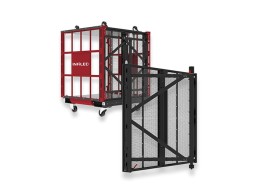
INFiLED launches its new outdoor rental solution, TITAN-X. As part of the INFiLED DNA, the idea behind the TITAN-X innovation is to create a long-lasting outdoor LED rental screen with excellent transparency yet remains strong.
INFiLED CEO, Michael Hao commented: “To accomplish this challenging task, we built an international R&D team of 15 engineers from both Europe and China, who after seven months of dedication to this project, finally completed TITAN-X. The beauty of TITAN-X lies in how our team combined high transparency with a super load capacity into one.”
He added: “The average outdoor stage screen construction needs a stage truss for every 2 meters of screen to protect against wind over 20m/s for two-tiers. However, TITAN-X needs a stage truss for every 9.6 meters of eight tiers, thanks to an elaborate built-in foldable subframe inside the TITAN frame. Moreover, the overall system remains around 22kg/m2 making it lightweight and strong which is absolutely mind-blowing!”
TITAN-X high-transparency large-format outdoor touring LED solution features a pixel pith of 8.3mm and high transparency rate of 70% offering outstanding display performance for state-of-the-art stage visual effects. Each cabinet offers extensive load capacity and advanced overall stability due to its unique rear triangular foldable wind bracing system which can resist wind speeds of 20m/sec for outdoor events, while the screen can reach heights of up to 24m. The extra-large 1,200mm by 1,200mm cabinets feature a unique design with an innovative lifting operation from the dolly that quickens installation time to a new level.
Its dedicated dolly system allows for easy transportation and makes installation more efficient. The foldable bracing design of each cabinet saves on storage space and even with extra accessories, the cabinets can still be transported in their dollies. Featuring a high brightness of 5000nits and IP65 protection, it’s a reliable and robust choice under any light and weather conditions. The TITAN-X can be customized and assembled at angles of ±15 giving it the ability to adapt to unlimited stage and creative design requirements such as a curve effect.
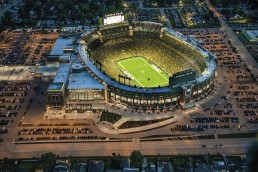
Lambeau Field
Crestron, a global leader in commercial lighting control, has become a lighting control vendor for Lambeau Field, the iconic home stadium of the Green Bay Packers in Green Bay, Wisconsin. After an extensive evaluation, Crestron was selected to replace and upgrade the stadium-wide controls. The Crestron installation is a cohesive lighting automation system that allows stadium management to easily update lighting preferences and closely monitor and control energy expenditures for the facility.
In operation since 1957, Lambeau Field is one of the most legendary and longstanding sporting venues in the United States. The stadium underwent a significant renovation in 2001 and has added several upgrades and expansions since then. As a result of these two decades of changes, there were over 12 disparate lighting control systems from different manufacturers that were not fully integrated. This sparked the search for a single technology provider that could unify and standardise solutions into one ecosystem.
https://issuu.com/mondiale/docs/mdst18_digitallr/48
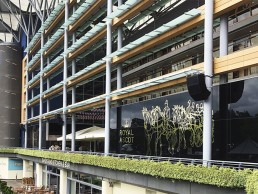
Bose Professional Ensures a Superior Audio Experience During Royal Ascot 2021
As the Official Technology Supplier-Sound for Ascot Racecourse, Bose Professional technology was part of this year’s exciting Royal Ascot. The audio solution is truly bespoke, consisting of almost 1,000 surface-mount and in-ceiling loudspeakers throughout the racecourse, promenade and other public areas, including 250 private boxes — more than any other venue in Europe.
Founded on a bedrock of tradition more than 300 years in the making, racing first took place in 1711 at the behest of Queen Anne in the Berkshire countryside approximately six miles from Windsor Castle. With more than 600,000 visitors each year during the usual 26 days of racing, Ascot Racecourse reimagined what a world-class race day experience should be, leveraging the innovative audio technology and expertise found with Bose Professional.
“Bose innovation has allowed us to take people on a journey,” stated Craig Staddon, head of sales at Ascot. “Since we began working with Bose, our guests repeatedly tell us the audio has added another dimension to the races — it simply brings the racing experience alive more.”
Consisting of ArenaMatch AM10, AM20 and AM40 loudspeakers as the basis for the system, the audio solution integrates Panaray MA12EX modular columnar array loudspeakers, ArenaMatch Utility AMU108 and AMU208, and a variety of FreeSpace loudspeakers all throughout the entire venue. The solution is powered by a network of PowerMatch PM8500N power amplifiers containing specific Dante® cards.
“Ascot has very specific needs. The core of the Ascot experience culminates in 11–12 minutes, yet guests are here for upwards of six hours or more,” shared George Vaughan, head of technology at Ascot. “For us, audio is a key element that goes beyond simple commentary needs. It’s about everything from announcing race details, upcoming event information and the distribution of music that keeps our guests entertained throughout the entire experience. And with Bose, their experience is ideal.”
San Francisco 49ers Unveil Brand-New Cache Creek Club
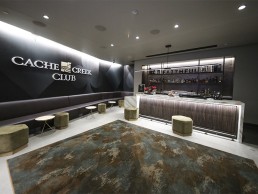
The San Francisco 49ers unveiled a brand-new Levi’s Stadium club space driven by the team’s partnership with Cache Creek Casino Resort and the Yocha Dehe Wintun Nation. The premium Cache Creek Club was showcased today at a press conference and ribbon-cutting ceremony featuring 49ers President Al Guido, 49ers Chief Revenue Officer Brent Schoeb, Yocha Dehe Wintun Nation Tribal Chairman Anthony Roberts, and Cache Creek Casino Resort General Manager/Chief Operations Officer Kari Stout-Smith.
The 1,400-square-foot club is located inside the northwest field tunnel between the visiting team locker room and the field entrance, providing exclusive views of the players entering and exiting the field. Additional features include a full-service bar and TVs throughout. The space also showcases Cache Creek Casino Resort branding accents and a decorative custom blackjack table. Access to the club is an exclusive benefit for ticket holders of north-end zone field seats.
“Of the many commonalities between the 49ers and Cache Creek Casino Resort, our shared success during the 1980s is where we really align. Our franchise soared by winning three Super Bowls, while Cache Creek was first founded as a bingo hall, soon to expand into one of Northern California’s largest casino resorts,” said 49ers Chief Revenue Officer Brent Schoeb. “As we enter our 75th Anniversary season, Cache Creek Casino Resort is the perfect partner to join us in strengthening our future by honouring our past.”
Beginning September 2019, the organizations embarked on a multi-year agreement that made Cache Creek Casino Resort and the Yocha Dehe Wintun Nation a proud partner of the 49ers. Now, almost two years later, the new Cache Creek Club builds upon an already thriving partnership that is highlighted by a new promotion that will select a pair of lucky fans at each game to receive an upgrade to the Cache Creek Club and field seats for that game.
“You can’t beat the view at Cache Creek Casino Resort, where our guests relax and play within sight of the Yocha Dehe Wintun Nation’s working vineyards and olive orchards, nestled in the breathtaking Capay Valley,” said Kari Stout-Smith, Cache Creek Casino Resort General Manager and Chief Operating Officer. “For football fans, the behind-the-scenes, tunnel view of NFL players on game day from the Cache Creek Club here at Levi’s stadium will be just as thrilling.”
“It’s a testament to the wisdom of our older generations and the vision of our current leadership team that the Yocha Dehe Wintun Nation has persevered to be here today, partnering with the 49ers to create this space on one of the biggest stages in the world,” said Yocha Dehe Wintun Nation Tribal Chairman Anthony Roberts. “At the same time, it makes complete sense. After all, Levi’s Stadium and Cache Creek Casino Resort are both places where winners play.”
This announcement and club unveiling adds to an exciting year for Cache Creek Casino Resort, as they recently completed an expansion to their South Tower at their property in Brooks, California – located 40 miles northwest of Sacramento and 80 miles from the San Francisco Bay Area. Complete with 459 new rooms and suites, a stunning new event/concert space, and luxurious pools, the refreshed resort stands as a premier entertainment destination in Northern California. Cache Creek Casino Resort is scheduled to host a grand opening event in September, featuring a pre-game watch party ahead of the 49ers regular-season opener against the Detroit Lions. With the Niner Noise drumline and Gold Rush cheerleaders in attendance, and special giveaways planned, the event is sure to make for an exciting atmosphere for the Faithful.
Opening day for the Cache Creek Club at Levi’s Stadium will be on Saturday, August 14th when the 49ers host the Kansas City Chiefs during Week 1 of the NFL preseason.
Marshall Cameras Enhance Kent State University's Esports Live Streams
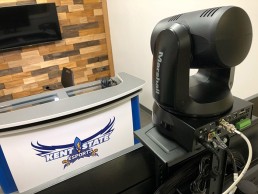
Kent State University originally launched its eSports program in the Fall of 1998 and it was the beginning of something big. Today, with a community of over 400 students and growing daily, the University currently competes at a varsity level in the Overwatch, League of Legends, Rocket League and Hearthstone competitions. Looking to enhance live streams by capturing athlete reactions and interactions with other players and team members, Jason Forbes, broadcast engineer at Kent State University, Teleproductions turned to the miniature CV503 POV and full featured CV730 PTZ cameras from Marshall Electronics.
The University was already very familiar with Marshall, as its cameras are used throughout the campus for some of its traditional sports and as observation cameras for classrooms and labs. The design and integration of Kent State’s 12-seat V-style arena gaming space was done entirely in-house with an assist from Heartland Video, which provided most of the video production gear. The use of Marshall’s ultra-compact cameras allowed the team to enhance its live streams to Twitch without causing any player distractions or interference.
“To capture athlete reactions, we placed one CV503 POV camera at each of the 12 player stations as gamer cams,” says Forbes. “We also installed two CV730 PTZ cameras in the arena space to shoot wider shots of the players, and then an additional CV730 in the casters studio. The control room houses the observer computers as well as the Marshall controllers.”
The Marshall CV503 offers 1920x1080p video at up to 60 fps in a sturdy, durable form factor, and straightforward design. Marshall’s best-of-class CV730 features a 30x optical zoom block and flexible 12GSDI, HDMI, IP simultaneous outputs with crystal clear UHD images up to 3840x2160p at 60fps. Remote adjust and match settings include iris, zoom, pan/tilt, white balance, exposure, pedestal, and more, over long distances to the control booth or during setup with capable auto settings that track environmental fluctuations.
Marshall’s professional grade VS-PTC-IP controller is used to maneuver the CV730 PTZ cameras into position and between presets as well as paint and fine tune as needed. The CV-RCP-V2 Touchscreen CCU is used to shade, adjust and match the CV503 POVs remotely from the control room.
“The ease of use of the Marshall cameras is amazing,” says Forbes. “The menus are self-explanatory, which is very important as our productions are primarily student-run. In addition, having PoE has made our life so much easier, as I did not have to bring an electrician in to get the cameras powered up. The other important piece of the puzzle is the price point. Operating on a university budget, Marshall’s price is spot on. The cameras have proven themselves to be reliable. After the initial set-up, our players don’t even know they are there.”
Kent State’s eSports program has a focus on student welfare. Students on the varsity team must be enrolled full-time and maintain a minimum 2.5 grade point average. They also have mandatory tutoring and advising to ensure they are progressing toward a degree. The Kent State eSports program collaborates with the university’s Student Wellness and Recreation Center to determine an exercise plan, a nutritionist, and a sports psychologist to work on the physical, nutritional and mental elements of the student players. In addition, faculty members from across various departments and colleges on campus are engaging in research around eSports, ranging from the psychological profile of top-tier players to the way human personalities connect in a virtual space.
RCF Hits a Home Run at Yokohama Stadium for the 2021 Olympic Games
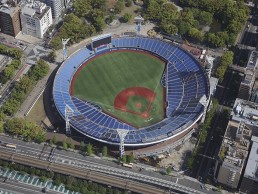
Yokohama Stadium selects RCF as its sound reinforcement system for both sports and entertainment events. The stadium is one of the venues of the Summer Olympics and one of the most important sports facilities in Japan. It is, in fact, the largest venue in Kantō region of its kind, primarily used for baseball as the home field of the Yokohama DeNA BayStars. International artists also performed at the Stadium, such as Santana, David Bowie, Madonna, and Michael Jackson.
Yokohama Stadium started in 1876 as the common ground for cricket competitions. In 1929, it was reconstructed as a baseball stadium with 15,000 seats to host the country's most popular participatory and spectator sport. Then in 1978, Yokohama Stadium was rebuilt as the first multi-purpose Stadium in Japan, officially named Yokohama Stadium.
After a complete renovation started in 2018, Yokohama Stadium was selected as the venue for 2020 Tokyo Olympics and Paralympics, postponed to the following year to better manage the Covid-19 pandemic. Developers at Yokohama Stadium have added additional seating with the number of seats increased to just over 34,000. It is now known as the official venue of the baseball competitions for the 2021 Olympics. Baseball will be featured at the Summer Olympics in Tokyo for the first time since the Summer Olympics in 2008.
The RCF speaker system serves as a PAGA system (public address and general alarm system). The main systems, consisting of two arrays of four TTL 33-WP each, are placed on six light poles around the Stadium (total 48 speakers). Fly bars are fixed to custom built titanium brackets. Yokohama Stadium has expanded seating on each side, with 4 x P4228 placed on the top edge of the left wing and 5 units on the right wing. Additionally, 9 x P3108 and 1 x P4228 are placed under-balcony to cover the seats behind the plate. Lastly, 1 x P2110-T and 1 x P8015-S are installed to cover the dugout.
Taketoshi Kobayashi, Lead engineer of Onkyo Tokki commented: “In the renovation of Yokohama Stadium, our mission was to achieve both excellent quality for entertainment as a ballpark and clarity as a broadcasting facility.”
“TTL 33-WP and other RCF loudspeakers were essential to maintain clarity of the sound without losing the volume of the lower part of the spectrum, contrary to the situation where the volume in the low frequency is lost due to prioritizing clarity, which is often seen in outdoor facilities. I was impressed by RCF’s intelligibility.
The system is perfect for the size and shape of the facility with its skillful design, easy tuning of the speaker, orientation, and level balance. In particular, sound from the opposite side of the field is well controlled. Currently, there are lots of sports facilities with line arrays installed. Still, the sound is very well controlled here, and this also contributes to the improvement of clarity and sound quality.” He continues, “the support of the RCF team during the process was excellent. Quick response to changes in rigging points and model selection was an essential factor in the success of this project.”