

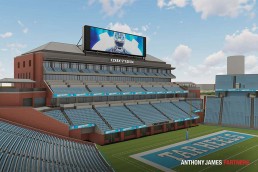
Daktronics elevate game-day experience at Kenan Stadium
Delivering a new game-day experience to Tar Heels fans at Kenan Stadium, Daktronics, partnered with the University of North Carolina (UNC) in Chapel Hill to manufacture and install 11 LED displays totalling more than 10,000 square feet – roughly one square foot for every five seats in the stadium – and more than 14.7 million LEDs. Two main video displays mirror each other at the ends of the stadium, while sideline ribbon, west end super ribbon and east end ribbon displays round out the LED installation taking place in 2026.
"We are excited to recognise 100 seasons of Kenan Stadium by honouring the program's alumni, elevating the fan experience from pregame to postgame and enhancing our historic facility,” said Steve Newmark, executive associate director of athletics at UNC. “As we cheer on the 2026 Tar Heels, we will also commemorate the past while continuing to build toward the future."
Main Video Display Details
Two main video displays will be installed, one on the east end and one on the west end. Each will measure 31.5 feet high by 106.5 feet wide and feature 8-millimeter pixel spacing to deliver crisp, clear imagery with wide-angle visibility to appeal to fans in every seat of Kenan Stadium.
“We’re honored to be working with the University of North Carolina on this video display project,” said Corey Williams, Daktronics sales representative. “The new displays will enhance an already amazing game-day experience for Tarheel fans, and to be a part of the 100th year of football at Kenan Stadium is very special.”
These main video displays are capable of variable content zoning, allowing the school to feature the right mix of content to ensure an exciting, memorable game-day experience. Each can display one large image or multiple zones of content ranging from live video and instant replays to game information and statistics to graphics and animations. They can also highlight sponsors and partners with messaging and branding.
Ribbon Display Details
Nine ribbon boards will be installed around the seating bowl of the stadium. This includes two west end super ribbons, a north and a south sideline ribbon, two east tunnel ribbons, two east lower ribbons, and one east upper ribbon. The west super ribbons are approximately 4 feet high, while all the other ribbons are roughly 2 feet high.
Each ribbon display will also feature 8-millimeter pixel spacing for excellent clarity and contrast. Combined, these ribbons add 1,450 linear feet of digital displays to supplement content and statistics on the main displays and to highlight sponsors around the seating bowl of Kenan Stadium.
All of these displays feature Daktronics’ industry-leading environmental protection, ensuring each operates as expected in the North Carolina outdoors.

Hellas Verona select Gensler for new stadium project
Hellas Verona FC has announced that it has selected Gensler, one of the world’s leading architecture and design firms, for the design of the Club’s new, state-of-the-art stadium in the area currently occupied by the Marcantonio Bentegodi Stadium. This appointment follows the submission of the project feasibility study to the Municipality of Verona in November 2025.
Gensler is internationally recognized for its expertise in architecture, design and the delivery of multi-use sports and entertainment venues. In order to pair this global experience with strong knowledge of the Italian stadium and real estate context, Gensler will work alongside a highly qualified team of professionals, including Sportium and ARUP, under the coordination of Colliers as project manager. Together, the team brings a combination of international design excellence, technical capability and local market expertise.
“This announcement reflects our long-term commitment to the fans, the Club and the city. It represents a significant step toward shaping the future of Hellas Verona by delivering a venue of the highest international standards — a home that our supporters and the entire Verona community can be proud of,” said Dirk Swaneveld, Managing Director at Presidio Investors.
As the project progresses, the Club will actively engage with fans, local residents and businesses through focus groups and surveys, so that the voices of the Verona community can help inform the stadium’s development. While the Club continues to view UEFA Euro 2032 as an exciting opportunity for the city of Verona, the new stadium project is not contingent on the tournament.
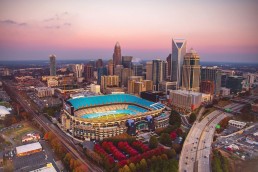
Bank of America Stadium Reports Efficient Game-Day Operations Using Evolv Technology
Evolv Technologies Holdings, Inc., a leading security technology company pioneering AI-based solutions designed to create safer experiences, shares new insights into the operational impact at Bank of America Stadium driven by ongoing use of Evolv Express® for efficient, high-volume fan entry security screening. As an early adopter of Evolv Express, purchasing Gen1 in 2021, the stadium recently announced their renewal and upgrade to Evolv Express Gen2 and the addition of Evolv eXpedite™ bag screening for employee entrances.
Bank of America Stadium hosts over 40 large-scale events annually, screening tens of thousands of fans at each event. According to Evolv Insights® data over the first four years of deployment, the venue achieved an average 93% clear rate* at fan entrances - equating to only 7 out of every 100 fans alerting - allowing most guests to move through screening without secondary checks. Thousands of fans are screened in minutes during peak ingress, while security teams have also detected and tagged thousands of potential threat items since the deployment of Evolv Express.
“With a clear rate around 93%, most of our fans are able to walk straight through without interruption,” said John Furr, Director of Safety and Security for Tepper Sports & Entertainment. “That makes a big difference during peak entry, where speed and visibility both matter.”
“Our customers are increasingly focused on understanding how systems perform in real-world, high-volume environments,” said John Baier, Vice President of Sports & Entertainment at Evolv. “This data highlights how venues can combine throughput and operational visibility to support both security and the fan experience.”
The results highlight a broader shift across sports and entertainment venues toward measuring security performance at scale, with a growing focus on throughput, operational visibility, and real-time adaptability. As attendance volumes remain high and fan expectations continue to rise, venues are increasingly looking for solutions that can support both security priorities and the overall arrival experience.
Beyond pro football, Evolv serves a large share of the teams and venues in the other major North American professional leagues with nearly 100 sports organizations around the world in total. Evolv also holds official designations with more than fifty teams and venues. More broadly, Evolv has more than 1,200 customers in industries ranging from healthcare to education to industrial workplaces as well as iconic venues and marquee events worldwide.
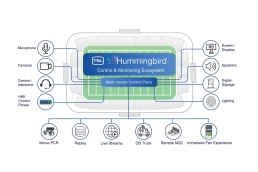
Why interoperability is the real MVP of sports and entertainment venues
By Ian Godfrey, CTO, TSL
For major stadia and arena venues, the audience experience is defined as much by spectacle as by sport. And meeting those ever-increasing levels of expectation depends on complex technology stacks working seamlessly in the background.
Modern venues are no longer just event spaces; they are now complex, multi-layered production environments. In many ways they resemble full-scale broadcast facilities that need to be capable of supporting everything from live sports and concerts to global live media distribution, often within the same operational window.
As a result, the challenge facing venue operators is no longer simply deploying more technology, but instead, how to make increasingly diverse and distributed systems work together as a coherent whole.
Managing increasing in-venue complexity
Venue AV and technical teams are now managing a vast ecosystem of technologies: broadcast infrastructure (in-venue, connecting to OB providers and specific feeds for tenants/franchises/artists’ live streams etc), AV systems, lighting, graphics engines, replay platforms, digital signage networks are only the start. Systems are sourced from different vendors, each with its own control protocols, interfaces, and operational logic.
Historically, audio and video domains were tightly coupled, often delivered as part of vertically integrated systems where signal transport and control logic were closely linked. That model worked when venues supported a narrower range of use cases and technologies evolved at a slower, more linear pace.
Read the full article from ISSUE 47 below:
https://issuu.com/mondiale/docs/mdst47_digitallr/66
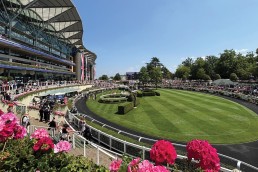
From Transactional to Experiential: The Future of F&B in Global Stadia
Russell Partnership Collection
Founded in 1989 with a vision to create a positive difference across the food and hospitality sector, over three decades later, we’re proud to have lead, developed strategy and operated with some of the world’s largest global events, including the London 2012 Olympic Games, Sochi 2014 Winter Olympics, 2015 and 2019 Rugby World Cups, Expo 2020 Dubai and the 2018, 2022 and 2026 Commonwealth Games.
Today, we continue to deliver strategic consultancy and operational support globally, across multiple sectors including business, government, higher education, major events, conference and hotels. We have the privilege of working worldwide with clients and operators across stadia and events including Silverstone F1 British Grand Prix, Wembley Stadium, the R&A Open Championship, Royal Ascot, LIV Golf and the Jockey Club to name a few.
As independent industry specialists, our services range from developing long-term F&B strategy / masterplans to delivering future partner procurement processes. Contract evaluation, commercial modelling and operational efficiencies are also key services we deliver for clients as venues develop longer term partnerships with operators and maximise the commercial and revenue impact to the bottom line.
How has F&B / hospitality industry changed post pandemic?
Since the pandemic, food, beverage and hospitality has shifted from being a background amenity to becoming a centre-stage driver of the modern event experience. Whether at a sports game, concert, conference, or festival, what guests eat, and drink plays a defining role in how they perceive and remember an event. Today, fans and attendees expect more than entertainment, they want memorable, meaningful, and high-quality culinary moments that complement the event itself. As a result, stadiums, arenas, and live venues worldwide are investing heavily in elevated food and beverage offerings that shape how people feel, engage, and return.
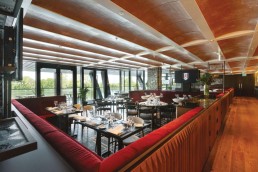
Arenas as Cities: The Rise of the 365-Day Hospitality
By George Vaughan, The Digital Line
If you build it, they will come.
For decades, stadium economics followed this simple, cinema inspired logic. Create a meeting place for fans of sports or music to congregate and they will gravitate to it. But in today’s landscape, that assumption no longer holds. Building the venue is only the starting point; the real challenge is giving people a reason to return when there is no event at all.
In today’s world, a modern stadium no longer sleeps. Lights remain on in its restaurants, visitors move through its lobbies, and office workers sip coffee in spaces that, just days before, were filled with thousands of chanting fans. The transformation is subtle but profound: the stadium has evolved from a periodic venue into a permanent destination.
What once seemed unusual now defines the direction of the industry. Increasingly, venues operate not as single-purpose sports facilities, but as miniature urban ecosystems - places designed to generate economic, social and cultural activity every day of the year. The result is the rise of the “365-day hospitality model,” where the success of a stadium is defined not only by what happens on a matchday, but also by what happens in between.
From Event Peaks to Everyday Footfall
For much of the 20th century, stadiums followed a simple rhythm. They opened for matches or concerts, produced intense but short-lived bursts of revenue and then sat largely dormant. While this model was sufficient in an era of lower construction costs and fewer expectations, it is increasingly difficult to justify today. Modern venues often cost hundreds of millions, if not billions to build and maintain.
More and more the reality is that idle time is no longer economically viable.
In response, developers and operators have reimagined the stadium as a year-round destination. Rather than relying solely on ticket sales and event-day spending, they seek to maximise daily footfall. Visitors no longer need a match ticket to justify a trip. A family might come for dinner, a business might host a conference, or tourists might book a stadium tour as part of a broader itinerary.
This marks a fundamental transition: from attendance-driven revenue to destination-driven revenue. In this new model, stadiums compete not only with other sports venues, but with restaurants, hotels and entertainment districts across the city.
Read the full article from ISSUE 47 below:
https://issuu.com/mondiale/docs/mdst47_digitallr/62
Behind the Screens: Powering Live Sports Production
From broadcast control rooms to distributed production workflows, modern live sports rely on seamless connectivity and real-time control. The journey begins in the broadcast control room where the expectations of live sports are defined, before those same environments and challenges are recreated inside Adder’s Customer Experience Center – a space designed to explore and solve the complexities of modern broadcast connectivity.
Transitions are a defining part of the stadium experience. Whether moving from the outer concourse towards the rising roar of the crowd, or walking through the tunnel to the bowl of the arena. These moments are carefully orchestrated to build anticipation and place the action center stage.
The lighting shifts, the sound changes. Conversations become sharper and more focused. For players stepping onto the field or broadcast teams taking their positions in the control room, this moment marks the transition from preparation to performance.
On match day, the tunnel is where anticipation builds and where the scale of what lies ahead begins to take shape.
As the corridor widens, the environment begins to shift.
And what emerges is not a conventional sports facility, but another kind of venue. One defined by high performance displays, interconnected ecosystems and a curated suite of technology partners powering the environment.
Where Technology Takes Center Stage
Environments like these have become essential to the sports broadcast operation. Screens dominate the space, commanding attention similar to a stadium scoreboard. Beneath them lie operator consoles forming the wider technical ecosystem, designed to manage the feeds and workflows.
Operators are rarely working with a single system. With production workflows distributed across multiple machines often located in different rooms or technical areas, accessing information quickly and reliably becomes critical. Maintaining complete control, responsiveness and total flexibility across systems is essential to keeping production running smoothly.
Read the full article from ISSUE 47 below:
https://issuu.com/mondiale/docs/mdst47_digitallr/72

SeatGeek power ticketing at Cincinnati Open & Credit One Charleston Open
SeatGeek, the high-growth technology platform transforming the live event experience for fans, teams and venues, today announced a new partnership with Beemok Sports & Entertainment (BSE) to serve as the official ticketing partner for the Cincinnati Open and the Credit One Charleston Open, two of the most celebrated events in professional tennis. The partnership also includes full ticketing exclusivity for Credit One Stadium, Charleston’s premier live event entertainment venue.
The partnership reflects a shared commitment to delivering a best-in-class fan experience at every touchpoint and represents a natural next step for BSE as it continues to elevate and operate its portfolio under a unified vision. By implementing SeatGeek’s modern ticketing technology across both properties, BSE is investing in tools and infrastructure designed to meet the expectations of today and tomorrow’s fans.
The Cincinnati Open, the longest-running US ATP Masters 1000 and WTA 1000 tennis tournament still played in its city of origin, recently underwent a $260 million campus renovation and was named US ATP & WTA Masters 1000 Tournament of the Year. The Credit One Charleston Open, the largest women's-only tennis tournament in North America, has been named WTA 500 Tournament of the Year for four consecutive years.
Beyond tennis, the partnership extends to the broader entertainment calendar at Credit One Stadium, which hosted nine days of world-class tennis and 22 concerts last year. Momentum is already building for 2026, with artists including Pitbull, Jelly Roll and Zac Brown Band on the slate.
“Our goal is to deliver a consistent, high-quality experience for fans across every event and venue we operate,” said Bob Moran, President of Beemok Sports & Entertainment. “SeatGeek gives us the technology and flexibility to bring our portfolio together in a more seamless way while continuing to elevate the standard for live sports and entertainment.”
Fans attending both tournaments and events at Credit One Stadium will benefit from SeatGeek’s intuitive, mobile-first ticketing experience. The platform makes it easy to discover events, compare seats using Deal Score, preview views before purchase and manage or transfer tickets in just a few taps. The platform also allows venues to highlight premium seating and hospitality options, so fans can find and unlock the full range of experiences each event has to offer. Day-of seamless mobile entry means less friction and more time enjoying the experience.
Behind the scenes, SeatGeek will serve as an intelligent operating system, connecting data across both properties to help each event sell smarter, run smoother and build deeper connections with fans over time.
"Beemok Sports & Entertainment has built something special, two of the most celebrated events in tennis along with world-class concert and event venues, operating with a shared vision and an uncompromising standard for the fan experience. That's exactly the kind of partner SeatGeek is built for,” said Russ D'Souza, Co-founder and President of Supply at SeatGeek. “Bringing our platform and intelligence to both properties gives us a unique opportunity to demonstrate what modern ticketing technology can do at the highest level of the sport.”
The partnership will roll out across BSE’s portfolio in phases. In July, SeatGeek will begin powering tickets for the Credit One Charleston Open, followed by the broader entertainment calendar at Credit One Stadium in January 2027. The Cincinnati Open and events at Lindner Family Tennis Center will transition to SeatGeek in January 2028, completing the full integration across both properties.
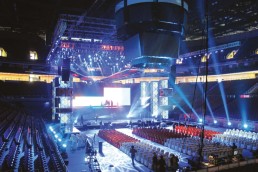
Star Live: Retrofitting Mothergrids In Legacy Venues
When the roof is the limiting factor: Retrofitting Mothergrids in Legacy venues
Today’s multi-use venues are under increasing pressure to maximise event density. Calendar gaps are lost revenue. Rapid changeover is no longer a bonus – it is expected.
But for many established venues, the constraint is not the pitch, the bowl, or the hospitality offer. It’s what’s above the stage area.
In the current touring landscape, roof capacity and ease of rigging are often the first criteria assessed during venue selection. If a venue cannot confidently demonstrate sufficient rigging capability in terms of capacity and feasibility, it may struggle to remain in contention for major touring productions.
Legacy assumptions vs modern demand
Many venue roofs were never designed with today’s touring demands in mind. In many cases, they were conceived purely for sport, with little consideration for concert rigging; in others, they were engineered for live events, but at a time when production loads were far lighter and less complex. Contemporary tours now bring together large-format LED walls, extensive dynamic lighting arrangements, powerful line array audio systems and broadcast infrastructure, creating loads that are not only heavier but far more concentrated.
In practical terms, this demands rigging systems that can transfer significant forces efficiently back to the primary structure. In many large sports venues, available strong points can be up to 12 metres (40 ft) apart and, in some cases, difficult to access. The challenge is no longer simply one of weight, but of how that load is safely and effectively transferred.
Read the full article from ISSUE 47 below:
https://issuu.com/mondiale/docs/mdst47_digitallr/6
Grass Valley La Liga Round-Up
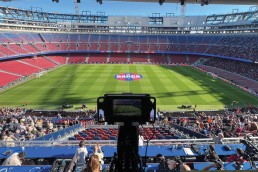
Grass Valley has recently launched and completed a major live production deployment with NVP, a leading European media company specializing in live sports production, delivering a significant leap forward in image quality, production flexibility, and technological innovation for LALIGA broadcasts.
This deployment responds to LALIGA’s RFP, which prioritized maintaining leadership in broadcast production through modern technology and scalable workflows. In meeting that requirement, NVP and Grass Valley have implemented a camera and production system designed to enhance visual quality and support the scale of live match coverage.
The project supports the production of more than 760 matches per season across Spain’s top professional football divisions (LALIGA EA Sports and LALIGA HYPERMOTION) and marks a new benchmark for live football production at scale.
Founded in 2007, NVP has built a strong reputation delivering large-scale international sports productions for global broadcasters and production partners. Building on a long-standing collaboration, NVP developed its proposal in line with LALIGA’s RFP, focused on advancing innovation and premium image quality. With that objective, NVP selected Grass Valley to deliver camera systems and workflows designed to scale and evolve over time.
Read the full article from ISSUE 47 below:
https://issuu.com/mondiale/docs/mdst47_digitallr/52