

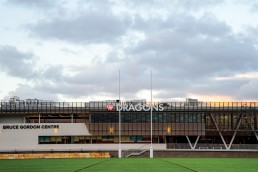
Populous-designed Bruce Gordon Centre officially opens
Australian National Rugby League (NRL) club the St George Illawarra Dragons has officially opened the Populous-designed Bruce Gordon Centre, marking a defining moment in the club’s history and a major investment in rugby league, community sport and high performance across the Illawarra.
Prime Minister Anthony Albanese, New South Wales Minister for Sport Steve Kamper and Federal Minister for Communications and Sport Anika Wells were among dignitaries on hand for the official opening at the University of Wollongong’s Innovation Campus.
The Bruce Gordon Centre unites the Dragons’ football, administration, community and high-performance operations in one purpose-built home, providing world-class facilities for the club’s NRL, NRLW, pathways and community programs.
The facility features two full-sized training fields, an elite gym and performance space, medical and rehabilitation areas, sports science facilities, administrative offices, educational and community spaces, and equitable facilities for male and female athletes.
Populous Senior Principal | APAC Director Al Baxter said: “The project has created a world class precinct and facility that will deliver high performance, administration and community facilities for elite, pathways and community programs. It will enhance the partnership between the Dragons and University of Wollongong across education, research and innovation and will harness the community power of sport to expand health and wellbeing programs and other community initiatives.”
“The perimeter design of the building pays homage to the legendary Dragons “V” with the incorporation of large V-shaped steel columns that support the structure. The Red V jersey is one of Australian sport’s most iconic symbols of excellence and celebrated its centenary in 2021. The V shape continues to be a powerful symbol for the club, and the building’s design conveys the importance of this symbolism throughout the structure.”
Dragons Chairman Andrew Lancaster said the opening represented one of the most important infrastructure milestones in the club’s history.
“Today marks a significant moment in the history of the St George Illawarra Dragons,” Lancaster said.
“The Bruce Gordon Centre gives our club a home that matches our ambition — not only for our elite teams but also for our pathways, staff, partners, supporters, and our community programs."
“It will help us develop the next generation of rugby league talent, provide equitable facilities for our NRL and NRLW players, and create more opportunities for young people, particularly women and girls, to see a genuine future for themselves in sport."
Located at the University of Wollongong’s Innovation Campus, the Bruce Gordon Centre will also strengthen the club’s relationship with UOW and support future collaboration across education, research, sport science, community engagement and student opportunities.

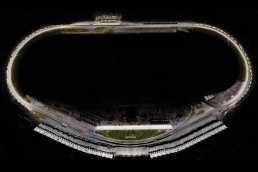
Daytona International Speedway to Install State-of-the-Art Musco LED Lighting System
Daytona International Speedway has announced a transformative, venue-wide LED lighting project that will introduce the next generation of lighting technology to the “World Center of Racing,” marking the next step in how motorsports are experienced by fans, competitors and viewers around the world.
In collaboration with Musco, Daytona International Speedway will install LED lighting across all existing oval track high mast pole-mounted fixtures, the road course, infield, pit box and emergency lighting systems. The project will also feature LED RGB accent lighting on track light poles synchronized with the caution light system, as well as uplighting for the upper-level underside of grandstand seating—creating dynamic, visually engaging moments throughout race events.
“The new LED lighting system at Daytona International Speedway underscores NASCAR’s continued commitment to reinvest in its facilities, enhancing the overall experience for fans attending events at Daytona as well as those watching around the world,” said Ben Kennedy, Chief Operating Officer, NASCAR. “The project will create new, visually compelling moments that drive fan engagement, elevate partner visibility and generate excitement across the sport.”
This comprehensive upgrade represents more than a modernization—it is a generational leap that reinforces Daytona International Speedway’s legacy of innovation while positioning the iconic venue to lead motorsports into its next chapter.
“Daytona International Speedway has long set the standard for motorsports venues, and this project ensures we continue to do so for the next generation of race fans,” said Frank Kelleher, President, Daytona International Speedway. “From enhanced visibility for drivers to a more immersive atmosphere for fans in the stands and watching at home, we are proud to partner with Musco for this new LED lighting system that will transform the racing experience.”
The new Musco LED lighting system will deliver brighter, more consistent illumination across the facility, significantly improving visibility for competitors and race teams, enhancing the in-person fan experience, and elevating broadcast quality for global audiences. Additionally, the new lights are expected to reduce energy consumption by approximately 50 percent, supporting NASCAR Impact’s broader goal of achieving net zero operating emissions by 2035.
“We’re excited to partner with NASCAR to relight the iconic Daytona International Speedway,” said Musco CEO Jeff Rogers. “We installed the original system in 1998 and appreciate our long-standing relationship to deliver exciting new LED solutions for drivers, television, and fans.”
The project officially began in April and is expected to be completed in Jan. 2027.
Daytona International Speedway Continues Legacy of Innovation
Since breaking ground in Nov. 1957 and opening with the inaugural DAYTONA 500 in Feb. 1959, Daytona International Speedway has been synonymous with NASCAR’s most defining moments. The track once again raised the bar in 1998 when it installed lights, becoming the largest lighted outdoor sports facility in North America at the time, with the Coke Zero Sugar 400 serving as its first night race.
From 2013 to 2016, the $400 million “Daytona Rising” redevelopment reimagined the facility as a world-class motorsports stadium. The new LED lighting project continues that tradition of reinvestment, ensuring the venue remains at the forefront of innovation for generations of fans.
Industry-Leading Technology with Musco
Through its partnership with Musco, a global leader in sports lighting for 50 years, Daytona International Speedway will become the largest sports facility in the world to feature Musco’s state-of-the-art LED lighting system—and the first major motorsports facility in North America to do so.
Musco’s lighting solutions, known for innovations in glare reduction and precise light control, are utilized across a wide range of venues, from local fields to premier global sporting events, including NFL and MLB stadiums, NBA and NHL arenas, collegiate facilities, and the Olympic Games.
The addition of RGB lighting—capable of producing more than 16.7 million color combinations—will allow for synchronized lighting effects tied to race action and cautions, creating new opportunities for fan engagement, partner integration and broadcast storytelling.
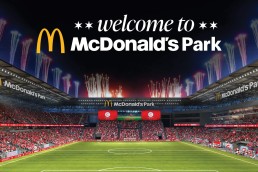
Chicago Fire: Mcdonald's sign landmark stadium sponsorship deal
McDonald’s and Chicago Fire Football Club have announced a historic naming rights partnership that will see the Major League Soccer club’s new $750 million privately-funded stadium named McDonald’s Park, opening in 2028. Located in The 78, a premier riverfront location in the heart of Chicago, McDonald’s Park will serve as a world-class sports and entertainment destination, anchoring year‑round programming and creating a new gathering place for fans, families, and communities.
In its first‑ever naming rights partnership for a major professional sports stadium in the U.S., McDonald’s will play an active role in shaping the experience at McDonald’s Park - from the design of a flagship restaurant to the ability to bring the McDonald’s brand to life through fan experiences, creative elements, and in‑game moments - bringing together sport, food, culture, and community in a way that reflects Chicago and extends far beyond matchdays.
At their core, McDonald’s and the Chicago Fire are rooted in the same belief: joy and belonging bring people together. From everyday moments shared over a meal to the energy of matchday or a concert, both brands connect people across cultures, generations, and neighborhoods.
Designed as a year-round destination, McDonald’s Park will feature – in addition to all Chicago Fire home matches and concerts and special events throughout the year – a permanent McDonald’s flagship restaurant, immersive fan and culinary experiences throughout the stadium, and programming that brings people back for concerts, cultural moments, community events, and celebrations all year long.
“Together, we are creating more than a stadium,” said Chris Kempczinski, Chairman and CEO of McDonald’s. “We are building a place that serves up joy, brings together community, delivers impact, and is designed to serve generations to come.”
“As we take the next step on our journey to build a world class Club, our commitment to Chicago is at the center of everything we do,” said Joe Mansueto, Chicago Fire FC Owner and Chairman. “That’s why McDonald’s is the perfect partner – an iconic global brand with deep Chicago roots and shared values in supporting our community. McDonald’s Park will be the stadium that Chicago deserves.”
Our Promise to Chicago: Expanding Youth Soccer Access Through Chicago Fire Foundation’s P.L.A.Y.S. Program
At the center of the partnership is a landmark commitment to youth soccer access across Chicago.
Beginning in 2027, McDonald’s will serve as the presenting partner of the Chicago Fire’s P.L.A.Y.S. (Participate, Learn, Achieve, Youth, Soccer) Program, supporting a multiyear expansion of free, school‑based soccer programming across Chicago Public Schools – with a priority placed on elementary schools with limited access to the sport.
P.L.A.Y.S. focuses on strengthening academic performance and social/emotional development through a soccer-based curriculum. Today, the program operates in 70 Chicago Public Schools. Through this partnership, McDonald’s and the Chicago Fire have committed to a phased expansion designed to remove barriers to play and dramatically increase access:
- Community impact: Beginning in 2027, the partnership will remove equipment as a barrier to participation by delivering co‑branded Soccer Starter Kits – including balls, goals, cones, and training materials—with the goal of growing to reach more than 280 under‑resourced CPS elementary schools, ensuring each school has the foundational tools needed to introduce and sustain soccer programming.
- By stadium opening (2028): The P.L.A.Y.S. Program footprint will double, expanding from 70 schools to approximately 140 schools (reaching more than 60,000 students, up from 31,000 today), providing free, structured after‑school soccer programming that combines physical activity with social‑emotional learning.
- Long‑term vision: Over the life of the partnership, McDonald’s and the Chicago Fire are committed to expanding P.L.A.Y.S. access to 100% of CPS elementary schools identified with elevated need – representing a four‑fold increase in reach (from 70 to more than 280 schools, and from 31,000 to more than 125,000 students) and one of the most comprehensive free youth soccer initiatives in a major U.S. city.
Local Impact Beyond Matchdays
McDonald’s Park will serve as a hub for community impact extending far beyond the game. Together, McDonald’s and the Chicago Fire will support hands‑on initiatives addressing food insecurity, including an annual meal‑packing and distribution effort hosted at the stadium – bringing together employees, players, and community volunteers to support families in need.
Ronald McDonald House at the Heart of the Partnership
Ronald McDonald House, Premier Partner of the Chicago Fire Foundation, will be a central charitable focus of the partnership, with year‑round integration across matchday and community platforms.
Key elements include:
- Stadium‑wide Round-Up for Ronald McDonald House donation opportunities across concessions.
- A dedicated Ronald McDonald House seating section at McDonald’s Park for families.
- Pre‑match meet‑and‑greets and special experiences for RMH families.
- Annual Family Night, featuring a 50/50 raffle benefitting RMH and on‑field recognition in support of families navigating serious illness.
Over the next two years, fans will be invited into the journey – through design reveals, construction milestones, and behind-the-scenes storytelling that brings McDonald’s Park to life. When McDonald’s Park opens in 2028, it will stand as more than a stadium. It will be a place where Chicago comes together—where soccer sparks joy, community thrives year‑round, and a new generation finds opportunity through play.
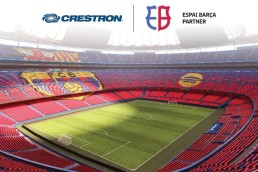
Crestron sign multi-year agreement with FC Barcelona
Crestron Electronics, the global leader in smart workplace and home technology, has become the new Official Smart Hospitality Systems partner for the Espai Barça project. FC Barcelona and the US-based company have signed a multi-year sponsorship agreement to create a high-performance digital ecosystem that will transform Spotify Camp Nou into a connected, flexible and multifunctional environment.
From hospitality boxes and changing rooms to VIP areas, press facilities and operational centres, Crestron technology will be integrated throughout the ground. The company will provide the infrastructure for a single management and control platform capable of instantly transforming stadium spaces for different uses, including events, meetings and matchday experiences. This will allow visitors to move seamlessly between spaces, reduce operational friction and ensure every interaction, whether on matchdays or during corporate events, delivers the same level of excellence. The result will be a Spotify Camp Nou where every space offers a business opportunity and an innovative new way to welcome visitors.
With a capacity of almost 105,000 spectators and a wide range of hospitality areas, Spotify Camp Nou is one of the world’s most advanced and complex venues. In a stadium where the energy and emotion of live events create unforgettable moments, technology plays a key role in enabling streamlined and personalised experiences that bring the infrastructure to life.
Marc Bruix, Global Partnerships Director at FC Barcelona said: “Crestron’s arrival as Official Smart Hospitality Systems Partner is another important step in our ambition to make Espai Barça a global benchmark for innovation, connectivity and premium hospitality. Through this partnership, Spotify Camp Nou will become a smarter, more flexible and multifunctional venue, capable of delivering seamless and world-class experiences for fans, partners and visitors every single day of the year.”
Brad Hintze, Executive Vice President of Global Customer Success and Marketing at Crestron added: “Espai Barça is about building what the modern venue should be. Going beyond the match days of each season, this new venue is primed to be active and lively all 365 days of the year. Crestron is powering the infrastructure behind it by enabling every space to adapt instantly, operate seamlessly, and deliver consistent experiences at massive scale.”
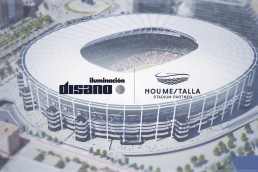
Disano Iluminació becomes stadium partner of Nou Mestalla
The Nou Mestalla continues to move forward in its development with the addition of Disano Iluminación as a Stadium Partner. The multinational company will provide the new stadium of Valencia CF with a new lighting system based on state-of-the-art LED technology that will be installed throughout all interior spaces, meeting the demands of a modern stadium by combining energy efficiency, performance, and seamless architectural integration.
The project has been conceived as a comprehensive solution, taking into account the specific characteristics of Valencia CF’s future stadium. To achieve this, linear lighting fixtures specifically adapted to the dimensions and technical requirements of the Nou Mestalla have been implemented, enabling uniform and comfortable lighting across all non-seating and non-pitch areas, particularly in transit zones and operational spaces.
In key areas such as locker rooms and interior corridors — where players carry out their warm-up routines before stepping onto the pitch — the lighting has been designed to support these activities, ensuring optimal conditions for players and coaching staff. Meanwhile, in public areas and premium hospitality zones, the system will help enhance the spectator experience, reinforcing the image of the Nou Mestalla as a modern, world-class venue.
In this project, Disano Iluminación acts as a strategic partner of Valencia CF, providing solutions focused on reliability, durability, and energy efficiency. Its involvement guarantees a system prepared to meet the demands of an environment where precision and performance are essential.
With this agreement, the Nou Mestalla continues to establish itself as a stadium aligned with current standards, including in the field of lighting, with a strong commitment to innovation and sustainability.
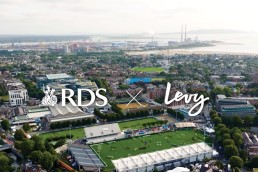
RDS & Levy to transform hospitality at Ireland’s largest multi-purpose venue
The Royal Dublin Society (RDS) has announced a new strategic partnership with Levy Ireland, marking a key milestone in the continued transformation of Ireland’s largest multi-purpose venue.
Set across its 43-acre Ballsbridge campus, the RDS is entering a new phase of development, anchored by the redevelopment of the Laya Arena, a state-of-the-art venue designed to bring visitors, fans, and guests closer to world-class experiences.
Leveraging its expertise in sport, hospitality, conferences and events, Levy Ireland will lead all food and beverage operations across the RDS, delivering a fully integrated hospitality offering across sport, live entertainment, conferences, exhibitions, and flagship events including the Dublin Horse Show.
As part of its commitment to sustainability, Levy Ireland is removing all air-freighted fruit and vegetables, prioritising locally sourced ingredients to support Irish farmers and reduce food miles. Seasonal menus and a ‘Head to Tail’ culinary approach ensure fresh, ethical, and sustainable produce remains central to the RDS visitor experience.
The partnership will deliver premium culinary experiences within the revitalised Laya Arena, featuring a new 6,700+ capacity Anglesea Stand, premium hospitality suites, and the integration of the former St Mary’s Church, now known as The Grand Hall, as a distinctive hospitality space.
With a future capacity of over 20,000, the Laya Arena will significantly enhance the RDS’s ability to host major international sports, large-scale events, and cultural experiences. As the home of Leinster Rugby, it will also host concerts and live entertainment year-round.
Hosting hundreds of events annually, and home to the RDS Foundation’s founding disciplines – Agriculture, Arts, Enterprise, Equestrianism, and Science & Technology – the RDS plays a vital role in Ireland’s economic and cultural life.
This partnership represents a step-change in hospitality delivery, combining premium catering, innovation, and operational excellence to meet the expectations of modern audiences and global event partners.
Paul Kelly, CEO, RDS said: “As Ireland’s largest multi-purpose venue in the heart of Dublin, we are uniquely placed to bring people closer to world-class events and experiences. This partnership marks an important step forward as we continue to evolve the RDS which includes the Laya Arena into a leading destination for sport, culture, business and live entertainment — with Levy bringing global best practice and international innovation to help position the RDS not only as a premier Irish venue, but as a destination of choice for international events and conferences.
I would also like to acknowledge and thank Gather & Gather and Madigan’s, for their long-standing contribution to the RDS.
With Levy Ireland’s proven expertise, we look forward to continuing to elevate hospitality across the RDS — from the Dublin Horse Show to major concerts, conferences, exhibitions, and sporting events.”
Barry Storey, Managing Director, Levy Ireland commented: “We are incredibly proud to be working with the Royal Dublin Society at such a pivotal moment. As the venue enters this new phase, we look forward to bringing our innovation and expertise to elevate the visitor experience.”
“Our food strategy is central to this; by championing a ‘Head to Tail’ culinary philosophy, sourcing our meat from Ireland, and utilising seasonal Irish produce, we are ensuring our menus are as sustainable as they are exceptional. Together, we share a strong commitment to delivering world-class hospitality and supporting the continued cultural and economic impact of the RDS.”
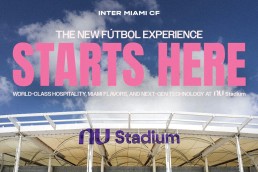
Inter Miami team up with Delaware North for hospitality at NU Stadium
At Inter Miami CF’s Nu Stadium, fans will experience more than a world-class stadium in the heart of Miami. The 26,700-seat venue, centrally located and steps from public transportation, anchors the Miami Freedom Park district and welcomes fans through grand staircases into a 360-degree open-air concourse with sweeping views of downtown Miami. From the moment they arrive, fans are immersed in a food and beverage program that celebrates Miami's chefs, local brands, and diverse culinary culture throughout the stadium.
Developed in collaboration with global hospitality leader Delaware North, the program pairs a curated lineup of local restaurants and culinary partners with innovative service technology designed to minimize wait times and get fans back to the match. Whether grabbing a quick bite from a market-style concession, settling into a premium club experience, or exploring one of the stadium's world-class hospitality spaces, every guest will find something that feels unmistakably Miami.
“Miami’s culinary scene is as diverse and vibrant as the city itself, and that’s exactly what we wanted to capture at Nu Stadium,” said Laurence McMillon, Director of Food & Beverage at Inter Miami CF. "Working closely with Delaware North, we’ve curated a program that celebrates local talent, delivers an unmatched premium club experience, and uses best-in-class technology to make every interaction faster and more seamless.”
Food and Beverage Options for Fans
At the heart of Nu Stadium’s culinary program is a lineup of celebrated Miami chefs and beloved local brands that reflect the city’s diverse food scene.
James Beard Award-winning chef Michelle Bernstein has Mercado MIA, a market-style concession concept on the main concourse featuring curated grab-and-go items alongside classic stadium fare. Featured menu items include Ham and Cheese Croquettes, Buffalo Chicken Empanadas, and Choripán with Argentine chorizo on a baguette with chimichurri.
Throughout the concourse level, fans will find a roster of local favorites and iconic flavors:
- Coyo Taco, serving signature tacos, burritos, and quesadillas, is located on the Publix Terrace.
- La Birra Bar, the award-winning burger concept and two-time winner of the South Beach Wine & Food Festival's Burger Bash, serving their signature burgers; located on the North side near the supporter section.
- Mr. Chory, serving Argentine-style choripán sandwiches, has two locations, one on the North side and one on the Lowe's Terraces.
- Club de la Milanesa, serving irresistibly crispy Argentine milanesa, the beloved dish famously favored by Leo Messi, is located on the northeast corner of the stadium.
- Doggi's Arepas, offering Venezuelan arepas stuffed with classic fillings; two locations on the East side of the stadium.
- Churromanía and ¡Dale! Dog, pairing freshly fried churros with specialty hot dogs and creative sweet-and-savory combinations, is located on the North side outside the West Club.
- Café Bustelo Bar & Ventanita, featuring a full espresso bar with Cuban coffee, café con leche, cortadito, and more, alongside pastries, cachitos, and tequeños from Caracas Bakery.
- Curated in-house concepts by Delaware North include Vice City Pie, serving hand-tossed pizza by the slice; a Miami-style nacho standfeaturing a two-foot nacho box; and Churrasco 305, featuring skewers and pintxos.
- Dessert options include Cielito Artisan Pops, Ola Gelato, Jackson Brothers Ice Cream, Italian Vice serving frozen cocktails and Italian ice, and Dippin' Dots.
- Modelo Especial Bar, the longest stadium bar in Major League Soccer, spanning 185 feet along the stadium concourse and serving as a central gathering point for fans throughout matches and major events. Fans throughout the stadium will be able to enjoy Modelo Especial as well as Modelo Chelada, Corona, and Pacífico products at select concession locations.
- The Terraces presented by Lowe’s, Publix, and Corona provide a vibrant gathering space where fans can connect, eat, and engage with interactive experiences and activations.
- A1R water hydration stations, fans can stay hydrated throughout the stadium, conveniently located at sections 115 and 126.
- The La Familia Bar located at the North end of Nu Stadium, just outside the supporters’ section, will undergo a rebrand this summer inspired by the energy and spirit of Royal Caribbean. Fans can expect specialty Royal Caribbean-themed cocktails, exclusive giveaways, special offers and discounts, live music, and more, creating a lively matchday destination for all. The new bar’s official name is coming soon!
Technology
Inter Miami CF and Delaware North’s Sportservice are collaborating with a carefully curated suite of technology companies selected for a single purpose of getting fans back to their seats faster. The integrated ecosystem prioritizes frictionless, often cashier-less transactions, combining autonomous checkout technology with smart queuing, grab-and-go market environments, and real-time inventory visibility to eliminate the bottlenecks that typically define stadium concessions. This approach is especially critical for fútbol, where halftime demand is intense and every minute counts. The result is a matchday food-and-beverage experience built around speed and simplicity, so fans spend less time in line and more time watching the game.
Tom Barney, president of Sportservice, Delaware North’s sports hospitality business: “Delaware North operates food and beverage programs at some of the most iconic sports venues in the world, including leading fútbol stadiums across the United Kingdom, such as Wembley Stadium and Emirates Stadium. At Nu Stadium, we worked closely with local chefs and brands to create a program that reflects Miami’s global culture while delivering the speed and convenience today’s fans expect.”
Premium Spaces
Nu Stadium features three distinct premium club experiences, each offering a different level of hospitality, from elevated pay-as-you-go to fully all-inclusive.
East Club
The East Club is the stadium's entry-level premium space, welcoming approximately 1,200 guests with direct access to seats on the pitch. A roped-off all-inclusive section accommodates around 300 fans, while the remaining guests enjoy pay-as-you-go dining from two market-style concessions featuring Coyo Taco, Vice City Pizza, and Miss Crispy Rice, with additional options at premium bars on both ends of the space. Lounge seating is available on a first-come, first-served basis.
West Club
The West Club is the stadium’s all-inclusive experience, with a capacity of approximately 2,000 guests spanning suites and premium seating. The West Club offers an elevated, food-festival-style atmosphere with rotating activation stations from local chefs and concepts, featuring Miami’s favorite restaurants and culinary brands in temporary residencies, and menus curated specifically for Inter Miami by Executive Chef Marvi Mapa in partnership with Delaware North. Fully all-inclusive with food, beer, wine, and ultra-premium beverage options, the space features multiple bars running the full length of the field, making it one of the only premium clubs of its kind in any stadium in the country.
Nu Club
Nu Club is the highest-end experience in the stadium, a ‘club-within-a-club’ nestled below the West Club and above the locker rooms and field entrance. The culinary program is led by Culinary Director Brad Kilgore, with a cocktail program by Harbour Club, Miami’s celebrated local members' club. Designed to feel like an exclusive private club, Nu Club delivers thoughtful culinary programming, a high-end pastry program, and rotating food stations driven by guest chefs.
Audi Executive Level, ERGO NEXT Field Level Suites, Platinum Level Suites
Nu Stadium's private suites blend premium hospitality, exclusive service, and unrivaled views, creating a personalized environment for hosting clients, friends, and family. Suites offer curated food and beverage selections, including items from Inter Miami CF partners Pura Vida and Mondelēz.
The Baptist Health Family Fan Zone
The culinary experience begins even before fans enter the stadium. Leading up to kickoff, the Baptist Health Family Fan Zone outside Nu Stadium transforms into a celebration featuring some of Miami’s top food trucks, partner activations, entertainment, and fan programming.
Global Esports Federation Partners with Trivandi for Los Angeles 2026 Global Esports Games
The Global Esports Federation has entered into a strategic partnership with Trivandi. As part of this partnership, Trivandi has been appointed as Operational Delivery Partner for the Los Angeles 2026 Global Esports Games.
The partnership will see GEF and Trivandi collaborate across global esports events, host city opportunities, and multi-sport ecosystems, combining Trivandi’s experience in delivering complex international events with GEF’s global network of 180 Member Federations at the intersection of sport, technology, entertainment, and culture.
Sir Paul J. Foster, President & CEO, Global Esports Federation said: “Trivandi brings world-class experience from the Olympic Games, Formula 1, and the FIFA World Cup. Together, we will elevate the delivery of the Global Esports Games and set new benchmarks for esports on the global stage. Los Angeles 2026 marks the beginning of a partnership focused on quality innovation, entertainment, and global impact.”
James Bulley OBE, CEO & Co-founder, Trivandi added: “What excites us about esports is how it brings together sport, technology, entertainment, and culture in a format growing at remarkable pace with global audiences. The Global Esports Games in Los Angeles is exactly the kind of complex, multi-dimensional event our team is built for. We share GEF’s ambition to deliver something exceptional while supporting the continued growth of esports worldwide.”
As the Operational Delivery Partner for Los Angeles 2026, Trivandi will lead end-to-end event delivery, working in partnership with GEF to deliver a world-class experience for athletes, fans, and stakeholders.
The Los Angeles 2026 Global Esports Games will take place from 2–10 December 2026, bringing together athletes from over 100 countries and territories. The nine-day program will feature elite competition, the GEFestival cultural program, the GEFcon thought leadership conference, and Opening and Closing Ceremonies.
Building on previous editions in Singapore, Istanbul, Riyadh, and Mumbai, Los Angeles 2026 represents a significant step forward in scale and ambition for the Global Esports Games.
The appointment follows the success of the recent Global Esports Games Mumbai, and comes at a landmark moment for major events in the United States, with the country set to host the FIFA World Cup 2026, the LA28 Olympic and Paralympic Games, and Expo 2031 Minnesota, where Trivandi also serves as Official Advisory & Delivery Founding Partner.
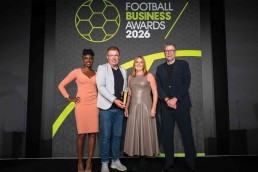
ADI recognised for game-changing impact on football
ADI has been named Best Business Serving Football (Over 100 Employees) at this year’s Football Business Awards 2026.
The prestigious award recognises nearly 30 years of supporting clubs, governing bodies and rights holders across every level of the game.
Since installing UK football’s first stadium LED screens in 1997 ADI have been at the forefront of football venue fan engagement. Today, ADI delivers integrated solutions spanning stadium LED installations, sports presentation, remote production workflows, creative content and live event operations, all through one connected business.
Added value for fans and commercial partners
ADI’s technology and content eco system helps clubs modernise matchday presentation, strengthen sponsorship opportunities and enhance supporter engagement.
They dominate the UK stadium digital infrastructure market, where they have installed and operate screens, digiBOARD and signage platforms in well over 50% of Premier League and Championship venue. ADI’s Live Venue remote production network centralises and simplifies matchday content delivery for clubs, delivering thousands of hours of live matchday content to millions of fans each season direct from their Lancashire HQ.
Notable recent projects include Villa Park, where ADI recently delivered one of Europe’s largest and highest-resolution digital stadium platforms. The long-standing partnership with Aston Villa also includes the transformation of the club store along with a revamp of Villa’s warehouse to heighten the club’s fan journey. Find out more here: https://www.adi.tv/projects/aston-villa
Delivering the modern football experience
Beyond permanent installations, ADI continues to support UEFA and The FA at a federation level at major international events, including sports presentation, fan engagement and ceremony delivery across England men’s, women’s and U21 fixtures. In particular, ADI’s inclusive, interactive pre-match entertainment has become a staple of The Lionesses fixtures in recent years.
ADI have been pivotal to the successful launch of Baller League UK in the UK, delivering high-energy arena productions designed to engage younger audiences across broadcast, live streams and social media platforms.
Lasting legacy
The Football Business Awards accolade recognises ADI’s fully integrated approach, which combines the design, manufacture and installation of LED technology with in-house creative production, live event delivery, sports presentation and digital storytelling.
Working directly with clubs from initial concept consultancy through to ongoing delivery, this complete service has delivered longstanding partnerships of over 20 years with a number of UK clubs.
Outside of the top tiers, ADI have helped embed digital stadium technology in the lower leagues, with notable recent installations in clubs such as Stockport and Forest Green Rovers helping to modernise and uplift stadiums whilst providing clubs with broader and stable income streams to attract local community investment.
Judges described ADI as “synonymous with football”, recognising the company’s long-standing role in helping shape modern matchday and ‘New Era’ experiences across the sport.
They continued: “ADI provide an excellent service to their client clubs and are always looking for creative and innovative ways to improve the service they offer, which in turn help clubs to generate more revenue and build relationships with their own commercial partners. ADI clearly display an understanding for clubs’ requirements and for future development in the digital sector of the industry.”
Geraint Williams, Founder and Group CEO of ADI, said: “This award is a fantastic achievement for everyone across ADI and reflects the passion, creativity and technical expertise our teams bring to every project. ADI would like to thank all of its clients, partners and collaborators across the football industry for their continued support and trust. From clubs and governing bodies to venues, sponsors and production partners, these relationships continue to drive innovation and help shape the modern matchday experience across the game.”
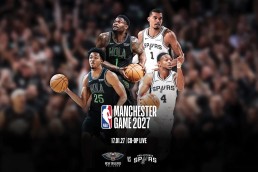
NBA confirm teams coming to Manchester and Paris
The National Basketball Association (NBA) today announced that the New Orleans Pelicans and the San Antonio Spurs will play regular-season games at the Accor Arena in Paris, France, on Thursday, Jan. 14, 2027, and at Co-op Live in Manchester, England, on Sunday, Jan. 17, 2027, as part of the league’s multiyear slate of regular-season games in Europe.
The NBA Paris Game 2027 presented by Tissot will mark the 16th game featuring an NBA team in France since 1991 and the league’s sixth regular-season game in Paris. The NBA Manchester Game 2027 will mark the 20th game featuring an NBA team in England since 1993, the league’s second game in Manchester and first regular-season game in the city.
“Playing games in Paris and Manchester reflects the strong momentum we’re seeing for basketball and the NBA in France, the UK and across Europe,” said NBA Managing Director, Europe and Middle East, George Aivazoglou. “As interest in the game continues to grow across the continent, we look forward to working with the Pelicans, the Spurs and our partners to deliver unique experiences for fans, aspiring players and the local communities.”
“Participating in these games in Paris and Manchester is an incredible opportunity for our organisation to proudly represent both the Pelicans franchise and the City of New Orleans on an international stage,” said Pelicans Executive Vice President of Basketball Operations Joe Dumars. “These games provide a unique platform to showcase our team, our culture and our community to global audiences while building meaningful relationships with fans, partners and communities abroad. We are grateful to be part of the NBA’s continued international growth efforts, and we are excited to help grow the game globally and connect with new generations of basketball fans.”
“It’s an incredible honour to make our return to France and play our first-ever game in England, given the strong embrace we’ve felt from the community and fans across Europe,” said Spurs CEO RC Buford. “Bringing world-class basketball, community impact engagements and compelling fan activations to a European market, alongside the league, aligns directly with our organisation's vision to unite our global audience through unforgettable experiences and a shared love of sports.”
The Pelicans, who will be playing their third and fourth games in Europe and first in France and England, currently feature two-time NBA All-Star Zion Williamson, 2022 NBA All-Star Dejounte Murray, and 2026 Castrol Rising Stars Jeremiah Fears and Derik Queen.
The Spurs, who will be playing their 10th and 11th games in Europe, sixth in France and first in England, currently feature two-time NBA All-Star and 2025-26 Kia NBA Defensive Player of the Year Victor Wembanyama, two-time NBA All-Star De’Aaron Fox, 2024-25 Kia NBA Rookie of the Year Stephon Castle, and 2026 Castrol Rising Star Dylan Harper. The Spurs currently lead the Oklahoma City Thunder 1-0 in the best-of-seven Western Conference Finals, with Game 2 tonight at 8:30 p.m. ET on NBC and Peacock.
In addition to the games, the NBA, the Spurs and the Pelicans will conduct NBA Cares social impact programming focused on health, wellness and sustainability, Jr. NBA/Jr. WNBA and Her Time to Play youth basketball clinics, coach and referee development programming, and interactive fan activities that will bring the NBA experience to fans in Paris and Manchester.
The NBA Paris Game 2027 will be supported by Presenting Partner Tissot and Official Partners including AWS, C4, Foot Locker, Emirates, Nike, Unibet and Sprite. The NBA Manchester Game 2027 will be supported by Official Partners including AWS, AB InBev, C4, Foot Locker, Emirates, Nike, Sprite and Tissot. Both games will air live across Europe and around the world, reaching fans in more than 200 countries and territories on television, digital media and social media.
Ticket sales and additional information about the games and surrounding events will be announced at a later date. Fans can register their interest and enter a chance to win free tickets by visiting NBA.com/Paris and NBA.com/Manchester. Fans in the UK and France can also enter for a chance to win court area tickets, travel and accommodation, and a meet and greet with an NBA legend by visiting NBA.com/ParisVIP and NBA.com/ManchesterVIP. Special ticket packages offering premium access, VIP experiences and hospitality are available now at NBAExperiences.com/NBA-Europe.