

Shift4 Partner With Cubs to Power Commerce at Wrigley Field
Shift4, a global leader in integrated payments and commerce technology, has partnered with the Chicago Cubs to power the fan experience at Wrigley Field, one of Major League Baseball's most iconic ballparks.
Shift4 will provide a comprehensive commerce ecosystem at Wrigley Field, processing payments for food & beverage concessions, retail sales, and Gallagher Way, the entertainment district adjacent to the historic ballpark. From the first pitch to the last out, Shift4’s end-to-end solutions will deliver a seamless experience for Cubs fans while streamlining operations across multiple revenue streams.
“We are thrilled to team up with Shift4 to power purchases at Wrigley Field on gamedays and beyond,” said Cubs Senior Director of Hospitality and Retail Brad Johnson. “Shift4 shares our unwavering commitment to delivering an exceptional and seamless fan experience, and this partnership is another way we’re delivering on that promise to our fans.”
“Partnering with the Chicago Cubs at Wrigley Field represents a milestone moment for Shift4,” said Dustin Alpert, Shift4’s Head of Sports & Entertainment. “We’re excited to deliver world-class commerce technology to this historic venue. From grabbing a hot dog at the concession stand to purchasing a jersey, our integrated solutions will enhance every aspect of the fan experience.”
Shift4 provides sports and entertainment venues with a unified commerce ecosystem including a wide range of payments technologies and integrations to deliver a seamless ordering and payment experience while simplifying operations for venue operators.
Shift4's integrated commerce solutions are used by every major professional sports league as well as colleges, entertainment venues, and many other business verticals, transforming the way fans and guests shop, order, and pay. To learn more, visit shift4.com/sports-entertainment.

Playfly Sports become Exclusive Commercial Partner for Estadio Monumental
El Club Social y Deportivo Colo-Colo (Colo-Colo), the most popular and successful club football team in Chile, today announced a partnership with Playfly Sports, the sports industry’s leading revenue maximisation company, to lead naming rights and founding partner sales for Estadio Monumental as the iconic venue undergoes a landmark renovation.
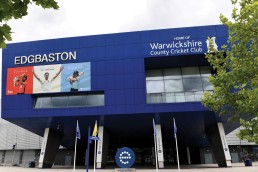
Edgbaston extend partnership with Levy
Edgbaston Stadium and Levy, the visionary venue partner and market-leading sports and entertainment provider, are proud to announce a landmark long-term extension of their successful Joint Venture (JV). This renewal represents the longest contract ever signed by Levy UK + Ireland, marking a significant milestone in a partnership dedicated to world-class matchday experiences, community-led growth, and elite culinary standards.
The partnership extension comes at a pivotal time as the Edgbaston Masterplan continues its momentum into phase three. With the demolition of older stands paving the way for a new world-class stand, Radisson RED hotel, and expanded concourses, the Joint Venture will play a critical role in the stadium’s transformation. This redevelopment is central to the shared aim of using sport to drive positive change, creating long-term employment opportunities for local people and bringing diverse communities together to deliver regional economic growth.
A cornerstone of this social mission is Xcelerate with Edgbaston. To date, this dedicated hospitality skills and training hub has seen over five and a half thousand people pass through its doors and hosted training and development for the local community leading to long lasting careers in the wider hospitality sector.
Another key focus of the extension is the continued elevation of the stadium’s food culture. This will be led by the Levy team at Edgbaston, whose elite kitchen talent took the top prize for Chef Team of the Year at the prestigious Stadium Events & Hospitality Awards. This recognition underscores the dedication to delivering restaurant-quality dining at scale, prioritising local sourcing and sustainable-first ingredients.
Jon Davies, CEO of Levy, commented: “We are delighted to extend our stay at Edgbaston through our established Joint Venture. This is a close and trusted working partnership built on a shared ambition to be the best in the business, and it is a proud moment for us to sign the longest contract in the history of Levy UK + Ireland.
“Moving forward, we are focused on working together to maximise community involvement and building on the incredible impact of Xcelerate with Edgbaston. Our teams are hungry for continued innovation, and we look forward to continuing to showcase high culinary standards, underpinned by our award-winning chef teams. As the Edgbaston Masterplan comes to life, we are committed to ensuring this venue remains at the heart of the community, driving employment and excellence for years to come.”
Craig Flindall, Strategy Director at Edgbaston, said:“We’re pleased to continue our partnership with Levy, as we strive to provide our guests with a first-class hospitality and matchday experience. Through signing the contract extension, we’re also continuing to facilitate the next generation of talent through the “Xcelerate with Edgbaston” training facility – maximising local community involvement and assisting with regional economic growth.
“With the next stage of our stadium Masterplan well underway, we’re excited to be able to deliver our new hotel, redeveloped stands, and enhanced spectator facilities in time for the Men’s Ashes in summer 2027.”
This extension follows the announcement of the UK-first automated cup return system at the stadium. This initiative further demonstrates the partners’ shared dedication to using cutting-edge innovation to enhance fan experience while significantly reducing single-use plastic waste.

Philadelphia Union partner with Evolv Express
Philadelphia Union have announced a multi-year partnership with Evolv Technologies Holdings, Inc., naming the the leading security technology company pioneering AI-based solutions designed to create safer experiences, as the club's official Fan Screening Partner.
Evolv Express uses advanced sensor technology and AI to detect concealed threats and identify the person and location of the potential threat, while allowing people to move through checkpoints at their natural walking pace. The system is designed to screen visitors effectively while helping minimize congestion and disruptions to traffic flow at entry points. Subaru Park, which is located just outside Philadelphia in Chester, Pennsylvania, has been the team’s home since 2010. In addition to Union matches, the 18,500-seat venue hosts collegiate soccer matches and tournaments, other sporting events, and concerts.
The partnership begins with the Union entering a multi-year subscription agreement for Evolv Express hardware and software. It also designates Evolv as the team’s “Official Fan Screening Partner” and gives the company a media presence inside Subaru Park and throughout the surrounding campus, including the Union Yards tailgate zone and the WSFS Bank Sportsplex training center. In addition, the two organizations plan to collaborate on other marketing and community initiatives.
“Partnering with Evolv Technology is an important step in our ongoing commitment to providing a safe, seamless, and welcoming environment for every fan who enters Subaru Park,” said Brian Haggerty, Subaru Park Vice President and General Manager. “Their advanced screening technology further strengthens our security measures while keeping entry quick and convenient, allowing the club to continue enhancing the overall matchday and event experience.”
“We are proud to welcome Philadelphia Union and Subaru Park to our customer roster,” noted John Baier, Evolv’s Vice President of Sports & Entertainment. “Additionally, being of service to half the pro soccer teams in North America is a major accomplishment for us as a company and speaks volumes for the league’s commitment to a world-class fan experience. We are also proud to have a strong presence in Philadelphia, which is one of strongest and most passionate sports markets in the country.”
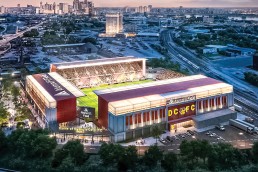
Barton Marlow to build new Detroit City FC Stadium
Barton Malow has been selected as the construction manager for Detroit City Football Club’s (Detroit City FC) new home stadium, AlumniFi Field. The privately funded, 15,000-seat venue will be built between Detroit’s Corktown and Mexicantown neighborhoods.
Detroit City FC has experienced rapid growth since its founding in 2012. With fan support consistently exceeding the capacity of Keyworth Stadium, the club’s current 7,000-seat home, a new, purpose-built facility is needed to meet its ambitions on and off the pitch. AlumniFi Field is designed to evoke the atmosphere of classic European football stadiums, featuring a natural grass pitch and three permanent grandstands with canopies.
Beyond football, the stadium is envisioned as a true community gathering place, capable of hosting other sporting events, concerts, and community programming — all while integrating organically into the fabric of the surrounding neighbourhood.
Honoring Detroit’s History
AlumniFi Field will rise on the site of the former Southwest Detroit Hospital. The hospital, which opened in 1973, was Black-owned and earned national distinction for its commitment to hiring Black doctors and nurses at a time when such practices were rare. The hospital ultimately closed in 2006 and remained vacant until its demolition earlier this year.
As part of the construction process, Barton Malow will work with Detroit City FC to incorporate a permanent installation in the new stadium that honours the former hospital’s pioneering legacy and lasting contributions to the Detroit community.
An Integrated Delivery Approach
Barton Malow’s selection was driven by its integrated construction delivery model, combining construction management expertise with robust self-perform capabilities in civil, concrete, steel, and interior work.
Demolition of the Southwest Detroit Hospital has concluded, and work is currently ongoing. Site work has commenced, followed by deep foundation work, structural steel installation, and interior buildout.
“This project represents everything we stand for — technical excellence, self-perform strength, and a genuine commitment to the communities where we build,” said Sean Hollister, Sr. Vice President, Barton Malow. “We are proud to bring AlumniFi Field to life for Detroit City FC and for the city of Detroit.”
“We built Detroit City FC on the belief that a club should reflect and serve its city, and AlumniFi Field is the next chapter in that promise — a home rooted unmistakably in Detroit’s character and authenticity,” said Sean Mann, CEO of Detroit City FC. “This will be a gathering place shaped by our supporters, our neighborhoods, and the creative energy that defines this city. We’re committed to building something that feels intimate, loud, and distinctly Detroit — where matchdays are electric but the doors stay open for the broader community every day. In partnering with Barton Malow, we’re teaming up with an industry leader to bring that vision to reality and create a uniquely Detroit space where memories will be made for generations to come.”
HOK acquires ROSSETTI creating sports architecture powerhouse
HOK has acquired ROSSETTI, a Detroit-based architecture firm recognised nationally for its sports venue design and renovation work. The merger strengthens HOK’s position as one of the world’s leading sports, recreation and entertainment design practices.
The combined firm will operate as HOK + ROSSETTI during the integration. ROSSETTI’s team, led by Matt Rossetti, FAIA, LEED AP, will continue to operate from Detroit—a market where HOK has long sought a physical presence and where ROSSETTI has been a fixture for 57 years.
ROSSETTI’s portfolio includes the Formula 1 Crypto.com Miami Grand Prix, the USTA Billie Jean King National Tennis Center and Detroit’s Ford Field, with a significant reimagination of USTA’s Arthur Ashe Stadium and Cosm Detroit currently underway. The firm also brings deep experience in professional training and performance facilities, arenas and sports-anchored mixed-use districts—areas that complement and extend HOK’s existing sports, recreation and entertainment capabilities.
“HOK has built a strong global sports practice over time. This partnership accelerates that trajectory with a firm whose expertise, culture and client relationships are exceptionally aligned with our own,” said HOK Co-CEO Eli Hoisington, AIA, LEED AP. “This strengthens every dimension of our Sports + Recreation + Entertainment practice while establishing a home in Detroit, a market we believe in deeply. We’re excited to welcome ROSSETTI’s people and give them a global platform for the work they’ve always done best.”
Rossetti, who becomes a director of HOK’s Sports + Recreation + Entertainment practice, said the move provides his team with the resources and reach to compete at a new level. “We built this firm on a commitment to design excellence and personal client service, and those values are shared completely by HOK,” he said. “Our clients will still work with the same people who know their projects and goals. The difference is that now those people have the backing of a global network with extraordinary depth across disciplines and markets. This is the right partnership at the right time.”
The combined HOK + ROSSETTI Sports + Recreation + Entertainment practice will be led by directors Nate Appleman, Shannon Bartch, Amy Chase, John Rhodes, Matt Rossetti and Rashed Singaby. The Detroit studio will serve as a key hub for the practice while also strengthening HOK’s ability to serve clients throughout the Upper Midwest. HOK has already made its mark in Detroit, having designed Little Caesars Arena and the forthcoming home of Detroit FC. This acquisition is a natural next step in the firm’s commitment to the market.
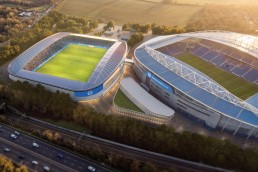
Brighton announce purpose-built women's football stadium
Brighton & Hove Albion has confirmed plans for the UK and Europe's first purpose-built women's football stadium. It will be one of only three such stadiums in the world, putting the club at the forefront of the women's game globally.
The stadium specifically 'built for her' will provide bespoke facilities for Brighton's women's team, its staff and the club's supporters. It represents a major milestone in the club's 2030 vision and underlines the board's intent and belief in the women's and girls' game, supported once again by the unstinting backing of owner Tony Bloom.
Work has begun on a planning application for the new women's stadium located at Bennett's Field, a site strategically acquired during 2025. The location is immediately adjacent to the American Express Stadium, enabling strong operational and fan experience links between the two venues with the opportunity for the club to use a range of its facilities across both men's and women's match days.
The new women's stadium has been designed with a minimum capacity of 10,000 and will be physically connected to the Amex via a new bridge link.
The sloping nature of Bennett's Field will allow the stadium to accommodate underground parking facilities, while still providing level access for spectators.
The club's ambition is for the stadium to open no later than the 2030/31 season, subject to planning approvals which will be sought through the neighbouring authorities of Brighton and Hove City Council and Lewes District Council.
The new stadium reaffirms the club's long-standing commitment to the women's and girls' game, adding to the significant investment in dedicated training and administration facilities at the American Express Elite Football Performance Centre in Lancing, just 20 minutes to the west of the stadium site.
The new stadium will give the women's team a new purpose-built home that reflects that level of support and ambition, further reinforcing Brighton's position as a global leader in women's football.
Women's managing director Zoe Johnson said, "The prospect of a bespoke stadium, built exclusively for women's players, staff and supporters, is incredibly exciting. It is a project that is the first of its kind in the UK and Europe, and one of only three in the world, and will capture the imagination of stakeholders across the women's game, not just here but globally.
"It is something we are asked about constantly, and we have worked hard to reach this moment, so it is exciting now to share this news with the wider world. It will help us push forward our ambitions to compete consistently both domestically in the Women's Super League, and also in European club competition, while helping us to attract key staff and grow a passionate fan base.”
"We also hope the stadium can support academy and development fixtures, giving more of our younger players valuable experience of playing in a purpose-built stadium environment."
Significant progress has already been made on design work for the women's stadium. In addition to the images released today, the club will share more detailed imagery publicly as the project moves through the planning process.
Having adopted a guiding philosophy of 'built for her', the new stadium will be designed around the needs of female athletes and the distinct needs and culture of the women's game rather than be an adaptation of a venue that was designed for male athletes historically and typically supported by a male-dominated audience.
From pitch standards and performance environments such as changing rooms and recovery spaces, every element of the new stadium will support elite female players.
Reflecting a different demographic of supporters, the matchday experience will be designed to be especially welcoming for families and first-time attendees with easy access for families, wider concourses, social spaces and an event-day atmosphere focused on music, entertainment and community.
Above all, with the team's on-field performance the focal point from a sporting perspective, the new stadium will provide a permanent home and identity for the women's team, driving repeat attendance, a better broadcast experience and long-term fan growth.
Chair of Albion Women Michelle Walder added, "We are determined to maintain the momentum built in recent years, not just nationally but here in the city. A stadium 'built for her' is an ambitious statement of intent - it's an exciting commitment and will establish Brighton and Hove on the global map as a genuine home for the women's game. Delivering these plans is central to accelerating the long-term growth of our women's team and the future of the wider game."
Albion chairman Tony Bloom said, "Since we announced our intention to build a stadium for the women's team in Brighton and Hove, we have seen unprecedented interest locally, nationally and internationally. It is a topic I am regularly asked about by many of our fans, clearly indicating the growing level of interest and potential for women's football.
"It is a significant further investment in our long term vision for women's football at Brighton & Hove Albion. A women's stadium in the city is essential to the continued growth of the team. We strongly believe it will strengthen our ability to attract elite talent, help develop our younger players for the future, support the growth of our fan base and create a genuine sense of belonging around the women's game."

Chelsea FC announce partnership with Moët Hennessy
Chelsea Football Club have announced a multi-year agreement with Moët Hennessy UK as the Official Champagne Supplier for the men’s team.
The collaboration brings together some of the world’s most celebrated luxury beverage brands including Moët & Chandon and Dom Pérignon with one of football’s most passionate communities, reinforcing the club’s commitment to delivering world-class experiences at Stamford Bridge and beyond.
Moët Hennessy, the wine and spirits division of LVMH, is renowned for its craftsmanship, quality and global appeal. Its iconic Maisons have become synonymous with celebration and excellence, making it the perfect partner for Chelsea FC men’s team as we continue to elevate our matchday and hospitality experience for fans and guests at Stamford Bridge.
With a heritage spanning over 300 years, Moët Hennessy’s portfolio represents the pinnacle of craftsmanship and savoir-faire in the world of fine wines and spirits. From iconic sporting victories to marking cultural moments, its products have been present at the world’s most prestigious stages – making this partnership a natural alignment between two global names.
Through the relationship, Chelsea FC will offer fans exclusive access to Moët Hennessy’s portfolio at the men’s matches, from premium matchday hospitality suites to key events throughout the year. The club is committed to delivering world-class food and beverage experiences for fans as they create memories from the excitement on the pitch, ensuring fans enjoy exceptional moments no matter where they are within the ground.
As part of this partnership, Moët & Chandon will be available throughout the stadium, with by-the-glass offerings across the hospitality lounges at Stamford Bridge. The champagne house, established in 1743, has a longstanding connection to sports and embodies the spirit of collective achievement and shared joy, fostering emotions that unite people and will allow fans to celebrate together through this partnership.
Oliver Boden, partnership sales director for Chelsea Football Club, said: ‘We are delighted to welcome Moët Hennessy to our family of partners and suppliers. Working with such a prestigious brand portfolio reinforces our commitment to creating the very best experiences for fans on matchdays and at events throughout the year at Stamford Bridge.’
Julie Nollet, Moët Hennessy UK managing director, added: ‘Moët Hennessy is proud to partner with Chelsea Football Club, an institution defined by excellence, ambition and global reach. Our Maisons have long been associated with celebration at the highest level of sport, and we are excited to bring our portfolio to Stamford Bridge.
‘This partnership unites two globally recognised brands rooted in excellence and international appeal, crafting unique experiences for supporters and visitors alike and ensuring every celebration at Stamford Bridge is remembered.’

Populous Expands Americas Design Leadership
Global design firm Populous today announced the hiring of Loren Supp as Senior Principal and Head of Design, Western U.S. In this role, he will oversee design quality across Populous’ offices in Los Angeles, San Francisco and Portland.
In addition to leading project design efforts, Supp will join Populous’ design team, led by Scott Capstack, Global Director and Head of Design of the Americas, to strengthen and elevate design quality across the region.
Based in Populous’ Los Angeles office, Supp will champion continued design excellence throughout the Western U.S. while playing an active, hands-on role in guiding key projects from concept through completion.
"Loren is a highly respected design leader with distinct vision and deep expertise in large-scale, complex projects. His experience leading design across a diverse range of venue types makes him an outstanding addition to the firm. We look forward to seeing Loren’s philosophy shape some of our most significant projects," said Jonathan Maille, Populous Global Director and Managing Director of the Americas.
Supp returns to Populous after working for the firm from 2008 to 2011 and brings more than two decades of experience leading high-profile projects across numerous project typologies around the world. His award-winning portfolio spans sports stadiums and professional training facilities, major airports and cultural venues.
He also brings expertise in integrating artificial intelligence and advanced parametric methodologies into professional practice, further positioning Populous to continue to deliver innovative, future-ready solutions for its clients.
“Populous has an exceptional culture grounded in design excellence and collaboration,” Supp said. “I am honoured to return to the firm to help advance design leadership, integrate emerging technologies and deliver projects that draw people together across the Western U.S. and throughout the Americas.”
Among his many accomplishments, Supp’s portfolio includes Shell Energy Stadium in Houston; Seattle-Tacoma International Airport; and the Seattle Seahawks’ Virginia Mason Athletic Center.
“I’m excited to welcome Loren back to Populous and to work closely with him in this role,” Capstack said. “He brings together big‑picture vision with disciplined, hands‑on project leadership, and we look forward to collaborating with Loren to further strengthen our creative culture across the Americas.”
Supp serves on the Board of Trustees for ArtsFund, the largest nonprofit supporter of the arts and culture sector in Washington and is a visiting instructor at the University of Washington. He has a Master of Architecture from the University of Pennsylvania and a Bachelor of Arts in Architecture from the University of Washington.

Humanforce to Elevate Workforce Experience at KSE Colorado Venues
Humanforce, a leading global provider of intelligent, AI-driven human capital management (HCM) solutions for frontline workforces, today announced a strategic partnership with Kroenke Sports & Entertainment (KSE) to optimize workforce management across KSE Colorado venues. The partnership encompasses Ball Arena, home of the Denver Nuggets and Colorado Avalanche, DICK’S Sporting Goods Park, where the Colorado Rapids compete, and Paramount Theatre.
In particular, Ball Arena employs an average of 700–800 staff members, scaling to more than 1,000 during major events to support a wide variety of functions including security, guest services, and ticket operations. Managing such a dynamic and flexible workforce presents unique challenges, particularly as the venue transitions between NBA, NHL, and large-scale entertainment events.
By implementing Humanforce’s modern, cloud-based platform, Team KSE will gain real-time visibility of schedules, staff event availability, and attendance, while streamlining communication and engagement to event staff through a modern mobile app experience. The solution will enable KSE to deliver seamless and consistent employee experiences across its operations.
“It is our responsibility to deliver a world-class event experience for our fans and that starts with our staff,” said Kelsey Cerrone, Sr. Director, Event Safety & Integrated Operations, KSE. “By managing workforce operations effectively, we can boost employee engagement, which creates a positive ripple effect on the game day experience.”
Humanforce's platform is designed to help frontline organizations manage large, shift-based workforces, bringing together scheduling, time and attendance, payroll, HR and employee engagement into a single system. Humanforce Connect extends that further — governing fulfilment across internal teams, external pools and agencies in one place, purpose-built for organizations where labor demand spikes fast and spans multiple workforce types.
With Humanforce, Team KSE will streamline workforce operations across multiple employment types and departments, ensuring employees are onboarded consistently, scheduled efficiently, and paid accurately, helping raise the bar for live sports and entertainment experiences in Colorado.
“KSE sets the standard for live sports and entertainment, and we’re proud to support their commitment to delivering an exceptional experience — starting with the people who make it all happen. This partnership reflects our vision to be the best-in-class HCM platform for frontline and flexible workforces, globally,” said Clayton Pyne, CEO, Humanforce. “As live sports and entertainment venues worldwide face mounting pressure to attract, retain, and empower their people, Humanforce is uniquely positioned to help them turn workforce operations into a competitive advantage.”
The KSE partnership underscores Humanforce’s accelerating momentum in North America and its position as the intelligent, AI-driven HCM platform of choice for organizations managing large, dynamic frontline workforces.
For more information about Humanforce, visit www.humanforce.com.