

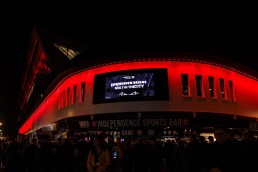
New LED screens for Ashton Gate
Ashton Gate Stadium has installed new state-of-the-art giant LED screens as it continues to improve its matchday and non-matchday experience.
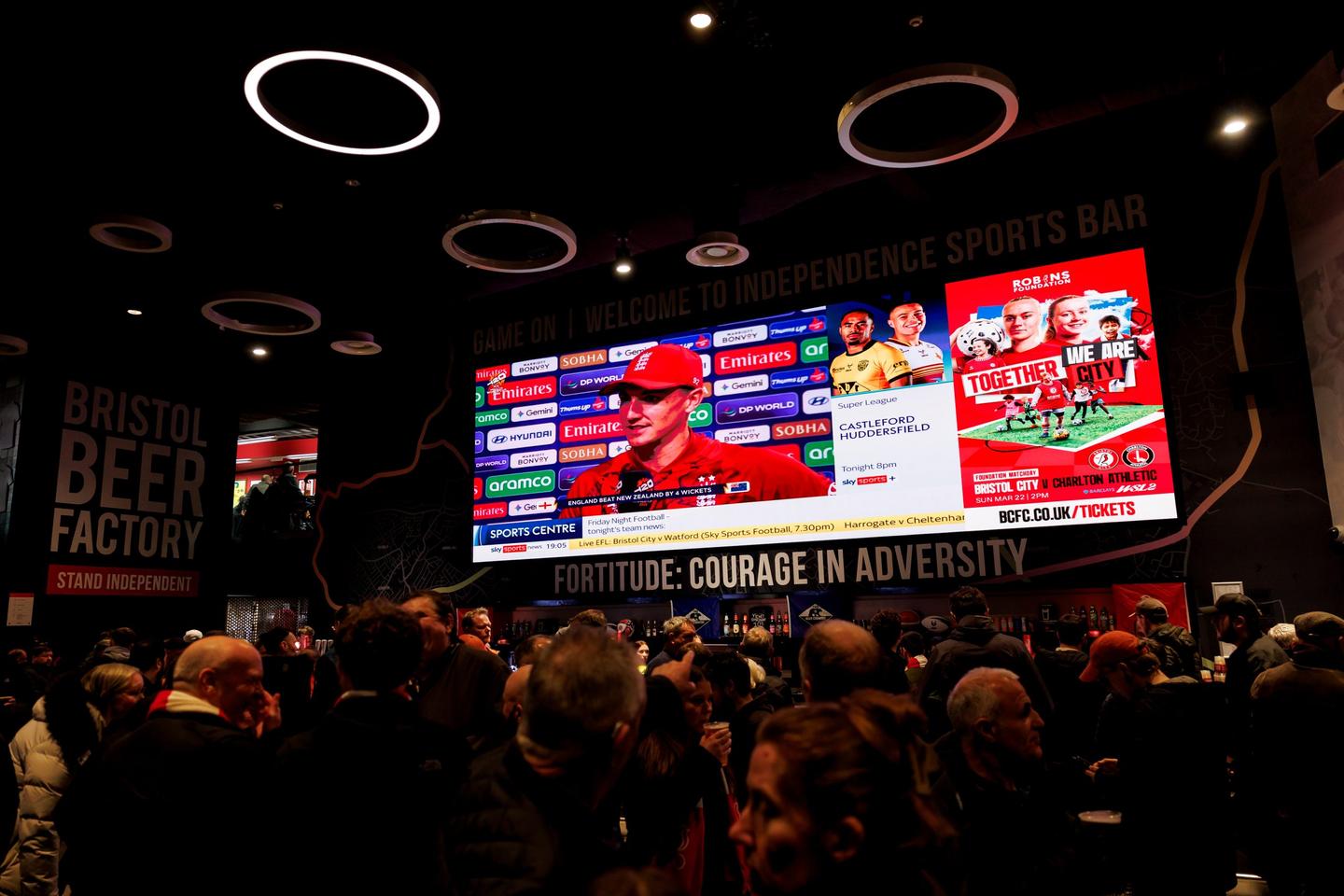
The two screens in the bowl, the Independence Sports Bar 23-metre square screen – home of the legendary ‘Bar Goes Wild’ meme and one of the largest in Europe – and a curved display on the stadium exterior have all been replaced.
All the new installations have a smaller pixel distances than previous screens, meaning a better viewing experience for a range of content, from matchday birthday messages to commercial partner and sponsor adverts at Bristol City and Bristol Bears games, and company logos for meetings and conferences on non-matchdays.
The stadium perimeter also has colour changeable static or ‘chase-style’ perimeter lighting and Ashton Gate Chief Operating Officer Ross Wormald said: “These new giant screens are a significant upgrade and an important addition to what we can offer. Stadium technology is advancing so quickly and we want to be at the leading edge of the experience for fans and visitors.”

New Balance secure partnership with New England Patriots
New Balance have announced a long-term agreement that will have the brand serve as the Official and Exclusive Athletic Footwear and Apparel of the New England Patriots and Gillette Stadium. The relationship reflects both brands' commitment to New England and their shared mission to inspire and empower the next generation of athletes. The sponsorship will come to life across performance, facilities and community, beginning with a new world-class training center in Foxborough.
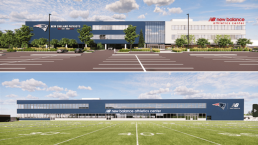
This Spring, the Patriots will unveil the state-of-the-art training center next to Gillette Stadium, officially named the New Balance Athletics Center, with surrounding practice fields branded as New Balance Practice Fields. Spanning 160,000 square feet, the facility will feature cutting-edge performance technology. Designed as a fully integrated performance campus for football operations, the center brings together training, strength, conditioning and recovery into one ecosystem, enabling New Balance to work closely with the team to provide product innovation for footwear and athletic apparel. New Balance will also serve as the Presenting Sponsor of Patriots Training Camp, further strengthening the brand's role in supporting player development and the team's preparation for the season.
As a Cornerstone Partner of the Patriots Foundation, New Balance will collaborate to develop, support and promote charitable initiatives as a core component of the relationship. The agreement underscores New Balance and the Patriots' long-term investment in cultivating an environment that will provide young athletes with an opportunity to reach their full potential. The brand will serve as the presenting sponsor of the Patriots youth football programs, with a focus on increasing participation, access and long-term community impact. This includes support for both tackle football and flag football initiatives, helping expand inclusion and access to the sport.
"At the heart of this partnership are two global brands united by shared values and a deep commitment to New England," said Chris Davis, Brand President and Chief Marketing Officer of New Balance. "The Patriots embody excellence, performance, and an authentic connection to the local communities, both on and off the field. This collaboration represents an enduring investment in performance, culture, and community, with the goal of creating opportunities that inspire and empower the next generation of athletes to play, grow, and compete. We're excited to innovate together."
"New Balance is a brand that shares our deep roots in New England and our commitment to performance, innovation, and excellence," said Jonathan Kraft, President of the Kraft Group. "As we look to the future, this new training facility will be a reflection of our relentless pursuit of improvement, providing our players and coaches with a world-class environment to prepare and compete for championships. We are proud to partner with New Balance, a company that understands what it means to represent this region with pride and to perform at the highest level."
As part of this expansive deal, New Balance will also work with the New England Revolution, including youth soccer programs and clinics throughout New England. Together, the Patriots and Revolution Foundations support the growth of youth sports through a wide range of impactful programs across the region. This dual-sport approach reinforces New Balance's commitment to football and soccer as powerful cultural drivers in New England.
New Balance branding will be integrated year-round across in-stadium signage, on-field placements, Patriots Place, and Patriots digital, social and broadcast platforms.
Additional details about the partnership will be shared leading up to the 2026 season. For more information, visit newbalance.com/football or follow @newbalancegridion on social media.

Lenovo & NVIDIA partner for AI roll out across sports industry
At NVIDIA GTC, Lenovo announced an expanded multiyear collaboration with NVIDIA to help the global sports industry deploy production-scale AI across mission-critical environments, transforming live data into revenue growth, operational resilience, and real-time decision advantage.
The global sports technology market is projected to grow from $23 billion in 2025 to more than $60 billion by 2030. Global sports events represent some of the most complex and demanding operating environments in any industry, combining unprecedented scale, technical sophistication, and public visibility. These events engage billions of viewers worldwide, generate and process petabytes of data in real time, and require highly coordinated, distributed operations across multiple countries, all within a context where reliability, resilience, and uninterrupted performance are non-negotiable.
Scaling AI across this ecosystem requires validated infrastructure, domain-trained intelligence, and production-grade integration, not isolated pilots.
Lenovo is partnering with NVIDIA to deliver scalable AI-powered solutions built on Lenovo’s end-to-end AI capabilities with NVIDIA accelerated AI platforms. This expanded collaboration further demonstrates Lenovo’s commitment to the sports industry vertical, building on its work with leading sports organizations such as FIFA, Formula 1®, the Dallas Cowboys, and Newcastle United, reflecting an established track record of developing and deploying purpose-built, end-to-end solutions for governing bodies, teams, venues, and broadcast operations.
AI Built for Environments Where Failure Is Not an Option
Lenovo is introducing three AI solutions designed specifically for sports environments across sports intelligence, operations, and content and media.
The Intelligent Command Center brings greater visibility and coordination to venue and event operations by unifying critical systems into a single operational view. This enables sports organizations to manage large-scale events with improved efficiency and oversight.
Sports AI PRO delivers advanced performance and competitive intelligence, helping teams and organizations translate data into sharper strategy and stronger results over the course of a season.
AI Data Labeling provides the structured data foundation required to power analytics, content innovation, and fan engagement initiatives, supporting new revenue opportunities and long-term AI adoption.
“In global sports, technology plays a critical role in how events are delivered, experienced, and managed,” said Ken Wong, President, Solutions & Services Group, Lenovo. “Our focus is not just enabling AI but operationalizing it in environments where every second matters. Through our work with NVIDIA, we are helping sports organizations manage complexity, improve operational resilience, and apply intelligence in ways that support both performance and commercial success.”
“Sports organizations are becoming real-time sports intelligence systems, generating massive volumes of data across venues, broadcasts, and performance environments,” said Richard Kerris, Vice President and General Manager, Media & Entertainment, NVIDIA. “By combining NVIDIA’s accelerated AI platform with Lenovo’s full stack AI capabilities, data can be transformed into actionable intelligence, driving predictive performance, personalized content and new level of operational excellence.”
Proven at Global Scale: From over 650TB of Live Race Data to the World’s Largest Tournament
Lenovo’s full stack AI portfolio of devices, infrastructure, solutions and services already operate in some of the most demanding live sports environments in the world.
As a Global Technology Partner of Formula 1®, Lenovo supports delivery of live race content to more than 820 million global fans, processing over 650 terabytes of live data per race weekend and bringing the thrills of F1 to 180+ territories worldwide. These environments require sub-second processing, uninterrupted uptime, and global synchronization, where milliseconds directly impact broadcast integrity and fan experience.
As Official Technology Partner of FIFA World Cup 2026™, Lenovo will support the technology backbone of what is expected to be the largest tournament in football history, spanning 104 matches with a global audience in the billions. Planned AI deployments include enhanced digital broadcast visualization, stabilized Referee View technology, intelligent operational command centers, and generative AI analytics platforms designed to manage massive real-time data volumes across venues and global media networks.
These deployments demonstrate AI operating at production scale under the highest levels of performance pressure and public scrutiny, translating advanced technology into measurable operational resilience and commercial impact.
As sports organizations modernize venues, digitize fan engagement, and scale global media operations, Lenovo and NVIDIA are embedding AI into the core of how sports are played, managed, broadcast, and monetized, at a scale and reliability level demanded by the world’s most visible live events. For more information, click here.
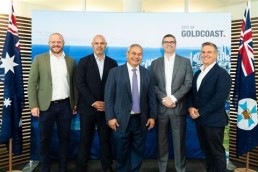
Gold Coast Arena: AmplifyGC named as preferred consortium
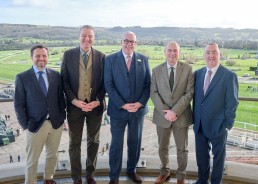
Global consortium AmplifyGC, headquartered in Australia, has been selected as the shortlisted proponent to progress the Gold Coast Arena transaction – a legacy venue for the Brisbane 2032 Olympic and Paralympic Games.
The consortium brings together global infrastructure developer and investor Plenary Group, who specialises in public private partnership (PPPs) and the development of major precincts, alongside Live Nation, the world’s leading live entertainment company. Together they bring decades of experience in global arena development, operations and event programming experience.
The consortium also includes leading Australian-owned construction and property group Built as design and construct contractor - bringing more than 20 years of delivery experience in Queensland - supported by Cox Architecture and 3XN as lead architects.
Invest Gold Coast, the City’s economic development and investment attraction entity, will now work with AmplifyGC through the next stage of the transaction process Request for Proposal (RFP) to refine investment options, delivery and design for the minimum 12,000 seat venue at Carey Park, Southport.
Gold Coast Mayor Tom Tate said he was delighted at the high calibre of AmplifyGC and its global strength for the next phase of the public private partnership transaction.
“With a single proponent, we waste no time in getting into the finer planning, investment options and detailed design,” he said.
“We can move swiftly as a designated Olympic venue to ensure the arena is delivered by 2030 – well ahead of the Brisbane 2032 Olympic and Paralympic Games.
“The world’s eyes are on the Gold Coast and the level of interest in this major public infrastructure legacy project is a sign of the city’s status.
“We are strategically growing our cultural capital. Cities around the world increasingly view creative industries as strategic assets for attracting investment, supporting innovation ecosystems and strengthening economic competitiveness.
“Gold Coast is the fastest growing city in Australia and capital investors understand the opportunities to be part of our rise as a powerhouse city in the Asia Pacific.”
Plenary Group Head of Development Sergio Calcarao said the AmplifyGC team was thrilled to be partnering with City of Gold Coast to deliver what will be an iconic piece of legacy infrastructure for South East Queensland.
“Our collective experience here and overseas make us ideally placed to deliver on the exciting vision for the Gold Coast Arena,” said Mr Calcarao.
“Our integrated delivery and operating model will ensure, fast tracked delivery, world-class operations and a whole-of-life approach. That will provide value-for-money for the City and delivers measurable economic, cultural and social outcomes for the community.”
Live Nation Australia & New Zealand Senior Vice President - Venue Development Guy Ngata said the Arena would play a central role in the Gold Coast’s future as a live entertainment destination.
“AmplifyGC’s vision is to shape the next chapter of live entertainment on the Gold Coast. Beyond the Olympics, the arena will position the city as a destination for global touring - driving economic growth, strengthening the region’s cultural life, and giving international and local artists a world-class stage for the next generation of live entertainment,” said Mr Ngata.
The shortlisted proponent from the Expressions of Interest (EOI) was endorsed by Council of the City of Gold Coast on Tuesday 10 March after a closed council meeting.
The EOI sought expressions of interest to design, build, finance, operate and maintain the city’s largest indoor entertainment and sports venue. Respondents were assessed on design vision, value for money, capacity, capability and Olympic readiness.
Invest Gold Coast will issue a process deed to AmplifyGC which sets out the next steps of the transaction.
It is expected the project agreement will be executed in early 2027 and construction to commence soon after.
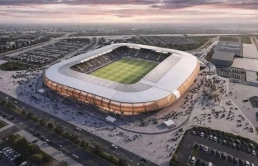
Agadir set to build new 15,000 seater stadium
Agadir is moving ahead with plans for a new 15,000-seat football stadium in Tikiouine, just over 10km south of Agadir. The stadium will feature a natural grass pitch and stands for around 15,000 fans. It’s being built to host local football matches, youth competitions, and regional events, meeting standards for national and regional games.
Tikiouine, once a quiet suburb, has grown into a busy residential area. Officials say placing the stadium here will decentralise sports services and make quality facilities more accessible outside the city centre.
The new stadium will sit alongside Agadir’s bigger Grand Stade d’Agadir in Adrar, which holds over 45,000 spectators. The Tikiouine stadium’s smaller size makes it better suited for club matches, regional tournaments and youth games that don’t need a massive venue. Local teams, including Hassania Agadir youth sides, Union Aït Melloul, and Olympique Dcheira would benefit the most.
Several public bodies are teaming up on the project, including the municipality of Agadir, the Ministry of Education, Preschool and Sports, the Ministry of Economy and Finance, the Souss Massa regional authorities, the Royal Moroccan Football Federation and the National Agency for Public Facilities. The agency will handle the technical and construction side, while the football federation will make sure the stadium meets proper football standards.
The project also ties into Morocco’s push to improve sports infrastructure ahead of the 2030 FIFA World Cup. While large stadiums are being upgraded for the world stage, mid-sized venues like Tikiouine help local clubs play and train without using the big arenas.
Officials expect the stadium to spark more investment in the area, including better roads and public transport links.
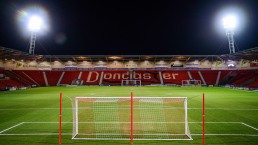
Doncaster Rovers confirm stadium infrastructure investment
The announcement follows several months of board‑level discussions, detailed consultation with specialist suppliers and feedback from the Doncaster Rovers Shadow Board.
The new big screen will be located in the North East corner of the stadium and will replace the existing South West screen, which is being removed to create additional seating in response to increased demand within the Polypipe South Stand.
This project forms part of a wider, multi‑year upgrade of stadium facilities and follows more than £1.7million of recent investment across Club Doncaster, including the installation of a new public address system and continued development of the club’s Cantley Park training ground complex.
The enhanced digital infrastructure will support the club’s transition from the long‑established 100Club to the new Club150 programme, expanding the digital assets available to partners and attracting a wider portfolio of commercial supporters. Further opportunities will also be created at Cantley Park, where the improved setup will allow for increased visibility and activation for partners.
To support this period of growth, the club has strengthened its communications and commercial departments throughout the season, ensuring high service standards continue for supporters and partners as the organisation evolves.
Installation work will progress over the coming months, with further updates to be provided as the new technology is introduced across the stadium and training ground.
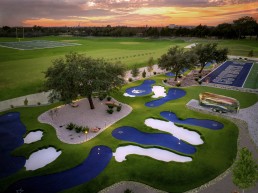
Cowboys Golf Club reopens after Arcis transformation
Cowboys Golf Club has reopened following one of Arcis Golf’s most extensive entertainment-driven transformations. The multi-million-dollar renovation of the world's only NFL-themed golf club includes a completely redesigned championship course, a Dallas Cowboys-themed high-tech driving range with game-used AT&T Stadium turf, and an 18-hole putting course.
A flagship within Arcis Golf’s 88-course portfolio of private, destination, and public properties, Arcis Golf commissioned renowned course architect Beau Welling to redesign the layout, with the company’s in-house design and construction team overseeing implementation.
“We reimagined every aspect of this property to create unforgettable experiences for our members and guests," said Blake Walker, Founder, Chairman, and CEO of Arcis Golf. "From championship-caliber golf to immersive Cowboys-themed entertainment, visitors now enjoy a destination that blends world-class sport with the excitement and tradition of America's Team.”
During the closure, the tee boxes, greens, bunkers, and cart paths were rebuilt or reshaped as part of a comprehensive master plan. Welling refined design elements in the field while seven Arcis crews simultaneously executed the transformation, which touched every element of the course:
- All 18 greens were expanded and modernized with dramatic contours and thrilling new hole locations, challenging golfers of every skill level.
- Cowboys Golf Club is the first in the nation to feature Tif3D Bermuda on all 20 greens (18 holes plus practice facility), ensuring consistent, pristine championship-level conditions year-round.
- Five sets of tees were rebuilt with a classic square design, while every greenside bunker complex was repositioned to better frame the greens and elevate the short-game challenge.
- Architectural styling and bunkering features were comprehensively reimagined.
Notably, bunkers on the par-3 third hole were relocated to the front of the green, allowing the hillside backdrop to prominently showcase the Dallas Cowboys’ legendary star logo.
The driving range is a showstopper, featuring a 60-yard-long, game-used turf football field from the Cowboys’ AT&T Stadium, complete with an NFL regulation goal post and 14 cutting-edge Toptracer stations that bring data, practice, competition, and entertainment together. The short-game practice area was also fully revamped, including the addition of new bunkering and expanded chipping areas.
These enhancements were strategically designed to further elevate Cowboys Golf Club as one of the premier corporate event, outing, and sports-entertainment venues in the Dallas-Fort Worth region and beyond.
“This transformation is about more than aesthetics – it’s about redefining and gamifying how people experience golf,” added Walker, who noted that Cowboys Golf Club now blends championship-caliber design with immersive entertainment in a way that reflects the power of the Dallas Cowboys brand and our commitment to innovation. “It’s golf redefined, fan-inspired, and built for families, players, and guests.”
The reimagined short-game area and the spectacular 18-hole putting course, “The Huddle,” feature an acre of Dallas Cowboys-blue turf, ensuring every moment is unforgettable. Each hole starts with the star logo, summoning the true Cowboys spirit.
Between rounds, golfers can enjoy food and beverage offerings at The Huddle’s Airstream trailer, serving up frozen margaritas, local beers, and signature barbacoa tacos and sausages crafted exclusively for Arcis Golf. The acclaimed Ring of Honor Kitchen & Bar (ROHK) features a bold Texas fusion menu, highlighting the freshest local ingredients and dry-aged meats. A 23-foot smoker and wood-fire grill accentuate smoky flavors, and soon, Neapolitan pizzas are fired to perfection in under two minutes. Guests can sip a jalapeno margarita or savor a curated bourbon tasting on the Five Points Patio, overlooking the new event lawn, putting course, and practice areas.
Super Bowl trophies, Tom Landry’s fedora, and other historic team mementoes line the Clubhouse interior and display cases, while stone markers throughout the course highlight milestone moments from the Cowboys’ rich history.
Arcis Golf owns eight additional clubs in the Dallas-Fort Worth Metroplex – Bear Creek Golf Club, Lantana Golf Club, The Golf Club at Fossil Creek, The Club at Frisco Farms, Gentle Creek Country Club, Lake Park Golf Club, Mansfield National Golf Club, and The Golf Club at Twin Creeks – and owns and operates a national portfolio of premier clubs including The Woodlands Country Club in Houston, Texas, and host site of the Insperity Invitational, a PGA Tour Champions event; Champions Retreat Golf Club in Augusta, Georgia, and host site for the first two rounds of the Augusta National Women’s Amateur; Grayhawk Golf Club in Phoenix, Arizona, former host site for the 2021-2023 NCAA Division I Men’s and Women’s Golf Championship; and The Club at Snoqualmie Ridge, host to the PGA Tour Champions’ Boeing Classic, to name a few.
An industry leader in providing inventive programming and unrivaled lifestyle amenities that complement exceptional golf offerings, Arcis Golf has invested more than $175 million over the past four years on property upgrades, new amenities, personnel, training, and systems to create extraordinary experiences and forge emotional connections with members and guests. The Company has received numerous honors, including recognition on the Inc. 500 list of fastest-growing private companies in America.

Genius Sports & Pac-12 announce integrity, technology and AI partnership
Genius Sports have announced a new multi-year integrity, technology and AI partnership with the Pac-12 Conference (“Pac-12”) to power the next generation of authorised and responsible sports betting, integrity, fan engagement and monetisation, and performance analysis in college sports.
The partnership reinforces Genius Sports’ role as the operating system of modern sport. As part of the agreement, Genius Sports will deploy GeniusIQ, its data and AI platform, in every venue across Pac-12 football and men’s and women’s basketball competitions – creating a single, intelligent foundation for tracking data and video capture, real-time insights, and commercial activation.
Genius Sports and Pac-12 will collaborate on a wide range of innovations designed to safeguard integrity, improve the fan experience, and unlock new revenue streams.
Authorised betting and integrity safeguards
Genius Sports will serve as the exclusive distributor of official data from Pac-12 competitions to licensed sportsbooks worldwide. Through this role, the company will administer a new Authorised Gaming Operator (“AGO”) program designed to safeguard the integrity of Pac-12 competitions and protect student-athletes.
In addition to eliminating any negative and risky bet types, the AGO program will create greater transparency, information sharing and cooperation between the Pac-12, Genius Sports and licensed sportsbooks, and prevent prohibited bettors from placing wagers; all designed to combat the threat of betting-related corruption and protect student-athletes.
A new era of moment-based marketing
Genius Sports’ Moment Engine will enable brands to activate advertising in real-time around key moments in Pac-12 games across broadcast, streaming and digital platforms, transforming live sports data into programmable advertising opportunities.
For Pac-12 advertisers, this unlocks the ability to activate around Pac-12 moments that matter most, instantly, with greater precision and at scale.
Next-level performance insights
The partnership will also support Pac-12 schools by offering the most advanced performance analysis on the planet.
Programs will have access to the GeniusIQ-powered Performance Studio platform, providing coaches and athletes with cutting-edge analytics and video tools used by the majority of NBA and WNBA teams.
“College sports are entering a new era where official data and real-time intelligence power everything from integrity and betting and media to performance,” said Mark Locke, CEO at Genius Sports. “By deploying GeniusIQ across Pac-12 venues, we are building the data infrastructure that connects leagues, sportsbooks, broadcasters and advertisers in real-time.”
“The Pac-12 is thrilled to announce this partnership which will allow a college sports conference, for the first time, to impose direct and meaningful integrity restrictions on sportsbooks who receive and use Pac-12 data,” said Pac-12 Commissioner Teresa Gould. “This partnership positions the Pac-12 as an early-mover in the data rights space, connecting to our strategic vision and challenger mindset to push boundaries in a disciplined fashion while introducing new opportunities for brand elevation and revenue growth."

FUJIFILM present new 4K broadcast zoom lenses
FUJIFILM North America Corporation, Optical Devices Division, have announced the development of three new 4K broadcast zoom lenses: FUJINON UA16x4BERD (“UA16x4”), FUJINON UA30x7.3BERD (“UA30x7.3”), and UA94x8.7BESM (“UA94x8.7”). Each of these newly developed lenses covers a wide range of focal lengths in a single unit, providing strong support for immersive storytelling in a variety of broadcast production environments such as sports broadcasts, concerts, live events, and studio production.
UA16x4 and UA30x7.3
The newly developed UA16x4 and UA30x7.3 portable broadcast zoom lenses achieve both an extended wide-angle range and high zoom ratio, fitting a focal length range that surpasses previous models into a compact and lightweight body.
UA30x7.3 delivers a best-in-class 30x zoom range1 covering 7.3mm-219mm, and UA16x4 delivers a class-leading1 wide-angle range of 4mm-64mm while also achieving best-in-class1 16x zoom range. By optimizing all elements – from optical and mechanical design to production and control technology – these two lenses achieve optimal zoom magnification and wide-angle focal length while reducing size and weight.
In sports broadcasts, UA16x4 and UA30x7.3 support a wide range of framing options, from wide views capturing the entire stadium, to powerful zoom-ins and close-ups for post-game interviews, enabling flexible image creation. Additionally, the flexibility of these lenses enables creative freedom for camera operators in various filming environments.
“In professional production environments such as sports broadcasts, concerts, live broadcasts, and studio production, it is essential to reliably capture moments that are key to the competition or performance,” said Stosh Durbacz, vice president, Sales, Optical Devices Division, FUJIFILM North America Corporation. “We’ve designed these lenses specifically to meet the needs of these high-stake situations, combining zoom performance that covers a wide range of focal lengths from wide-angle to telephoto in a single lens with compact and lightweight designs that allow for agile operation.”
UA94x8.7
UA94x8.7 is a versatile box zoom lens for 2/3-inch sensor broadcast cameras, covering the wide-angle to super-telephoto focal range from 8.7mm to 818mm, providing operational flexibility. It is ideal for a wide variety of applications including sports broadcasts, concerts, and other large-scale live events. UA94x8.7 enables diverse visual creativity, from immersive wide-angle shots that capture the atmosphere to close-up footage that brings subjects vividly into focus.
“As professional video production styles diversify, broadcast equipment is increasingly being utilized across a wider range of settings, resulting in more demand for box lenses that offer high production quality and versatility, yet are still cost effective,” said Durbacz. “UA94×8.7 sits in a sweet spot between our UA70x and UA107x box zooms. It delivers a proprietary image stabilization system offering superior operability during zooming and focusing, reducing the burden on camera operators, and contributing to smooth operation in live production – at a price point we think will better align with their needs.”
Availability
UA94x8.7 is due to be released in fall of 2026, and both UA30x7.3 and UA16x4 are due to be released in spring of 2027. Fujifilm will showcase all three lenses at the 2026 NAB Show, the world’s largest international broadcast equipment trade shows, to be held in Las Vegas from April 19 to 22, 2026.
For more information about FUJINON broadcast and cinema lenses, visit https://www.fujifilm.com/us/en/business/cine-and-broadcast.