


WSDG showcases integrated acoustics and AV design expertise at ISE 2026
WSDG, the award-winning international consultancy specialising in acoustics and AV technology design, will make its official return as an exhibitor at ISE 2026, presenting its integrated approach to acoustics and media technology. Visitors are invited to meet WSDG’s international team in Hall 7, Booth N240, to discuss how complex performance requirements can be translated into robust, real-world technical solutions.
Active across Arts & Entertainment, Sports, Recording Studios, Corporate & Government, Educational, Religious, Residential, Broadcast and Transportation sectors, WSDG works at the intersection of architectural design, acoustics and AV technology. The firm supports projects from early requirements definition and advanced simulation through to system design, procurement support, commissioning and long-term lifecycle planning, ensuring that sound and media systems perform reliably and seamlessly over time.
“Our role is not to promote specific product ranges, but to design the right solution for each client’s situation,” says Sergio Molho, Senior Partner, Co-CEO at WSDG. “That means understanding how a space needs to perform acoustically and technologically, and ensuring that the system design integrates effectively with the architecture and the way the space will be used in real life.
Dirk Noy, Senior Partner, Co-CEO, agrees and adds: “Equally important is ensuring that performance-driven design never compromises fundamental requirements. Safety, materials compliance, and regulatory considerations must be embedded in the design process from the outset, rather than treated as an afterthought. A space can only truly perform when it is safe, resilient, and fit for real-world conditions.”
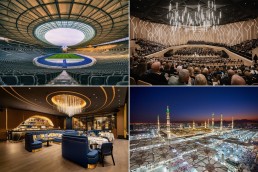
This consultancy-led approach is reflected in projects such as The Ark Legacy Project in Ota, Ogun State, Nigeria - a 150,000-capacity worship venue where WSDG delivered acoustic modelling, sound isolation strategies, and the design of large-scale video, lighting and electroacoustic systems. The result supports speech intelligibility, musical performance and immersive congregational experiences at scale. Similar approaches, such as projects Olympiastadion Berlin, Lithuanian State Symphony Orchestra, Billionaire St. Moritz, and The Prophet’s Mosque in Madinah, Saudi Arabia, underpin WSDG’s work across stadiums, arts & entertainment venues, hospitality, religious, residential, corporate hubs, broadcast facilities and high-performance media production studios, where precision sound control and resilient AV infrastructure are critical.
At this year’s ISE, the firm will highlight how it helps bridge the gap between technology manufacturers and end users, translating rapidly evolving tools into practical, future-ready solutions tailored to each project.
“ISE has always been an important meeting point for meaningful dialogue,” explains Molho. “The industry is moving away from isolated products towards fully interoperable ecosystems. Our focus is helping clients navigate that complexity by uniting acoustics, AV and media technology design from the earliest planning stages.”
WSDG has a long-standing relationship with ISE, having been involved as an exhibitor at the show’s very first edition in 2004 in Geneva, and attending every edition since as the event moved through Brussels, Amsterdam and Barcelona. Returning as an exhibitor in 2026 marks a significant milestone for the firm.
Looking ahead, WSDG expects continued growth in trends such as ‘a world where everyone is a broadcaster’, increased AI-driven automation, greater system integration, and a growing emphasis on immersive, multi-sensory experiences across entertainment, education and experiential spaces. The firm also anticipates emerging conversations around sustainability, personalisation and the continued convergence of AV, broadcast and IT infrastructures.
“Technology is becoming more powerful, but also more accessible,” concludes Noy. “The challenge is ensuring that these systems remain intuitive, reliable and sustainable over time - and that’s where careful, performance-led consulting and engineering becomes essential.”
At ISE 2026, WSDG looks forward to welcoming attendees to Booth N240 in Hall 7 for conversations around project needs, technology strategies and the benefits of designing acoustics and AV systems as a unified discipline from day one.
d&b audiotechnik goes bold at ISE 2026 with major product launches.
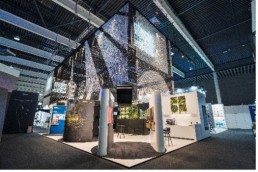
d&b audiotechnik returns to Barcelona for ISE 2026, taking place February 3 to 6 at Fira Barcelona Gran Via, with one of its most significant lineups of new product introductions to date. Headlining is the U-Series, a new family of compact multipurpose point-source loudspeakers, opening a completely new chapter in the product category. Another key focus is the advancement of audio-over-Ethernet technologies with four new Milan-enabled products, expanding the d&b Milan ecosystem and enabling users to build scalable, robust, and future-ready audio systems. Completing the highlights is the 42S, a new point-source loudspeaker that combines acoustic precision with an ultra-compact form factor.
Underlining its commitment to constant innovation, d&b will premiere the U-Series, a new family of compact multipurpose point-source loudspeakers, representing a true paradigm shift in system design. Featuring both passive and advanced networked options, the series provides maximum system architecture freedom, all packaged in a sleek, industrial design that supports a wide range of installed and mobile applications.
d&b will also shine a spotlight on its latest Milan-AVB products reinforcing the company’s dedication to open standards, reliability, and seamless integration. The new Milan lineup includes the DS22 Audio Network Bridge, the DS1 USB-to-Milan interface, the DN2 AVB Switch and the 5DM, the Milan-enabled version of the renowned 5D installation amplifier. Both the 5D and 5DM pair perfectly with the new 42S, an ultra-compact all-purpose solution for applications where size and acoustics matter.
In addition to the new launches, visitors to the stand will be able to discover a range of products and solutions tailored to the needs of fixed installations, including CCLi, the installation version of the CCL Compact Cardioid Line Array, as well as a selection of the company’s Custom Solutions offering, which spans color options, custom rigging, and weather-resistant variants.
“ISE is a fantastic opportunity to showcase how innovation can strengthen our clients’ businesses, and I’m proud of our team to bring such an extensive range of new products to Barcelona,” says Jaakko Kaivonen, CEO d&b group. “I’m looking forward to meeting partners, customers, and industry peers, and to continue fostering the relationships that make this industry so special.”
Alongside stand 7E190 in Hall 7, d&b again has a dedicated demo room (D2, Hall 8) where visitors can experience the latest products in action.
SustAInable by design: PPDS brings next level processing power, performance, and intelligence to digital displays with the new Philips Signage 5000 Series
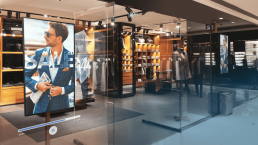
PPDS, the exclusive global provider of Philips Professional Displays and complementary solutions, is delighted to announce the official debut of its most powerful and intelligent digital signage line to date: the new AI ready Philips Signage 5000 Series (D-Line).
An evolution of the Philips Signage 4650 (D-Line) – globally popular for delivering eye catching installations in retail, corporate, transportation, education, public venues, and more – the striking new Philips Signage 5000 Series has been remodelled and reimagined using the latest breakthroughs in advanced UHD visual technology, energy efficiency, and processing power for unbeatable quality and performance.
Taking versatility, 24/7 reliability, and usability to unprecedented levels and to even wider audiences, the portrait or landscape mountable Philips Signage 5000 Series is available now across an extended range of screen sizes to suit, including 32”, 43”, 50”, 55”, 65”, 75”, 86” and 98”.
Set to go on public display for the first time at ISE 2026 in Barcelona (Philips booth 3N500), the Philips Signage 5000 Series (D-Line) introduces a new era for smarter digital signage displays, pushing beyond the boundaries of traditional signage to support a growing number of businesses seizing the benefits and opportunities around artificial intelligence.
AI ready
Designed with both the present and future in mind, the Philips Signage 5000 Series features an octa core processor and becomes the first in PPDS’ extensive range of Android SoC displays to integrate a 6 TOPS (Tera Operations Per Second or Trillion Operations Per Second) neural processing unit.
Bringing extended AI power and possibilities to partners and customers in any market, the 6 TOPS NPU allows AI applications and tasks to run faster and deliver smoother processing, ensuring seamless user experiences without slowing down or impacting other processors and operations – such as the Central Processing Unit and Graphics Processing Unit.
Andrea Barbuti, Global Product Management Lead EMEA at PPDS, commented: “As AI continues to progress, so does the innovation in our displays. Regardless of your thoughts or fears around AI, the opportunities for businesses are increasingly clear, with interest and adoption across multiple, if not all, markets continuing to grow exponentially.
He continued: “We have to be ready to match the current and future needs of our partners and customers. With the Philips Signage 5000 Series we are doing exactly that, with the speed and responsiveness of AI applications of today and tomorrow being seamless for the user. And, while the AI capabilities are a key new feature, it is just part of a plethora of new and enhanced innovations which set the Philips Signage 5000 Series apart.”
Tailored around you
Continuing to raise the bar for quality and performance, the Philips Signage 5000 Series (D-Line) delivers a wealth of extended installation capabilities and opportunities to customers and partners, guaranteeing to captivate audiences, whatever the setting.
Featuring a stunning new UHD 600 nits – 500 nits on 32” FHD model – the Philips 5000 Series provides greater usability and operability in even more environments.
Designed to support around the clock usage and reliability, the Philips 5000 Series (D-Line) delivers complete peace of mind with its FailOver technology automatically playing back up content on screen in the unlikely event of a media player failure.
Ensuring screens never go blank – imperative for locations such as airports and train stations – AV/IT managers simply select a primary input connection and a FailOver connection for instant content protection.
Staying in control
Behind the screen, the Philips Signage 5000 Series (D-Line) is powered by an upgraded Android 14 professional SoC platform with trusted connectivity and security built in. Optimised for native Android apps and enabling managers to install web apps and software directly onto the display, eliminating the need for an external media player.
With integrated HTML5 support in a Chromium based browser, users can connect, control and create content – whether for single displays or for fleets installed around the world – entirely remotely, using a preferred cloud platform.
Unlocking the full power and intelligence of the display, the Philips Signage 5000 Series is compatible with the Philips Wave ecosystem – PPDS’ evolutionary cloud platform puts users in complete control of their Philips Professional Displays. Spanning digital signage, ePaper, and dvLED, Philips Wave offers simplified installation and set up along with making it easy for users to monitor and control displays, upgrade firmware, manage playlists, and set power schedules — saving time, energy, and environmental impact.
Internet connection is available via LAN cable, WiFi, or with an optional 4G module for reliable connection.
Extended product lifetimes
The Philips 5000 Signage Series continues a firm focus on sustainability, offering reduced power consumption compared with its predecessor, and reduced WEEE disposal thanks to PPDS ‘dual architecture’ modular design. First debuted on the Philips Signage 4650 (D-Line), PPDS’ modular approach brings new opportunities for longer product lifetimes with easily detached and replaced components, in the event of unlikely faults or age related degradation.
Ensuring maximum versatility and to match user preferences – and encouraging the reuse of existing cables and compatible equipment – the Philips 5000 Series (D-Line) supports HDMI, DP, HDMI out, RS232, LAN (Gb) and USB-C.
Bart Wouters, International Product Manager for Professional Displays at PPDS, added: “The highly flexible and versatile Philips D-Line was a landmark digital signage display, breaking new ground for design, quality, reliability, and versatility. With the new Philips Signage 5000 Series – an evolution of the D-Line, we have upgraded everything that made the 4650 and its predecessors a global success. We have introduced new features and capabilities to support the needs of businesses, including their sustainability commitment, both today and into the future. It is another clear symbol of unwavering dedication to our customers.”
To see the power of the Philips Signage 5000 Series for yourself, visit Philips booth 3N500 at ISE 2026.
First Live Production with S12: brutal güet Deploys Lawo AoIP and Flexible Broadcast Workflows at the Winter Classics
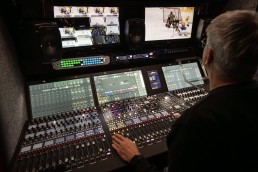
The Women’s Winter Classics in Gstaad marked the first live outing for OB truck S12, the new mobile production unit operated by Swiss broadcast service provider brutal güet. Produced for RED+, the open-air event — a flagship fixture of Switzerland’s top-tier women’s ice hockey league — also served as the inaugural live deployment of the vehicle’s fully IP-based Lawo audio infrastructure. At the core of the audio control room is a Lawo mc²56 MkIII console with 48 faders, paired with a redundant A__UHD Core and an AoIP environment based on SMPTE ST 2110, AES67 and RAVENNA. The production demonstrated how flexible system configurations, efficient workflows and high audio quality can be reliably implemented in a demanding live environment.
The Winter Classics in Gstaad rank among the premier events in Swiss women’s hockey. Staged in the center of the village, and framed by an alpine backdrop, the matchup saw reigning champions SC Bern face league leaders EV Zug. The production was realized in a demanding setup given the lack of conventional stadium infrastructure on site. For brutal güet, the event provided an ideal opportunity to put the production concept of the new OB van into operation for the first time under live broadcast conditions.
For Christian Maier, Senior Broadcast Audio Engineer at brutal güet, the first production with the new system marked a technological step forward: “Overall, it initially felt quite unspectacular because I was already familiar with the system. At the same time, working with AES and RAVENNA streams introduces new capabilities and advantages that still require a certain degree of adaptation.”
Multilingual operation is a central requirement in Swiss broadcast productions. Although only one language feed was actively used in Gstaad, the audio setup was designed for trilingual operation from the outset. “Productions in Switzerland are inherently more complex. We always have to be able to deliver three language versions,” explains Maier. “That’s why I structured the setup so that all three languages are prepared — not only for this production, but for all future ones as well.”
The latest mc² generation provides advanced DSP capabilities that streamline daily workflows. “Being able to store and recall EQs, compressors and presets, as well as using dynamic EQ processing, makes multilingual productions much easier. I don’t have to build the same signal chains multiple times.” DSP resources can also be allocated selectively. “Not every output requires full processing. If a signal path is mainly used for information delivery, I can reduce processing there and allocate resources where they deliver the greatest sonic benefit.”
Speed is another critical factor in live broadcast operation — both in day-to-day use and when troubleshooting. “I can customize the console to suit my workflow in every detail, but I don’t have to. I can also pragmatically route a signal from A to B quickly and easily — and it still works. At the same time, I can create an interface that lets me work extremely efficiently”, says Maier. The system’s visual clarity proves particularly valuable when problems arise: “If a camera operator reports they can’t hear anything, I can immediately check a second or third meter to see whether the signal is leaving my system. That tells me right away where to look — or where not to look.”
The open-air setting introduced additional acoustic challenges for the audio design. With no plexiglass walls behind the goals, the typical ice hockey reflections were absent; also the number of spectators was unpredictable. “It makes a significant difference whether 500 or 5,000 people are standing around the rink. In some cases, spectators may even be just a meter behind my ambience microphones,” notes Maier. To address this, the team implemented a customized microphone setup using directional shotgun microphones, ensuring precise capture of the on-ice action while minimizing unwanted noise.
Maier’s mixing approach focuses on balancing atmosphere and speech intelligibility. “I like to use a strong ambience mix to create an immersive experience, but the commentator always needs a clearly defined space.” This was implemented using dynamic EQ processing, sidechain filtering and automix functions. “The ambience is dynamically shaped in the relevant frequency ranges to leave room for speech without reducing overall level. This is an area where the latest Lawo console generation offers significantly more creative and technical flexibility.”
Precise timing and latency management is another critical aspect of modern broadcast production. Wireless cameras, remote feeds and distributed IP signal paths require flexible delay strategies. “Different signal paths operate in different time domains, and these have to be aligned again at the output stage. With Lawo, delays can be applied exactly where they make sense — at the input stage, within groups or on direct outputs. This level of clarity and flexibility remains a key advantage, especially in hybrid IP and remote production environments.”
For brutal güet, the S12 premiere represents both a technical milestone and a strategic foundation. The vehicle was built by Broadcast Solutions based on the Streamline concept and designed for a wide range of production scenarios, including sports, cultural events, festivals and live entertainment. “From the outset, our goal was not to focus exclusively on traditional sports productions,” says Maier. “If we produce an opera, we need this surface structure and channel capacity as well. The concept is to use the OB van as a fully equipped mobile control room and minimize on-site setups.”
The successful Winter Classics production validated this approach, showing how Lawo AoIP technology, flexible DSP architectures, and carefully designed workflows enable modern live broadcasts to be executed efficiently with consistently high quality, even under challenging conditions. For brutal güet, the first production with the S12 OB van marks the beginning of a new generation of mobile broadcast operations — scalable, versatile, and fully IP-based.

POPULOUS ANNOUNCES NEW GLOBAL OPERATIONS ROLES
Leading Design and Architecture practice Populous has announced the appointment of two new global roles that expand its operational capacity around the world.
Gavin Houldin has joined the practice as Global Chief Operating Officer, focusing on strengthening global operations by standardising systems and processes, leading integration efforts for acquisitions, and optimising business and project performance. He will report to Bruce Miller, Populous CEO and Chair.
Gavin has joined Populous from Arcadis, where he served as Senior Vice President and Operations Director for their global Places business in North America, leading a team of over 600 in the Americas and an additional 250 in global excellence centres across India, the Philippines, and Romania. Prior to that he held senior leadership positions at AECOM in both Africa and the United States. He brings deep expertise in global operations, M&A integration, and driving performance across large, multidisciplinary teams.
Bruce Miller, CEO and Chair of Populous, comments: “With his extensive experience in architecture, engineering, and project-based professional services, Gavin brings a collaborative, people-centric leadership style and a focus on design excellence and client service. His proven track record in scaling businesses through organic growth and M&A integration, coupled with strong commercial acumen and strategic thinking, make him ideally suited to help drive Populous into our next phase of growth and innovation.”
Reporting to the Chief Operating Officer, Teryn Hightower has also joined Populous as Head of Global M&A Integration, responsible for creating and leading a disciplined global integration strategy for Populous acquisitions.
Teryn joins Populous from Accenture, where she spent more than seven years leading post-merger integration within Corporate Development, focused on aligning strategy, operations, systems and teams, to deliver against long-term business objectives.
Populous announced the acquisition of aviation design firm Fentress Architects in June 2025 to create Fentress Studios, significantly broadening the scope and scale of services that Populous offers clients across the globe.
Both roles are based in the United States, but will be fully global in scope, working across the firm’s regional headquarters in Kansas City, London and Brisbane and the 34 Populous studios around the world.
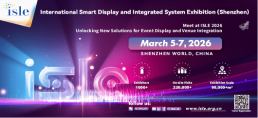
ISLE 2026—Your One-Stop Solution for Venue & Event Innovation
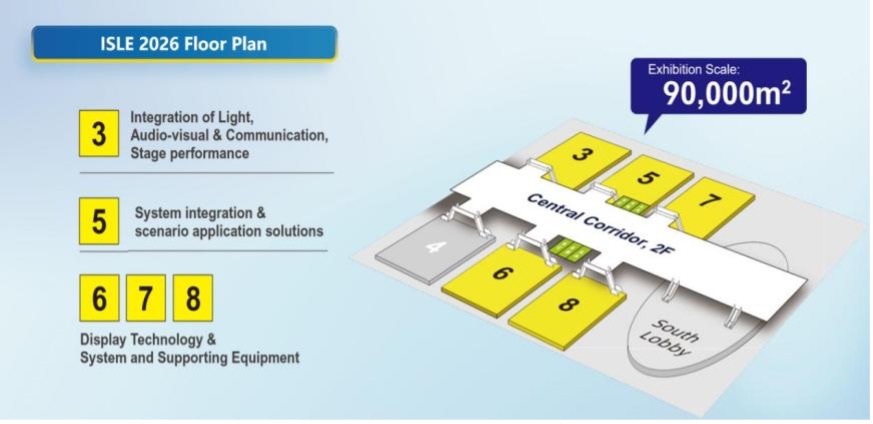
For sports professionals seeking to elevate event experiences, modernise venues, or integrate cutting-edge technology into every aspect of sports operations, ISLE 2026 stands as the ultimate one-stop exhibition—where global leaders converge to redefine the future of sports events.
Registration is now open for ISLE 2026—Asia's largest exhibition for smart displays and integrated systems, set to take place from March 5–7 2026 at the Shenzhen World Exhibition & Convention Centre in China.
Display Industry Center
As a recognised hub for the display industry—particularly LED technology—Shenzhen offers unmatched proximity to China’s leading LED manufacturers, with most major factories located within a 30-minute drive of ISLE venue. The exhibition brings together the full supply chain, offering global buyers a one-stop platform to discover new products, tour local factories, and connect with industry leaders.
Larger Scale, Greater Impact
Building on the success of ISLE 2025, which gathered over 1,000 leading exhibitors (including industry giants like Leyard, Absen, Unilumin, BOE, and Hikvision), welcomed 220,000 visits from 100+ countries, and debuted 150+ new products across 80,000㎡of exhibition space – ISLE 2026 is poised to scale new heights. The 90,000㎡ showcase will bring together the world’s most innovative brands, showcasing transformative smart sports solutions.
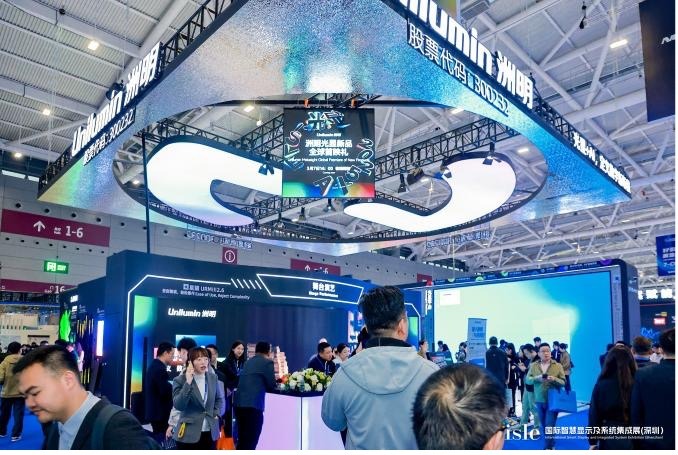
Why ISLE 2026 is a Must-Attend for the Sports Industry?
ISLE 2026 showcases cutting-edge display tech that captivates every spectator. Outdoor ultra-HD large screens deliver clear live views from any angle, while Fine-Pitch LED panels create vibrant indoor visuals—together offering an immersive experience that brings fans closer to the action.
ISLE 2026 will offer integrated solutions for smart venues. Satellite positioning for crowd control, AI-driven systems for automated management, and high-speed data transmission for real-time analysis. These technologies work together to optimise energy use, enhance safety, and improve the event-day experience.
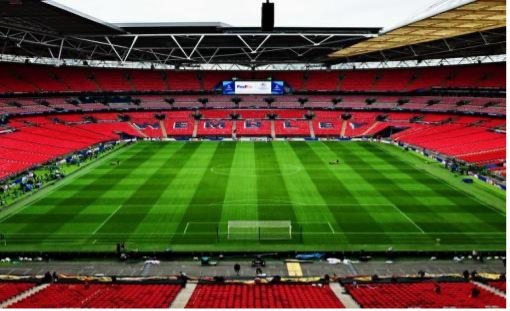
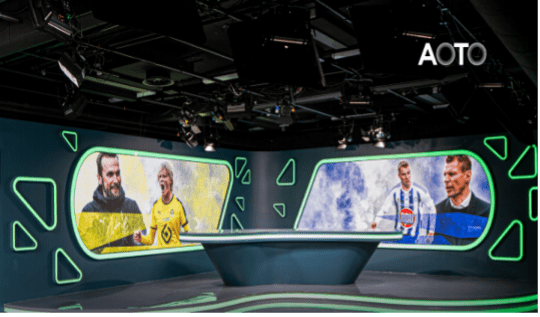
ISLE 2026 offers 24-hour uninterrupted event support. Multi-system command platforms enable unified control over operations and security, while integrated live broadcast solutions ensure seamless production and distribution. Whether for local matches or global tournaments, these tools provide full-process support—ensuring every event runs smoothly.
Who Should Join Us?
Sports event organisers, venue management companies and facility operators、sports media and broadcast networks, technology buyers from sports leagues, clubs, and governing bodies.
Four Trends Defining the Future of Display
In ISLE 2026, there are some features in the products & solutions on site:
- Deeper fusion of “AV + Industry”: Leading AV integrators will present information release systems, distributed control platforms, and AI consoles, enabling immersive scenarios such as emergency command centres, smart city operations, and data visualisation.
- Mini/Micro LED taking central mainstream stage: Exhibitors featuring Mini/Micro LED backlight displays and COB/MIP products, will showcase materials and chips to end-use applications.
- AI transforming the display industry: Exhibitors will showcase Al-powered products for smart meetings, home theatres, commercial displays and education/healthcare applications. These innovations will enhance both functionality and user experience with the development of market demands.
- Green technology under continuous progress: Aligned with China's "Dual Carbon" goals, companies will introduce energy-efficient solutions including low-carbon displays, energy-saving cold screens, with photovoltaic-storage power systems. These products will reduce energy costs, improve performance, and extend product lifespan.
Actionable Insights on Trending Technologies
ISLE 2026 offers unmatched industry insights through 20+ forums, co-hosted with top industry associations. Dive into trending topics like Mini/Micro LED technology, digital intelligence, smart cities, and new energy vehicles cabins– gaining actionable forecasts, policy analysis, and opportunities for industry-academia-research collaboration.
The 24/7 Digital Service of ISLE
As the industry's largest digital platform, ISLE’ s official portal drives continuous innovation through a suite of interactive features—including virtual exhibition halls, real‑time inquiry systems, media release centers, live streaming, and cloud-based exhibition tours. Hosting over 1,000 global exhibitors and thousands of products, the platform empowers buyers worldwide to discover and connect effortlessly, generating tens of thousands of inquiries every week and delivering a truly seamless exhibition experience.
Exclusive Service for International Buyers
We will offer exclusive services for international buyers, including three nights of hotel accommodation, airport shuttle for same flight to & from Shenzhen Airport, factory tour near the exhibition venue.
Watch the ISLE 2026 Video
Get a first look at what awaits: https://youtu.be/GsZ1a3_N8ys
Save the Date & Register Today
Dates: March 5–7, 2026
Venue: Shenzhen World Exhibition & Convention Centre, China
Register Online: https://www.isle.org.cn/audience/register?lang=en&locale=en (URL)
For more ISLE details, please check this ISLE video: https://youtu.be/GsZ1a3_N8ys
Live Nation Entertainment, DF Entertainment, and Dale Play Live partner for deal at Mas Monumental
Live Nation Entertainment has announced a long-term partnership with Club Atlético River Plate, alongside DF Entertainment, Argentina’s leading international live entertainment company; and Dale Play Live, Argentina’s leading Latin live entertainment company, to further elevate Mâs Monumental Stadium as one of the world’s premier destinations for global touring artists and major live events.
Beginning January 1, 2027, the agreement grants Live Nation the exclusive presentation of live shows at Mâs Monumental Stadium, as well as the granting of the stadium’s naming rights, reinforcing Buenos Aires’ growing role on the global touring circuit.
Under the partnership, DF Entertainment will promote international shows, building on its successful run at the stadium since 2022 and its track record of presenting many of the biggest live shows in the world, while Dale Play Live will lead promotion for Latin artists, ensuring a strong, locally rooted approach that reflects Argentina’s vibrant music culture.
As part of the agreement, River Plate members will receive access to dedicated pre-sale ticket allocations for select shows held at Mâs Monumental Stadium, creating new benefits for the club’s community while expanding access to world-class live entertainment.
This long-term partnership reinforces Mâs Monumental Stadium’s position as a premier destination for global touring artists and major live events, while expanding opportunities for fans to experience world-class live music in Buenos Aires.
Ribbon Cut on Charlie Monfort Field at America First Ballpark
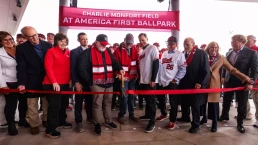
The University of Utah opened its new baseball stadium this week as 150 supporters gathered to celebrate the grand opening of Charlie Monfort Field at America First Ballpark.
Several dignitaries spoke from the podium to illustrate the facility's impact—not only as the home for the Utah baseball program but as a shared community asset. In keeping with that theme, the event recognized the outcome of a shared vision between the U, Salt Lake City and community.
Once podium remarks concluded, project supporters and partners gathered to cut the ribbon and officially kick off a new era.
The ballpark is located on Guardsman Way and was built on the site of the baseball team's former practice facility. It brings the Utes back to campus for games after playing the majority of contests downtown at Smith's Ballpark from 1996 to 2025.
America First Credit Union played a leading role in bringing the program's new home to life, partnering with the U on a 10-year naming rights agreement. The project also received meaningful support from Charlie Monfort, owner and general partner of the Colorado Rockies and a proud Utah alumnus.
Ground was broken in summer 2024 and Utah will host game competition in the facility beginning this season. The Utes began practicing here in August 2025 once the FieldTurf playing surface was installed and while work continued in other areas of the ballpark. The team was able to see the completed interior spaces—including the locker room—for the first time this past Sunday, and day-to-day baseball operations will transition here in the coming days.
Nearly everything that a Utah baseball student-athlete could need is located here. In addition to the field itself, the team locker room, film room, lounge, weight room, equipment room, sports medicine suite, coaches' offices and more are all under one roof. Directly adjacent to the field surface is an indoor training facility with hitting tunnels and pitching lab. Many of these spaces were previously spread across campus and the city—and were not as extensive.
The project came together rather quickly; less than two years ago, this same location was a grass field with a chain-link backstop. A key moment came in 2023 when the U's Board of Trustees gave contingency approval for the project. In the months that followed, Populous was selected as design architect, VCBO was designated as the architect of record and Layton Construction was tabbed general contractor. The majority of funding for the $38 million project was privately raised.
UNM announces initial findings of University Stadium and South Campus Improvement Plan
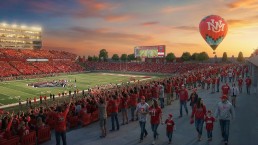
The University of New Mexico has released initial findings of its ongoing feasibility and development planning effort to modernize University Stadium and advance long-term development of the South Campus Sports and Entertainment District.
The findings outline a phased approach to addressing critical infrastructure, accessibility, and safety needs at University Stadium, beginning with a proposed $58 million improvement package focused on high-impact, foundational upgrades designed to address the most urgent infrastructure, accessibility, fan experience and safety needs.
“University Stadium is an important part of UNM’s campus and a shared public asset for our state,” said UNM President Garnett S. Stokes. “This phased approach allows us to address critical infrastructure, accessibility, and safety needs in a thoughtful, responsible way while laying the groundwork for long-term improvements that benefit students, fans, and the broader community.”
Phase 1 prioritizes essential upgrades that improve the overall game-day experience while addressing safety and accessibility constraints. Priority improvements focus on ingress and egress, expanding concourse space, modernizing restrooms and adding fixtures, expanding concessions, and resolving accessibility and congestion challenges throughout the facility.
The total phase 1 cost is estimated at $58 million, including a new $50 million funding request to the New Mexico Legislature made during the 2026-2027 legislative session, along with $8 million remaining from a prior state appropriation authorized by Governor Michelle Lujan-Grisham
“The first phase of this plan will be an immediate improvement on how the stadium functions on gameday,” said Interim Vice President and Director of Athletics Ryan Berryman. “These improvements will dramatically improve the quality and safety of the experience for every single fan that comes through our gates.”
Critical improvements in Phase 1 of the improvement plan include:
- North Entry Plaza and Concourse Expansion
Renovation and construction of a North Entry Plaza and expansion of the existing north concourse - the stadium’s most heavily trafficked arrival point on game days. The expanded concourse will extend into adjacent parking areas, significantly improving circulation, security screening, and fan flow before and after events. The expanded entry will add 32 new gate lines and is designed to allow 71% of fans to enter in the first hour of arrival, an increase from 33% today, caused by structural limitations. - Concessions and Restroom Modernization
Adding new concessions infrastructure, including the first full-service kitchen in University Stadium history. Restroom renovations will increase fixture counts to better align with modern building code and game-day demand, directly improving comfort, efficiency, and service quality. This phase increases University Stadium’s fixture count by 377 while creating 142 new point of sale options for concessions and merchandise. - East and West Concourse Widening and Accessibility Improvements
Widening of the east and west concourses from 9 feet to 20 feet, resolving configurations that currently falls 11 feet short of code and creates persistent congestion and accessibility challenges. These improvements will significantly enhance safety conditions and ADA accessibility, while also improving overall fan circulation throughout the stadium. - South End Facilities Renovation
Modernizing gates, restrooms, and concessions areas at the south end of the stadium – much of which dates back to the facility’s original 1960 construction – will bring key facilities up to modern standards for safety, accessibility, and operations.
Phase 1 is intentionally designed as a foundational step that supports future modernization opportunities.
Future phases of the University Stadium Improvement Plan will address premium seating, including chairbacks in the lower bowl, hospitality spaces, South Stadium connectivity and videoboards, and renovation of the existing press tower.
The feasibility study and development plan were completed by renowned architectural firms Dekker and Gensler. Dekker is a local New Mexico multidisciplinary architecture firm with over 65 years of experience in New Mexico and the southwest. Gensler is a global leader in architecture at the forefront of athletics master planning and the development of sports venues and training facilities.