
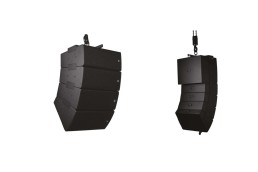
CODA Audio: APSi-Pro Range
CODA Audio has announced the launch of APSi-Pro, a purpose-built high output progressive line source platform designed for fixed, permanent installation projects which need predictable coverage, high SPL, and cost efficiency. Stadiums, indoor sports arenas, nightclubs and many other permanent installation projects stand to benefit from this latest development from CODA Audio.
APSi-Pro evolved from the company’s existing APS-Pro Series in response to market demand. Although APS-Pro was originally conceived as a touring systems, it has consistently delivered outstanding results in fixed environments, leading many integrators to demand a version which contained the full acoustic performance of the touring system in a format purpose-built for installations. Lighter, cleaner, more cost-effective, and free from unnecessary touring hardware, APSi meets those requirements with flexible weather-protection options, from durable outdoor finishes to full marine-grade treatment, along with custom colour choices to match architectural requirements.
Read the full article from ISSUE 48 below:
https://issuu.com/mondiale/docs/mdst48_digitallr/68

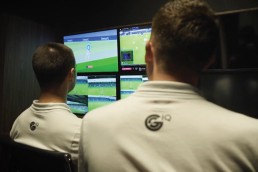
Harry Lennard: Director of Officiating, Genius Sports
MONDO | STADIA spoke with Harry to explore how semi-automated offside technology is being deployed across some of the world’s most demanding stadium environments. From the logistics of installing 30 cameras across 20 architecturally distinct Premier League grounds to the mesh tracking data that underpins every decision, Harry discusses the operational realities of rolling out SAOT at scale. He also addresses the fan experience question that has dogged VAR since its introduction —and makes the case for why speed, accuracy and in-ground clarity are no longer competing priorities.
SAOT needs 30 cameras installed in every stadium - how does the placement and calibration of those actually work on the ground, and who owns that process at each venue?
Semi-automated offside technology (SAOT) is one of many systems that runs off GeniusIQ, our data and AI platform. When we partner with a new league, we align closely with them and each of their teams to install our cameras in every stadium. These cameras capture a wealth of official tracking data from each game, which feed into GeniusIQ as a central system of intelligence.
Once GeniusIQ is deployed in a league, we can power everything from semi-automated offsides to data-driven coaching solutions and immersive fan experiences.
Read the full interview from ISSUE 48 below:
https://issuu.com/mondiale/docs/mdst48_digitallr/16
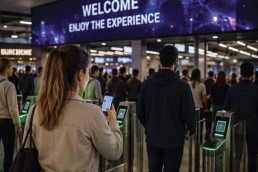
From Concrete to Code: How Technology is Transforming The Modern Venue
By George Vaughan, The Digital Line
It is often said that time moves faster as we get older. From personal experience I can certainly attest to the fact and it is perhaps nowhere more evident than in the world of technology.
Cast your mind back to 2008.
The smartphone revolution was only just beginning. The App Store was in its infancy. Most people still carried physical tickets, paid with cash, printed directions before travelling and relied on desktop computers for much of their digital activity. Social media was beginning to emerge as a cultural force but still had little influence on how we communicated, while concepts such as digital wallets, cloud computing and artificial intelligence remained largely the preserve of enthusiasts rather than everyday consumers.
At the time, many of us believed we were living through a period of remarkable technological change. Looking back now, we were certainly only witnessing the opening act.
In less than two decades, technology has transformed almost every aspect of our daily lives. The device in our pocket has become our primary interface to the world around us, understanding us in more intimate ways than we properly appreciate. It has become our camera, payment card, travel companion, entertainment platform and navigation system.
For those of us working within the venue industry, this shift is particularly significant because technology has not simply changed the buildings we operate. It has fundamentally changed the people who visit them as well.
The guests attending our arenas, stadiums and entertainment destinations today arrive with very different expectations from those who attended events in 2008. They expect information instantly, transactions to be seamless and experiences to be personalised.
Read the full article from ISSUE 48 below:
https://issuu.com/mondiale/docs/mdst48_digitallr/72
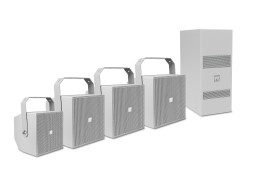
WORK PRO Audio: ARENA Series
Equipson has expanded its WORK PRO range with a range of loudspeakers that deliver a reliable, outdoor sound solution, whatever the weather.
Available in a range of sizes to suit different applications, the ARENA Series is so durable and robust that it can defy the elements and transform any outdoor space into a high quality sonic experience. Every aspect of the Series’ engineering has been carefully designed to ensure that these loudspeakers can withstand the most testing weather conditions. From the hottest, driest day to the coldest, wettest night, these ARENA can handle everything that nature throws at it, without missing a beat.
Read the full article from ISSUE 48 below:
https://issuu.com/mondiale/docs/mdst48_digitallr/66

LEDVANCE becomes Official Lighting Partner of FC Bayern
FC Bayern has a new official lighting partner: LEDVANCE, with whom they've signed a long-term deal running until 2029. The German champions and LEDVANCE, one of the world’s leading providers of universal lighting, are not only united by shared goals but are also genuine neighbours: true to the motto ‘At home in Munich, at home in the world’, both are rooted in Munich, and LEDVANCE’s headquarters are within direct sight of the Allianz Arena.
Rouven Kasper, FC Bayern board member for marketing & sales: “FC Bayern and LEDVANCE are united by their commitment to showcasing success in the right light. Elite sport is all about emotion, energy and special moments, and in LEDVANCE we have gained a strong partner who, like our club, has its roots in Munich whilst also being at home all over the world. We look forward to many successful years together.”
Fredrik Ergert von Gillern, global head of brand & communication at LEDVANCE: “It is no coincidence that this partnership has been formed in Munich: our headquarters are within direct sight of the Allianz Arena. Together with FC Bayern, we’re demonstrating what lighting can achieve – in terms of performance and safety, as well as the atmosphere in the stadium and around matchdays, which inspires people all over the world. For us, this partnership is a significant step towards further expanding our international project business and actively shaping the future of sports venues and beyond. At the same time, we are strengthening our global brand perception and sharpening our positioning.”
FC Bayern has already relied on LEDVANCE products for a number of projects in the past, and further projects are currently being implemented. At the heart of the partnership lie the shared values and strategic collaboration between two strong brands with international appeal. Sport is pure emotion, and lighting makes it visible and tangible. This is precisely their shared ambition: to inspire people, create special experiences and further strengthen their positions in their respective fields. With their modern approach and global focus on growth, FC Bayern and LEDVANCE aim to combine their strengths in the future.

Victor Jimenez & Conn Dunning: Adder Technology
Victor Jimenez and Conn Dunning: Building Connected Stadium Ecosystems
As stadiums continue to evolve into multi-purpose entertainment destinations, venue technology teams are under increasing pressure to deliver seamless live production, immersive fan experiences and broadcast-quality operations – all while managing increasingly complex and distributed infrastructures. From sporting events and concerts to premium hospitality experiences, today’s venues must support highly demanding operational workflows with little margin for error.
MONDO | STADIA sat down with Victor Jimenez, Eastern Region Sales Manager and Conn Dunning, West Region and LATAM Sales Manager at Adder to discuss the key challenges shaping modern venue operations after working closely with venue operators and system integrators across North America.
Modern stadiums are now expected to operate as multi-purpose entertainment destinations as much as sporting venues. How has the operational landscape changed in recent years?
Jimenez: We’ve seen sporting events evolve into full-day experiences and, in many cases, family occasions where groups of people come together to celebrate. This shift is driving some of the biggest changes in the operational landscapes.
Stadiums are no longer expected to support a single game-day production workflow. They’re hosting complete, high-demand entertainment experiences that combine sports, concerts, hospitality and live broadcasting – often within extremely tight turnaround times.
Dunning: This evolution is placing far greater pressure on technology and production teams to deliver seamless, high-quality experiences across the entire venue ecosystem while maintaining operational efficiency behind the scenes.
At the same time, fan expectations have risen dramatically. Audiences expect real-time replays, immersive visuals and uninterrupted connectivity throughout the entire event experience.
Read the full interview from ISSUE 48 below:
https://issuu.com/mondiale/docs/mdst48_digitallr/12
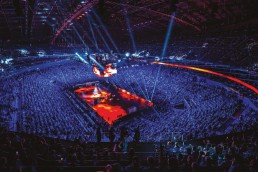
Lidl Final4 @ LANXESS Arena
When the Lidl Final4 for the DHB Cup got underway at Cologne’s LANXESS Arena this April, the 19,750-capacity venue had something it had never had before: a floor that was part of the show. Large-scale animations covered all 900-plus sq metres of playing surface for the opening ceremony, player introductions were staged through the court, and sponsor content appeared directly beneath the players’ feet — visible in the arena and across broadcasts, reaching more than 80 countries. It was a world premiere for top-level handball, made possible by ASB GlassFloor’s portable, full-surface LED video sports floor.
ASB GlassFloor has been developing LED sports flooring for over a decade, and the Lidl Final4 represented its most visible stage yet. The floor is exactly what the name suggests: a toughened glass surface, embedded with LED panels, capable of displaying video content, animations, and live data across its full area. The latest generation of the product — the ASB LumiFlex S — has been engineered specifically for the demands of high-rotation, multi-use venues, where rapid turnaround between events is as critical as performance on the night.
At LANXESS Arena, that turnaround was tested in the most direct terms. The Wednesday before the Final4 saw Game 4 of the DEL ice hockey playoff series between Kölner Haie and Eisbären Berlin played on the standard arena floor. On Thursday, ASB Arena and Event Services AG — the Swiss-headquartered subsidiary of ASB GlassFloor responsible for planning and executing the installation — moved in. The entire floor was laid, cabled, and technically signed off within a single day. Training and rehearsals for the handball began on Friday. By the following Monday, ice hockey was back in the building for Game 6.
Read the full article from ISSUE 48 below:
https://issuu.com/mondiale/docs/mdst48_digitallr/30
From Fan Festivals to Hospitality: How Unilumin Is Helping Shape the 2026 World Cup Experience
As the 2026 World Cup expands across North America, the tournament is redefining how and where fans experience the world's biggest sporting event. While the action takes place inside stadiums, today's World Cup experience extends far beyond the pitch—into fan festivals, entertainment districts, restaurants, training facilities, and broadcast environments powered by advanced display technology.
Through a series of recent high-profile installations across the United States, Unilumin is helping shape this transformation by delivering LED display solutions that enhance fan engagement across stadiums, fan festivals, sports districts, and hospitality venues.
Immersive Fan Engagement in Dallas
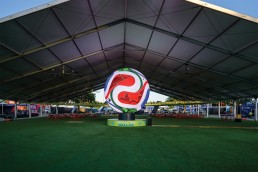
One of the most visible examples is the FIFA Fan Festival™ Dallas, where Unilumin delivered more than 8.5 million pixels of LED technology in collaboration with AMS Events. The installation features a 5-meter interactive LED sphere that allows fans to upload photos via QR code and see themselves displayed in real time on a 360-degree canvas, creating an immersive, shareable fan experience that extends engagement well beyond the match day.
The project also includes a massive 46-foot by 26-foot outdoor LED display on the main stage at Dos Equis Pavilion, providing fans with crystal-clear viewing for live entertainment, tournament programming, and match-day activities. Together, the installations demonstrate how large-scale LED technology is helping transform fan festivals into destination experiences rather than simple viewing parties.
A Connected Sports District in Kansas City
In Kansas City, Unilumin partnered with AmpThink to deploy a district-wide LED ecosystem across Current Landing and CPKC Stadium, delivering more than 4,000 square feet of LED displays throughout the mixed-use development.
The installation includes video boards, ribbon boards, plaza displays, retail signage, a practice field videoboard, and an 8.5-million-pixel virtual production studio designed to support broadcast production, sponsorship content, player media opportunities, and immersive storytelling.
The project is particularly significant as the Kansas City Current Training Facility has been selected as the official training base for the Netherlands Men's National Team during the 2026 World Cup, placing this digital infrastructure at the center of one of the tournament's most important off-field operations.
Bringing the World Cup to Hospitality Venues
The World Cup experience doesn't stop at official venues. Across Southern California and San Antonio, NOVO Brazil Brewing has transformed all five of its locations into destination viewing environments using nearly 1,750 square feet of Unilumin LED displays.
The deployment combines indoor fine-pitch displays, outdoor LED screens, and custom four-sided cube displays to create immersive match-day atmospheres that creates immersive match-day environments that encourage fans to gather, extend their stay, and enjoy a premium viewing experience. According to NOVO Brazil Brewing, the installations have become central to attracting soccer fans throughout the tournament while elevating the overall guest experience.
Although each project serves a different purpose, together they illustrate a common trend: major sporting events are driving investment not only inside venues, but across the broader sports and entertainment ecosystem.
Beyond the Stadium: A Broader Industry Trend
These projects reflect a broader shift taking place throughout the sports and entertainment industry. Premium LED displays are no longer confined to scoreboards or control rooms—they have become integral to creating immersive destinations where live sports, digital content, hospitality, retail, sponsorship, and broadcast converge.
“The 2026 World Cup is redefining how fans engage with the game. The experience no longer begins at kickoff or ends when the final whistle blows — it spans entertainment districts, hospitality venues, fan festivals, training facilities, and every touchpoint in between. Digital display technology has become a key part of that ecosystem, helping venues create more engaging experiences while unlocking new opportunities for storytelling, sponsorship activation, fan engagement, and long-term commercial value. We’re proud to support our partners as they prepare for this new era of sports entertainment.” — Marcello Marques, Director of Business Development – Sports at Unilumin.
For venue owners, hospitality operators, and sports organizations, display technology is increasingly viewed as critical digital infrastructure that enhances fan engagement, supports content creation, creates new sponsorship opportunities, and generates long-term value beyond a single event.
As the 2026 World Cup continues across North America, projects like those in Dallas, Kansas City, and Southern California demonstrate how digital infrastructure is reshaping the fan experience far beyond the stadium. From fan festivals and training facilities to hospitality venues and sports-anchored districts, LED technology is becoming a foundational element in creating connected, immersive destinations that will continue delivering value for owners, operators, sponsors, and fans long after the final match is played.
For more information, please visit https://www.unilumin.com.
Atlético de Madrid partner with Fever for Enhanced Fan Experience
Atlético de Madrid have reached an agreement with Fever, who will become the club's Official Ticketing Partner and Fan Experience Partner for the next five seasons. Throughout this long-term partnership, the club will further enhance the experience of fans and visitors at the Riyadh Air Metropolitano.
As the world's leading technology platform in its field, Fever will power the distribution of experiences linked to the club, including football matches, stadium tours, museum visits, as well as concerts and live entertainment. These experiences will be available through the new Riyadh Air Metropolitano website. The home of Atlético de Madrid continues to strengthen its position not only as one of world football's leading stadiums, but also as a major destination for entertainment, culture and music.
Atlético de Madrid's Chief Revenue and Operations Officer, Óscar Mayo, highlighted the importance of the partnership: "This long-term collaboration with Fever will allow us to continue raising the standard of the experiences we offer our fans at the Riyadh Air Metropolitano. We are delighted to work together to further improve the satisfaction of Atleti supporters with their stadium, which is their home."
Rocío Trujillo, Fever's General Manager for Southern Europe, added: "The Riyadh Air Metropolitano is much more than a stadium. It is one of Europe's leading entertainment venues and a clear example of how major venues are evolving around the world. We are thrilled to take this step alongside Atlético de Madrid and help expand the reach, visibility and experiences that take place in this unique space."
How Smart Stadium Hospitality Design Increases Fan Spend & Loyalty
By Layrd Design
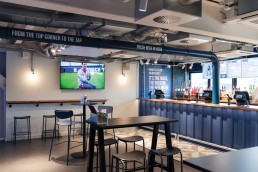
Great stadium experiences are no longer defined by the match alone; they are shaped by the spaces fans inhabit, the flow of movement through the venue, and the environments in which services are integrated. Modern stadium hospitality design moves beyond functionality to influence how fans interact, linger, and invest in the experience.
Redefining Stadium Hospitality Through Interior Design
Stadium hospitality has evolved from a functional afterthought into a strategically designed component of the fan journey. Today’s fans expect more than amenities; they seek environments that anticipate their needs, facilitate social connection, and elevate the live experience. Each design decision, from layout to lighting, directly affects how fans engage, dwell, and spend.
Thoughtful circulation and clear wayfinding reduce congestion, allowing fans to move effortlessly between concessions, seating, and hospitality areas. Comfort is equally essential. Ergonomically designed seating, textured finishes, and flexible lounge arrangements balance style, usability, and social interaction. Material choices, from tactile fabrics to warm timber finishes, communicate quality and sophistication, while lighting helps guide movement, highlight key experiences, and create spaces that feel both welcoming and exclusive.
Every element serves a purpose. Modular furniture adapts to varying group sizes, spatial zoning encourages guests to stay longer, and sensory-rich environments immerse fans in the excitement of the event. The result is hospitality that does more than enhance aesthetics; it extends dwell time, encourages higher spending, and strengthens the likelihood of repeat visits.
Read the full article from ISSUE 48 below:
https://issuu.com/mondiale/docs/mdst48_digitallr/6