

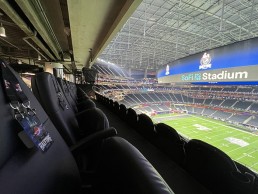
PixMob Scores Big at Super Bowl LVI Halftime Show
Although no NFL franchise has ever been victorious three Super Bowls in a row, team PixMob scored its third consecutive Super Bowl win at the Super Bowl LVI Halftime Show, featuring performances by hip-hop icons Dr. Dre, Snoop Dogg, Eminem, Mary J. Blige and Kendrick Lamar at SoFi Stadium in Los Angeles, California. The Montreal-based PixMob — immersive experience experts specialising in wearable technology, wireless lighting and crowd activation — dazzled fans in the stands and TV viewers alike with a truly epic halftime spectacle, one that had to overcome a significant production hurdle.
PixMob’s Super Bowl Halftime Show experience this year was their third straight, and fourth overall, at North America’s biggest annual sporting event. It follows unforgettable success at last year’s halftime show featuring The Weeknd, and at the Jennifer Lopez and Shakira performances the year before, both shows together totalling over 200 million viewers.
New Tech Tackles Unique Game-Day Challenge
The Los Angeles Rams and Cincinnati Bengals weren’t the only ones aiming to light up the field during the afternoon game. PixMob were challenged to develop immersive illumination technology that would not just function but enthral in the daylight-filled stadium — in other words, the brightest tech yet. Enter NOVA, a new family of high-brightness PixMob products.
PixMob provided 70,000 never-before-seen, NOVA-powered LED laminates to all live audience members as well as the halftime show field cast (dancers, extras, etc.). The laminates, designed in Montreal, are brighter than any device the company has ever made previously. Each laminate has 10 times the brightness of the popular LED event wristbands PixMob is renowned for, and is the same technology now used in the permanent installation built into the seats of the SAP Center, home of the San Jose Sharks. The result was sensational, with PixMob again demonstrating their signature ability to reinvent themselves to transform audiences into a vibrant, pulsating and entrancing canvas of light.
“When we saw the stadium with its clear roof for the first time, we thought this might be tough. With our engineers, we got to work and did some electronic alchemy to take an existing circuit and super charge it. As we like to say, we must innovate or disappear,” said Vincent Leclerc, CEO, PixMob.

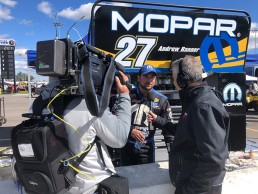
Dejero Connectivity Solutions Simplify Production of Canadian Car Racing
Video production company and ‘high-speed story-teller’, Fuel MediaLab, is using Dejero connectivity solutions to transmit broadcast-quality video from multiple camera feeds over multiple cellular networks and other IP connections. The signal is sent in real-time from speedways across Canada to Dejero rental partner TV2GO’s teleport, during competitions such as the NASCAR Pinty’s Series and Sports Car Championship Canada (SCCC), for distribution to various broadcast networks such as NBC and TSN.
“Most race tracks are located in rural areas where cellular network connectivity is limited,” explains Joel Robinson, media producer at Fuel MediaLab. “When you add a few thousand spectators into the mix, the networks can become congested. However, with Dejero’s EnGo mobile transmitter blending all available networks, we get incredibly reliable connectivity – and we can boost cellular reception even further by securing the EnGo into the vehicle antenna dock and connecting it to our truck’s rooftop antennas.”
At speedways where cellular networks are particularly unstable, Fuel MediaLab uses the Dejero GateWay M6E6 network aggregation solution, equipped with six cellular modems, to boost internet connectivity in the production trucks.
A Dejero WayPoint receiver, located at TV2GO headquarters in Toronto, reconstructs broadcast-quality video transported over multiple IP connections from the EnGo, decodes HEVC or AVC, and outputs to SDI or MPEG-TS workflows for distribution across multiple online and broadcast platforms. TV2GO uses the Dejero Control cloud-based management system to simplify the routing and sharing of video feeds and it allows them to monitor the status of EnGo SIM cards, traffic usage and mobile coverage, so they can keep track of data costs while ensuring the best connectivity performance in the various race locations.
“What I love about the EnGo in particular, is its simplicity and flexibility,” said Robinson. “I press a button on the unit, TV2GO checks the signals remotely and we’re good to go from virtually any speedway location.”
Fuel MediaLab has been contracted as NASCAR Pinty’s official host broadcaster for 2022 which consists of 13 races across the provinces of Ontario, Quebec, Alberta, Saskatchewan – many of which are in remote locations with little or no onsite internet connectivity from the venue. Fuel MediaLab has also previously covered production for the Porsche GT Cup Canada and Sports Car Canada Championships (SCCC).
“For the NASCAR Pinty’s Series, we can distribute the video stream in different formats that are required by the event sponsors at these races,” explains Lawrence Partington, chief innovation officer of TV2GO. “It might be pay-per-view, a dedicated OTT channel or a traditional linear channel. We send the live video coming in from the Dejero EnGo or GateWay through our teleport to TrackPass on NBC Sports Gold in New York via RTMP and to Canadian rights holder TSN as HD SDI over broadcast fiber. It works incredibly well.”
The solution features Dejero’s Smart Blending Technology to create a resilient internet connection by aggregating multiple networks into a single service. Dejero’s new EnGo 265 mobile transmitter, purposely designed for the broadcast and media production industry, allows for the transmission of high-quality live video with glass-to-glass latency as low as 0.5 seconds over the bonded cellular connections.
Fuel MediaLab and TV2GO plan to build a REMI kit using multiple Dejero EnGo transmitters for specific racetracks where laying camera cables is logistically too difficult and using satellite connectivity alone would be costly. “In the past, we had to rely on a satellite truck for transmission, but with Dejero’s connectivity solutions, we can transport high quality video via their Smart Blending Technology. Dejero is a solid partner for us,” said Partington.

Pixellot & Morawa Bring AI-Powered Live Streaming Content to Austria
Pixellot, the world’s leading provider of AI-Automated™ sports video and analytics solutions, has partnered with Morawa Digital, the Media subsidiary of Austria’s venerable Morawa publishing empire to bring quality sports content of the many teams and leagues that have not had coverage up until now.
During the 2022 season, Morawa Digital will begin installing Pixellot systems with a goal of connecting hundreds of venues across Austria. The rollout plan will include live coverage of amateur league games followed by video analysis and streaming of 1+2 Bundesliga Soccer and the Women Bundesliga first league soccer, 1+2 handball Bundesliga, 3+4 soccer leagues, and the regional ice hockey league. The content will be available on-demand on for by subscription package on www.fans.at.
The Pixellot’s multi-purpose technology platform empowers sports coverage and analysis with a range of solutions for both media and coaching. Pixellot’s value proposition combines cost-effectiveness with the field-proven ability to operate in all conditions: indoor and outdoor, and even with low light and low-bandwidth connectivity.
“The quality and affordability that Pixellot systems deliver, with low latency and low bitrates are absolute game-changers,” said Hannes Rangger, CTO of Morawa Digital. “We are very excited to be bringing true democratisation to Austrian sports, The AI-Automated production will enable us to provide large quantities of live sports content for sports fans around the country.”
“The cooperation with Morawa Digital and Pixellot is absolutely great for us. As a TV broadcaster, the short delay of just 5 seconds is a real game changer,” added Marco Cornelius, Director of krone.tv Sport “The possibility to stream at a low upload rate helps the clubs that have limited connectivity and that is very exciting for the fans and the teams of all levels and leagues - men, women and youth”
“Our mission has long been to bring sports fans content from their most beloved teams, that’s why we created a modular platform that can serve multiple business models,” said Alon Werber, CEO of Pixellot. “Today, all leagues can be covered cost-effectively, and monetised easily. Fans will have much more access to their favourite teams, and leagues and rights-holders will be able to realize new avenues for development.”
Pixellot’s AI-Automated solution is revolutionising the way teams play, coach, and share their games with family, friends, and fans. By enabling teams to easily capture their games, broadcast them live or on-demand, and monetise through advertising and subscriptions, any team can afford to stream their live games.

Henderson Announces New CEO / President and New Structure
Henderson is proud to name Kevin Lewis as the next CEO & President of Henderson Engineers, and the President of Henderson Companies, the parent company of Henderson Engineers and Henderson Building Solutions. Lewis becomes the fourth CEO & President in Henderson’s 52-year history and succeeds Rich Smith, who will remain with the company as President-Emeritus and a board member.
As part of this leadership transition, the firm also unveils a new company structure that aligns Henderson’s vast nationwide engineering and construction experience across building types into five sectors: Business, Community, Health, Retail, and Venue.
A licensed professional engineer with more than 20 years of AEC-industry experience, Lewis has held a variety of leadership roles at Henderson since he joined in 2004. His vast knowledge of the business has brought him success as a project manager, project engineer, venue practice director, director of practices, and most recently as the company’s chief sector officer.
“I am humbled and proud to be selected as Henderson’s next CEO and am excited to lead our firm into the future,” said Lewis. “Henderson has been known for our people-first culture, technical innovation, and focus on client relationships for more than 50 years. In that time, we’ve added new services, new offices, new vertical markets, and the best employees in the industry.”
“We are now aligning our design and construction expertise across vertical markets into five specialised sectors,” Lewis added. “Through this structure, we offer clients and partners a single source for engineering and turnkey construction management services. Our goal is to lead the industry with our approach to client experience.”
Henderson’s new sectors include nationwide experts from both Henderson Engineers and Henderson Building Solutions who specialise in the building types within that sector. Henderson named an executive to lead each sector who will work collectively with firm’s executive leadership team.
Henderson also selected industry veterans Tony Welter and Vince Masilionis to lead sectors dedicated to two of Henderson’s largest clients.
“When you’ve been in business as long as we have, you’ve worked in almost every building type in every market,” said Lewis. “We understand that good engineering design requires great building partners to bring it to life, which is why we provide both through Henderson. I’m excited about our move to specialised sectors as it lets us double down on great client service and provides even more career opportunities for employees who are passionate about working in these markets. We’re still the same Henderson; these changes are simply the latest evolution of the people-first, client-focused firm we’ve always been.”
Lewis steps in for Smith, who served as Henderson’s CEO & President for the past nine years, helping transform the company from a small, local firm into a national engineering and building systems design powerhouse with 12 offices across the country. Henderson experienced some of its highest employee and revenue growth years in company history under Smith’s leadership. He was passionate about fostering a people-focused company culture known for creativity, flexibility, and diversity. He played a pivotal role in helping Henderson land some of the largest projects in company history and was a founding member of KC Global Design, a collective of design firms and leaders focused on elevating Kansas City’s reputation in the world of design.
“I am thrilled Kevin was selected as Henderson’s next CEO and am confident the firm is in good hands,” said Smith. “He is a strategic leader known for his technical knowledge, innovative mindset, and strong industry relationships. He’s also a friend and someone I’ve worked closely with for almost two decades. We made an intentional decision to choose our next CEO from within Henderson to protect the legacy started by Fran Henderson more than 50 years ago. Kevin understands what we stand for as a company. His vision for the future of Henderson builds on that legacy as we continue to enhance our client service and employee experience.”
In addition to naming a new CEO and sector leadership, Henderson also named a new Board of Directors for Henderson Companies, the parent company. Lewis joins the Board, which is led by Robin Broder as the newly elected Chair of the Board. Additional members of the Board of Directors include Dave Haake, Shane Lutz, Drew Rimmer, Vince Masilionis, Andrew Bennett, and Smith. Steve Hancock was also named as the new president of Henderson Building Solutions as part of these changes.
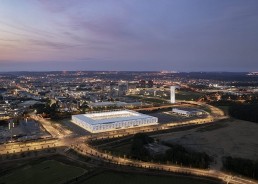
Stade de Luxembourg Officially Opened
The qualifying match for the 2022 FIFA World Cup in Qatar between Luxembourg and Azerbaijan took place on September 1, 2021, and was the first official match to take place in the new Stade de Luxembourg football and rugby stadium. The design by architects von Gerkan, Marg and Partners (gmp) for the Grand Duchy’s national stadium was the successful winner amongst 25 competitors in the 2016 negotiated procedure. The new construction of the football and rugby arena to the south of the city of Luxembourg replaced the outdated previous structure and was built in cooperation with the local practice Beng Architectes Associés.
In addition to the design for the stadium itself, the task involved an urban masterplan for the site of about 8 hectares. The new national arena is located on a strip of land that runs from east to west, with the A6 motorway to the north and a planned new road and tramway connection to the south, the latter creating a central traffic and interchange hub close to the stadium. Here, in addition to the sunken parking lot, gmp have also designed the new service building for the city of Luxembourg’s Service des Sports.
The size of the pitch and the facilities at the new arena follow international guidelines, meaning that both the top UEFA stadium category IV and that of the International Rugby Board (IRB) are achieved. The stadium features an orthogonal layout with a single tier and diagonally-truncated corner areas, with the grandstand reaching all the way down to the edge of the pitch. Towards the south, a building block accommodates the functional facilities for VIPs, the press, players, and officials. There, directly above the main entrance from the forecourt at the new Boulevard Kockelscheuer, is the access to the business foyer with adjoining press area and multifunctional room, which can also be used independently of sports events. The load-bearing structure of the grandstand roof consists of a grid of double-angulated steel girders that are tapered to reflect the internal forces; the grid of girders rises from all sides of the arena and, at its highest point, carries the pitch lighting system.
With its 9,900 seats, the new stadium is rather small in relation to global standards. For this reason, the design was aimed at creating the atmosphere of a football arena also at this scale while also, at the same time, achieving a significant presence in the urban ensemble. To achieve this the designer developed a uniform facade structure, as well as a simple geometric load-bearing structure. The diamond-shaped folded metal plate structure of the facade has a unifying effect on the overall volume of the building. In addition, at the second level high above the building and seen from outside, the line of lighting fixtures marks the dimensions of the pitch. At this exposed site, this creates a dynamic and sculptural feature that can be seen by both stadium visitors and those driving by. The effect is particularly noticeable at night, when the pitch lighting and the illuminated facade structure radiate out to the city.
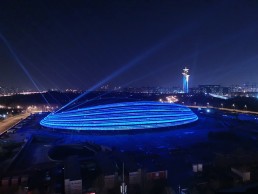
Populous' Ice Ribbon Set for 2022 Winter Olympics
On the 4th February, the world will be watching Beijing celebrate the start of the 2022 Winter Olympics as the world’s first dual Olympic city.
The only new permanent venue for the 2022 Winter Olympics and Paralympic Games, the National Speed Skating Oval or the ‘Ice Ribbon’, will be unveiled under Olympic lights for the first time since its completion in 2021.
The 12,000 seat venue will host the speed skating events and will award 14 gold medals.
Designed as a spectacular new landmark by global sports architecture firm Populous, after winning an international design competition, the ‘Ice Ribbon’ was created as a symbol of Chinese cultural heritage that celebrates the elegance, precision, pace and dynamic of speed skating.
From its Asia Pacific headquarters in Brisbane, Populous managed a multitude of stakeholders across five countries and three offices to win the rigorous design competition over 60 other firms. The win recognised Populous’ unparalleled Olympic experience and their involvement in their 14th Olympic Games, both summer and winter.
Populous Senior Principal and co-Project Director on NSSO Andrew James said to be selected as the chief designer of an Olympic sports venue was a huge honour.
“The winning design for the ‘Ice Ribbon’ was created in an intense time frame and was forged through several concepts and many iterations to develop a spinning concept into its final form.
“It became a global effort with our team in Beijing, Brisbane, India, London and America drawing on our experience from Oval Lingotto in Turin, Italy and our design of Fisht Stadium in Russia, home of the 2014 Winter Olympic Games,” James said.
The client, Beijing National Speed Skating Oval Operation Co. said the ‘Ice Ribbon’ demonstrates the excellence of Populous’ design and justified their international reputation in sports architecture.
“It was an extraordinary project, the key building for the 2022 Winter Olympics…and continues to receive accolades from all walks of life.
Sitting together as iconic buildings along the central axis of the Beijing Olympics’ ‘Bird’s Nest’ and the ‘Water Cube’ venues they said, “The National Speed Skating Oval is not only a world-class sports facility designed to be among the best in the world, but it also brings an international landmark for Beijing and enhances the landscape and urban fabric of the area.”
When reflecting on the characteristics of Olympic speed skating, Tiric Chang, Principal of Populous in China and the co-Project Director of the NSSO drew on childhood memories of growing up in Beijing to create a beautiful interpretation of Chinese culture and heritage.
“Much of the inspiration for the conceptual design of the ‘Ice Ribbon’ came from a traditional ice game played in old Beijing which involved a high-speed spinning ‘ice top’.
“The ribbons of the design make reference to the floating silk ribbons of the artwork my family had dedicated their time to – which was the study and preservation of the Dunhuang Grottoes, a significant collection of Buddhist art from the Tang dynasty.
“It guided the design team to boldly extend the concept of a high-speed rotating ice top to creating 22 rotating light bands for the façade, which not only represent the ice surface and the shape of the oval, but also perfectly demonstrated the high-speed movement of speed skaters,” Chang explains.
In addition to the striking appearance of NSSO, the design process has also been thoroughly considered in terms of its practical functions to meet the requirements of the International Olympic Committee (IOC) and the International Skating Union (ISU).
Importantly, the design also adds to the intense and exciting atmosphere where every movement and sound of the speed skating blades can be seen and heard by everyone in the oval.
In the lead up to, and during the Games, NSSO will be the home of training for speed skating events and Olympic competition.
Following the Games, the design’s legacy allows the transformation of the facility to serve its long-term purpose as a real hub for the community, to hold Winter festivals, public ice skating, ice hockey or private ice-based shows and events.
This legacy design will support the Chinese Central Government’s Ice and Snow Sports Development Plan which aims to involve 300 million people in ice and snow sports by 2025 and the IOC’s ‘Agenda 2020’ to ensure there is real cost-benefit associated with hosting the Games.
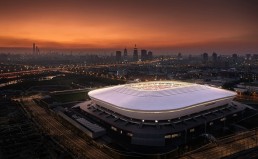
HPP Architects-Designed SAIC Motor Pudong Arena Completed
The 33,765-seat SAIC Motor Pudong Arena is the new home ground of professional football association Shanghai Port FC and is the first football stadium in China to meet the international standards of world football association FIFA. HPP won the internationally tendered competition in 2017 and was commissioned with the lead consulting, design, interior and landscape architecture. The visionary overall concept of the SAIC Motor Pudong Arena was already chosen for the prestigious “Iconic Awards 2021 Innovative Architecture Selection”.
The new stadium stands in the outer green belt of Shanghai on a 10-hectare site. Its wide range of services with two adjoined training pitches and offers for the general public secure the complex its place as a national sports centre. The new landmark SAIC Motor Pudong Arena provides space for identification and fan culture and is becoming an urban meeting point for the Shanghai population with an array of fitness, leisure and entertainment activities.
A well-designed stadium not only provides the ideal backdrop for matches on pitch, but also serves as a catalyst for excitement in the stands. The basis for an atmospheric fan experience is the compact shape of the stadium. The cantilevering of the upper tiers ensures the best view of the pitch right up to the uppermost places and achieves maximum proximity to the pitch. This allows development of the highly coveted “cauldron effect”, which is palpable in every seat. The division of the tiers into upper and lower sections also enables the flow of spectators to be efficiently managed and distributed over the promenade which runs right around the inside of the stadium. “The architecture of the new Pudong Soccer Arena reflects the identity of the club with its healthy, nurturing fan culture and creates a unique football experience”, says HPP Partner Jens Kump.
HPP designed the shape of the stadium to resemble a bowl made of traditional Chinese porcelain. The compact impression of the flat geometry is underlined by the planar, white shimmering metal façade and curved building envelope. It is this minimalistic architectural language that allows the stadium to blend unobtrusively into its simultaneously urban and rural surroundings and skilfully shift the focus to use and interaction.
The supporting framework and the roof with its predominantly horizontal aspect and simple, clearly defined contours also support the “less is more” concept. In a similar way to the spokes of a wheel, the stadium’s flat roof functions as an internal tension ring and external compression ring, following the principles of suspension cable construction. Unlike traditional structures, this innovative design technique enables creation of an interior space without vertical supports spanning 56 metres from roof edge to central opening and is used for the first time anywhere in the world in the SAIC Motor Pudong Arena. The maximum span of the roof measures 212 metres. The supporting framework of the spectator stands simultaneously supports the substructure of the outer envelope. Podium, spectator stands and façade merge to form a single entity.
The impact of the arena will not only be as the home ground of the Shanghai Port FC, but also as the main venue for the Asian Cup 2023.
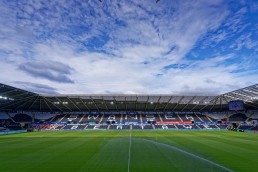
Swansea.com Stadium
Opened in 2005 to provide a home for Swansea City and Ospreys Rugby, the Swansea.com Stadium is a venue the city can be proud of. Built on the site of the former Morfa Athletics Stadium and playing fields, the 21,000-capacity stadium has become one of the foremost sporting venues in the country.
With two hugely successful sporting teams, the ground also regularly plays host to international sporting fixtures, numerous sell-out concerts and thousands of conferences and events each year.
With an array of matches, concerts and events at Wales’ third-largest stadium, the whole ground was in need of a full audio revamp to modernise the facility and enhance the atmosphere for the fans.
Gordon David, Facilities Manager at Swansea City Football Club, takes up the story: “The decision to upgrade the existing audio system, which had been in place since the stadium opened in 2005, was taken in early 2020. The reasons behind that were partly down to the age of the system, but also, more importantly, to ensure it remained compliant to the necessary British standards. This was a challenge with the original system, as some of the infrastructure was obsolete and available spare parts were difficult to procure.”
Read the full story in the latest issue of MONDO | STADIA.
https://issuu.com/mondiale/docs/mdst21_digitallr/34
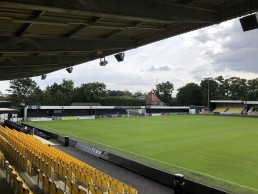
EnvironVent Stadium
In August 2020, Harrogate Town FC were promoted to the English Football League (EFL) for the first time in their history thanks to a 3-1 victory over Notts County in the National League play-off Final at Wembley. With promotion came new responsibilities. The league’s regulations precluded the use of the club’s Wetherby Road (EnviroVent) stadium’s synthetic pitch, and, as a narrow window of time did not allow the work on a replacement to be completed before the start of 2020/21 season, Harrogate Town arranged a temporary ground-share at Doncaster Rovers’ Keepmoat Stadium. Comfortably maintaining their new league status during a season largely played in empty stadiums due to Covid-19 restrictions, the club, with work on a new grass pitches completed, prepared to return home.
Other EFL infrastructure criteria also had to be met at the EnviroVent, one of which was provision for a permanent public address system, which according to the League’s regulations required ‘… adequate speaker output to relay information to all spectator areas, as required by the local authority, with the ability to interrupt for safety announcements from the stadium control room’. With the possibility of a future further development of its facilities, the club sought to install a high quality, future-proof system that could be expanded if required.
Sheffield-based technical services specialists, AVLS Technical, who had previously supplied temporary pre-match PA requirements on a hire basis, were engaged by the club to consult over the permanent installation. The club’s plan at this stage was to upgrade audio provision in four of the ground’s six distinct areas, and work with their existing set-up in the remaining two.
Read the full story in the latest issue of MONDO | STADIA.
https://issuu.com/mondiale/docs/mdst21_digitallr/52
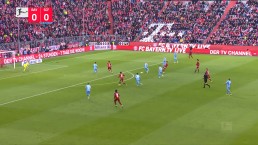
Bayern Munich Select ADI for LED Perimeter and Content Solution
As they push for an unprecedented 10th Bundesliga title in a row, Bayern Munich have contracted stadium technology specialists, ADI, to supply the new LED perimeter system at The Allianz Arena.
The contract sees ADI installing over 370 linear metres of digiBOARD digital perimeter, including a full 252m camera arc and an additional 120m second row along the camera-facing touchline. ADI have installed the system which was used for the first time in Bayern’s first home match of the season against FC Köln on 22nd August.
The digiBOARD system is fully UEFA compliant featuring class-leading LED technology, making it one of the world’s highest resolution stadium digital perimeter platforms and providing a future-proof solution for exceptional brand representation at 4K broadcast resolution.
In addition to the digiBOARD hardware, ADI are providing their proprietary digiSOFT control software to operate the system. ADI’s Studios Division will provide ongoing content support in the form of a weekly Quality Control Service for club content. With 15 years of experience in creating engaging digital perimeter advertising ADI will also be the preferred creative partner for any club and commercial partner perimeter content throughout the course of the contract.
The second row has been positioned to provide a seamless view from the camera gantry, allowing the club to utilise the space for separate content or to create a single, giant “Mega Banner” of content.
ADI pioneered the Mega Banner concept with their installation at Wolverhampton Wanderers in 2019 and their ADI’s digiSOFT software intelligent scaling to ensure the image retains its size and shape as the camera pans across the pitch.
James Robinson, Chief Operating Officer at ADI, commented: "As the dominant supplier of LED technology to the English Premier League, ADI are delighted to announce this multi seasonal contract with Bayern Munich.
“ADI empower our customers in the Sports and Entertainment Industries by providing innovative digital platforms and production services allowing Federations, Brands, Clubs and Events to directly engage fans and consumers. Through ongoing product innovation, trusted relationships and high levels of service ADI have supported our customer's growth and success for over 30 years.
“For a club of Bayern Munich’s stature to recognise ADI as their supplier of choice naturally reflects our market position and supports our continued strategic growth outside the UK. I am delighted that we can now include one of the most well respected football clubs in Europe among our long term customers.”